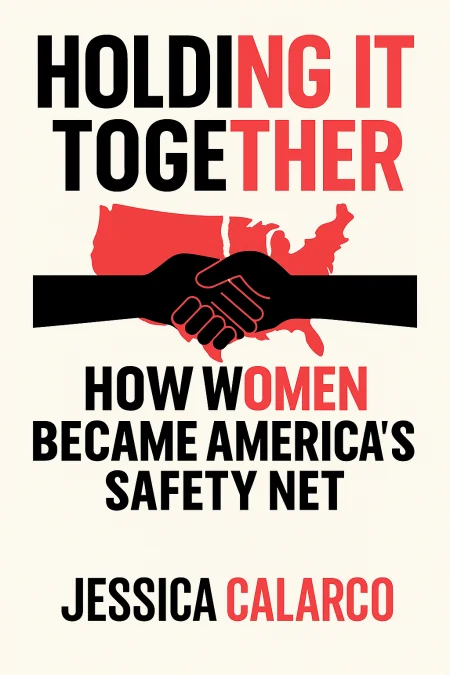
Holding It Together
How Women Became America's Safety Net
Book Edition Details
Summary
In the silent shadows of everyday life, where safety nets falter, women shoulder the weight of a nation's neglect. Jessica Calarco's "Holding It Together" unveils the invisible scaffolding built on the backs of women, revealing a tapestry of resilience and despair. Through years of immersive research, Calarco shares vivid tales of women stretched to their limits—single mothers juggling meager benefits, young girls thrust into parental roles by crises, and professionals caught in the crossfire of societal expectations. Each story is a testament to systemic oversight, where women's labor keeps the wheels turning while the system sleeps. With profound insight and unflinching honesty, this book challenges us to rethink the fabric of American support systems and recognize the unseen heroes who stitch society together, urging a collective call for change before the seams unravel entirely.
Introduction
American society operates on a fundamental contradiction that has remained largely invisible to public discourse: while promoting ideals of individual opportunity and gender equality, the nation has systematically constructed a care economy that depends on women's unpaid labor to compensate for deliberate policy failures. This hidden infrastructure of gendered responsibility extends far beyond traditional domestic roles, encompassing everything from healthcare coordination and eldercare management to educational advocacy and community support networks. The persistence of this arrangement reveals not natural gender differences or personal choices, but rather a carefully maintained system that transfers social costs from institutions to individual families, with women bearing the heaviest burden. The analysis that follows employs a structural lens to examine how policy decisions, economic incentives, and cultural narratives converge to create what appears to be voluntary gender specialization but actually represents systematic exploitation. Through examining the mechanisms that channel women into unpaid caregiving roles, the myths that justify these arrangements, the economic interests that sustain them, and the policy alternatives that could transform them, a clear pattern emerges of how societies can choose to organize care and responsibility. This examination challenges readers to move beyond individual explanations for persistent gender inequality and instead confront the institutional forces that make such inequality both profitable and politically sustainable.
The Structural Trap: How Policy Failures Force Women into Caregiving
The transformation of American women into an informal social safety net results from deliberate policy choices rather than evolutionary social change. Beginning in the 1970s, political leaders systematically dismantled New Deal-era protections while promoting market-based solutions to social needs. This shift created gaps in essential services that families were expected to fill privately, with women becoming the default providers of unpaid care work. The absence of universal childcare, inadequate family leave policies, and employer-provided healthcare tied to full-time employment created a web of constraints that consistently channeled women toward caregiving roles regardless of their professional qualifications or personal preferences. These structural forces operate through interconnected mechanisms that compound over time. When childcare costs exceed potential earnings, leaving the workforce becomes economically rational for the lower-earning spouse, typically the woman due to persistent wage gaps. When eldercare needs arise, daughters and daughters-in-law face social pressure and practical necessity to provide care that public systems fail to deliver. When children require medical attention or educational advocacy, mothers typically assume coordination responsibilities that can consume substantial time and energy. Each individual decision appears voluntary, but the cumulative effect creates systematic patterns that transcend personal choice. The economic logic underlying these arrangements reveals their constructed nature. Employers benefit from workers whose family responsibilities are managed by unpaid female labor, allowing them to maintain demanding schedules and minimal benefits while accessing a workforce subsidized by women's unpaid contributions. Government budgets remain lower because essential services are provided informally rather than through public programs. Meanwhile, the women providing this labor face career penalties, reduced lifetime earnings, and increased economic vulnerability, costs that remain invisible in conventional economic accounting. International comparisons demonstrate that these outcomes are not inevitable consequences of modern life but rather results of specific policy frameworks. Countries with robust social safety nets, universal childcare, and comprehensive family leave policies achieve higher levels of gender equality while maintaining economic competitiveness. The American approach of privatizing care while maintaining the fiction of equal opportunity creates systematic disadvantages that no amount of individual effort can overcome, revealing the structural nature of what often appears as personal struggle.
Deconstructing the Myths That Justify Gender-Based Care Exploitation
Three interconnected myths sustain the system that transforms women into unpaid care providers while obscuring the structural forces that create this outcome. The meritocracy myth promotes the belief that success results from individual effort and moral character, allowing society to ignore systematic barriers while blaming those who struggle for their circumstances. When applied to gender roles, this myth suggests that women's disproportionate caregiving responsibilities reflect their natural preferences or superior abilities rather than limited alternatives and social coercion. This narrative makes structural inequality appear to be voluntary specialization, deflecting attention from policy solutions that might redistribute care responsibilities more equitably. The biological determinism myth treats gender differences as natural imperatives rather than social constructions, presenting men and women as fundamentally different beings with complementary but unequal roles. This framework positions men as naturally suited for competitive public sphere activities while women are deemed inherently better at nurturing and care work. Such essentialist thinking makes current arrangements appear inevitable rather than chosen, providing psychological comfort to those who benefit from them while making alternatives seem unnatural or impossible. The persistence of this myth despite overwhelming evidence of its falsity demonstrates its utility in maintaining systems that concentrate benefits among the privileged while distributing costs among the vulnerable. The optimization myth promises that women can successfully manage multiple demanding roles simultaneously through better time management, personal efficiency, and individual resilience. This narrative shifts focus from systemic inadequacies to individual performance, suggesting that struggling mothers need personal improvement rather than institutional support. The myth simultaneously celebrates women's capabilities while ensuring they remain responsible for managing impossible expectations, creating a framework where system failures become personal shortcomings. These myths work synergistically to create a closed logical system that deflects criticism while maintaining existing power structures. When women struggle with caregiving demands, the meritocracy myth suggests they lack sufficient dedication or skill. When they request support, the biological determinism myth implies they should naturally excel at such tasks. When they consider reducing their responsibilities, the optimization myth insists that capable women can handle everything through better personal management. Each myth reinforces the others while directing attention away from structural solutions that might challenge the fundamental organization of care and work in American society.
The Political Economy of Privatized Care and Corporate Interests
The resistance to expanding America's social safety net reflects not principled commitment to limited government but rather the economic interests of corporations and wealthy individuals who benefit enormously from the current system of privatized care. When families bear the costs of childcare, healthcare, and eldercare through private arrangements, these expenses do not appear on corporate balance sheets or require higher tax contributions from businesses. The privatization of essential care services subsidizes corporate profits while creating captive markets for expensive private alternatives that affluent families purchase when public options remain unavailable. Corporate opposition to family-friendly policies operates through sophisticated influence networks that extend far beyond direct lobbying. Business interests fund think tanks that promote individualistic ideologies, support political candidates who oppose social spending, and shape media narratives that frame public investment in care as unaffordable luxury rather than economic necessity. The same corporations that benefit from women's unpaid labor also profit from the private childcare, eldercare, and healthcare industries that emerge to serve those wealthy enough to purchase market solutions. This creates powerful constituencies for maintaining inadequate public support while expanding profitable private markets. The political influence of concentrated wealth creates systematic advantages for opponents of redistributive policies while fragmenting support among those who would benefit from them. Wealthy families can purchase private solutions to care needs, reducing their stake in public alternatives and their willingness to support higher taxes for universal programs. Meanwhile, working families lack the resources and political access necessary to counter well-funded opposition to social spending, creating a political economy where those who most need public support have the least political power to secure it. Campaign contributions, lobbying expenditures, and media ownership allow economic elites to shape political discourse around family policy in ways that consistently favor private over public solutions. The success of this influence appears in polling data showing broad public support for family-friendly policies alongside political outcomes that regularly block their implementation. This disconnect reveals how concentrated economic power can override democratic preferences, maintaining systems that serve narrow interests while imposing costs on the broader population through the hidden subsidies of women's unpaid labor.
Building Universal Care Systems: Evidence for Structural Solutions
International evidence demonstrates conclusively that universal care systems produce superior outcomes for families, children, and economic growth while costing less than America's privatized approach. Countries with comprehensive childcare, universal healthcare, and generous family leave policies achieve higher levels of gender equality, child wellbeing, and economic mobility than the United States while spending smaller percentages of GDP on total care costs. These systems succeed not despite their comprehensiveness but because of it, capturing economies of scale, eliminating administrative redundancies, and removing profit margins from essential services that benefit everyone. The economic logic of universal systems rests on their ability to create positive feedback effects that strengthen rather than undermine economic performance. When families can rely on public childcare and healthcare, women's workforce participation increases dramatically, generating tax revenue that helps fund the programs themselves while expanding the overall tax base. Children in high-quality universal programs demonstrate better developmental outcomes, reducing future social costs while increasing economic productivity. Universal healthcare systems achieve better health outcomes at lower costs by eliminating insurance company profits and administrative complexity, freeing resources for actual care delivery. Universal care systems also transform the political economy of social policy by creating broad constituencies with stakes in program success. When childcare, healthcare, and family leave are available to everyone regardless of income, middle-class and affluent families develop interests in maintaining and improving these programs rather than seeking private alternatives. This political dynamic creates sustainable support for generous funding and high-quality services, contrasting sharply with means-tested programs that generate resentment and political vulnerability. The transition to universal care requires overcoming entrenched interests and ideological resistance, but the policy mechanisms are well-established and proven effective across diverse national contexts. Pilot programs can demonstrate effectiveness while building political support, gradual expansion can manage transition costs while creating momentum for comprehensive reform, and strategic coalition-building can unite constituencies that share interests in universal provision despite different immediate needs. The key insight from international experience is that universal systems create virtuous cycles where public investment generates economic and social returns that justify continued support, making them more politically sustainable than targeted programs that divide potential beneficiaries against each other.
Summary
The systematic conscription of women to serve as America's invisible safety net represents neither natural evolution nor individual choice, but rather the predictable outcome of deliberate policy decisions that privatize essential care while maintaining the fiction of equal opportunity. The convergence of structural constraints that channel women into unpaid caregiving roles, myths that justify these arrangements as voluntary or natural, and economic interests that profit from privatized care creates a system that systematically exploits half the population while concentrating benefits among those wealthy enough to purchase private alternatives. Breaking free from this exploitative arrangement requires abandoning comforting illusions about individual solutions and meritocratic outcomes in favor of honest assessment of how structural forces shape personal possibilities, and embracing the evidence that universal care systems offer proven pathways toward genuine equality and shared prosperity that benefit everyone rather than extracting hidden subsidies from women's unpaid labor.
Related Books
Download PDF & EPUB
To save this Black List summary for later, download the free PDF and EPUB. You can print it out, or read offline at your convenience.
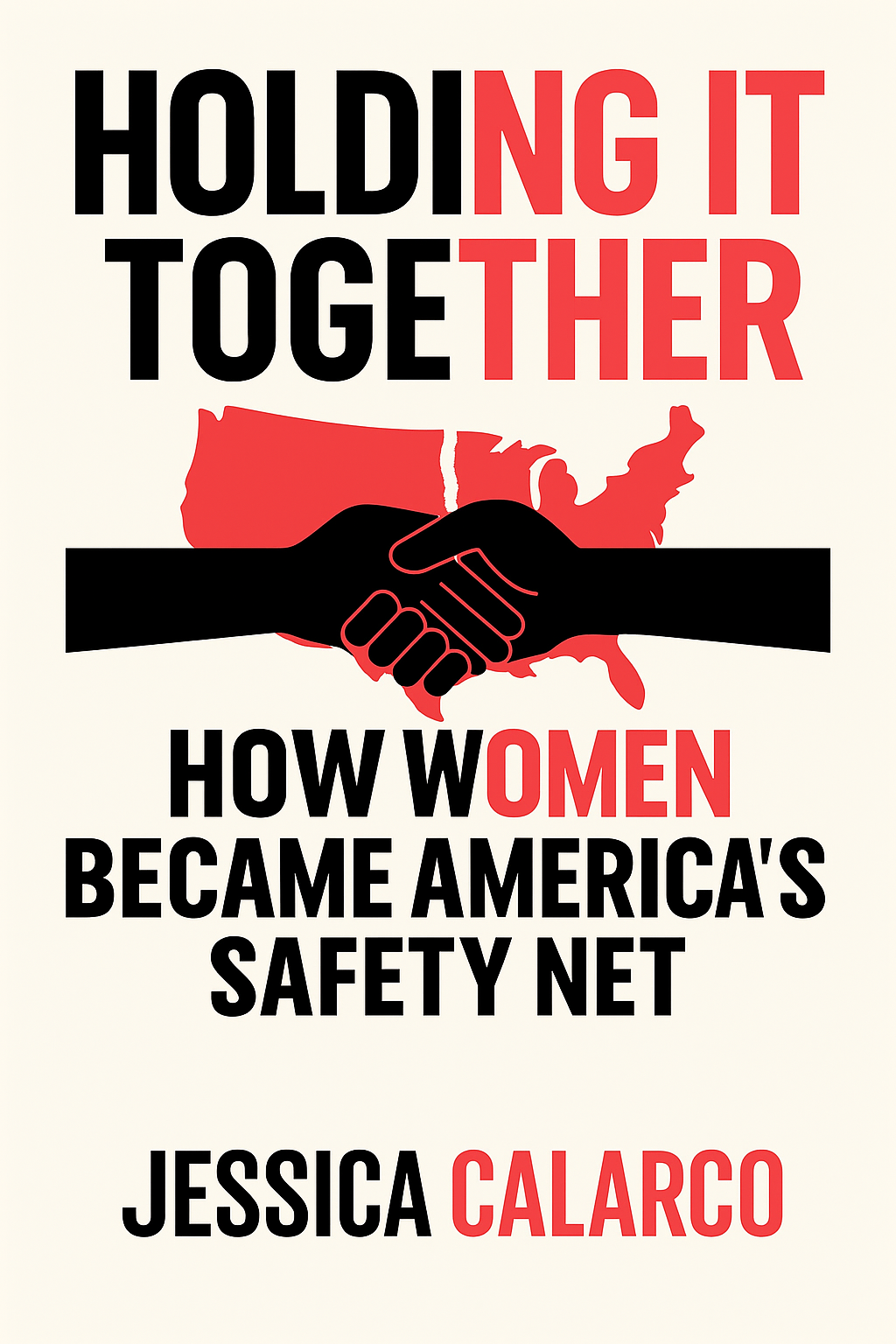
By Jessica Calarco
