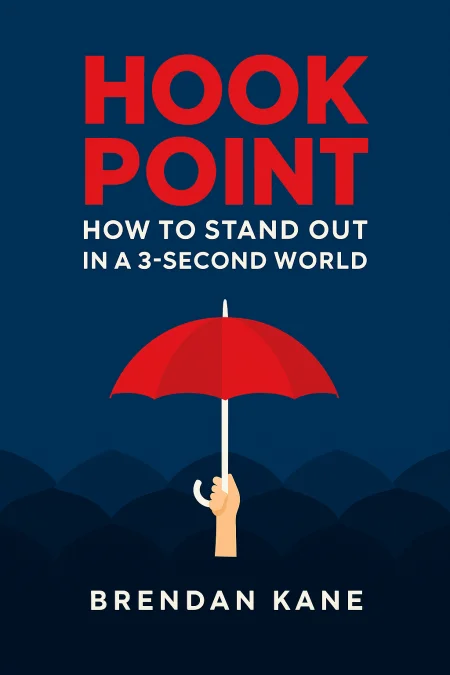
Hook Point
How to Stand Out in a 3-Second World
Book Edition Details
Summary
In a world where attention is the rarest of commodities, Brendan Kane emerges as the modern sage of the digital age with his electrifying guide, "Hook How to Stand Out in a 3-Second World." This isn't just another book on marketing; it's your ticket to capturing the fleeting gaze of a distracted audience. Kane, the mastermind behind some of the most recognizable celebrity brands, demystifies the art of crafting "hook points"—those striking, irresistible nuggets of communication that slice through the digital noise like lightning. Whether you're looking to supercharge your brand or breathe new life into your business strategy, Kane's insights are a revelation. In a landscape oversaturated with messages, he equips you with the tools to not just survive, but to thrive, by making every second count.
Introduction
In today's digital landscape, you have mere seconds to capture someone's attention before they scroll past your content forever. With over 60 billion messages flooding digital platforms daily, the challenge isn't just creating great products or services—it's getting noticed in the first place. Whether you're building a personal brand, launching a startup, or growing an established business, your success hinges on one critical skill: the ability to hook your audience instantly. The modern consumer's attention span has shrunk dramatically, and traditional marketing approaches simply don't work anymore. What you need is a systematic approach to standing out that works both online and offline, creating magnetic moments that draw people in and compel them to learn more about what you offer.
Craft Powerful Hook Points That Capture Attention
A Hook Point is your secret weapon in the battle for attention—it's a compelling combination of text, concept, personality, or format designed to stop people in their tracks within three seconds or less. Think of it as your attention-grabbing headline that makes scrolling thumbs pause and curious minds lean in. Consider how Netflix transformed from a small startup into a streaming giant by mastering this principle. When Reed Hastings returned a late copy of Apollo 13 to Blockbuster and faced a $40 late fee, he didn't just get frustrated—he got inspired. Netflix's initial Hook Point was brilliantly simple: "No late fees." This wasn't just a feature; it was a solution to every movie renter's pain point. While Blockbuster focused on what they did—renting movies—Netflix focused on what frustrated customers most about the experience. This Hook Point helped Netflix capture market share rapidly because it addressed a universal problem. As they evolved, so did their hooks. Today, Netflix's Hook Points center around binge-watching original content like Stranger Things and The Crown—concepts that keep subscribers engaged for hours rather than minutes. To create your own Hook Point, start by identifying your audience's biggest frustration or deepest desire. Use the "if/then" formula: if your audience struggles with a specific problem, then your Hook Point should position you as the solution. Test multiple variations, keep them concise, and ensure they're authentic to who you are as a brand. Remember, your Hook Point doesn't need to explain everything you do—it just needs to create enough intrigue to earn the next ten seconds of someone's attention.
Master Digital Storytelling and Content Creation
Digital storytelling requires a fundamental shift from traditional narrative structures. In our three-second world, you must give away the most compelling part of your story upfront, not save it for the climax. This approach, called "giving the gag away," ensures viewers stay engaged rather than scrolling past. Derek Muller discovered this principle firsthand when creating his viral YouTube video about the black plastic balls on the LA Reservoir. Initially considering the title "Throwing Shade Balls," he pivoted to "Why Are There 96 Million Black Balls on This Lake?" after advice from fellow YouTuber MrBeast. This Hook Point created immediate curiosity—viewers had to know the answer. The video exploded to over 32 million views, demonstrating how the right Hook Point can transform good content into viral phenomena. The success wasn't accidental. Muller structured the entire video to satisfy the curiosity sparked by his Hook Point while maintaining the intrigue throughout. He understood that viral content depends on two key metrics: watch time and click-through rate. The more compelling your Hook Point, the higher your click-through rate becomes. When crafting digital content, front-load your value within the first three seconds. Use meme cards—text overlays that set expectations for your content—to promise viewers exactly what they'll gain by watching. Create visual satisfaction through proper pacing and composition. Your content should feel rewarding to consume, not like work to understand. Test different Hook Points for the same piece of content, analyze performance data, and continuously refine your approach. The digital landscape rewards creators who understand that attention is earned in seconds but sustained through genuine value delivery.
Build Authentic Connections and Provide Value
Authenticity serves as the foundation that makes your Hook Points stick and prevents them from falling flat as mere clickbait. Without genuine substance behind your attention-grabbing moments, even the most clever hooks will ultimately fail to build lasting relationships with your audience. Whitney Wolfe exemplified this principle when founding Bumble. Her Hook Point—women make the first move—wasn't just a gimmicky feature but reflected her authentic mission to empower women in dating. She genuinely believed that traditional dating dynamics needed disruption, and this authenticity resonated powerfully with her target audience. Wolfe's approach on college campuses was refreshingly honest: she spoke to sorority houses about women's right to pursue what they wanted, then offered fraternity members pizza in exchange for downloading the app where "hundreds of girls were waiting." The authenticity of Wolfe's mission transformed a simple app concept into a movement. Bumble grew to 52 million downloads and $335 million in revenue precisely because users could sense the genuine purpose behind the platform. This wasn't manufactured marketing—it was real belief translated into business success. To build authentic connections, start by clarifying your "why"—the deeper purpose that drives your work. Ask yourself what problem you're genuinely passionate about solving, not just what might be profitable. When you communicate from this authentic place, people instinctively trust you more quickly. Provide value before asking for anything in return. Share your best insights freely, help solve problems without expectation, and demonstrate your expertise through generous action rather than empty promises. Remember that authentic relationships compound over time. One genuine connection often leads to introductions, referrals, and opportunities you never could have anticipated. Focus on being useful, honest, and consistent in all your interactions, both online and offline.
Scale Your Brand and Sustain Long-Term Success
Scaling requires strategic thinking about where existing traffic already flows rather than attempting to build audiences from scratch. The most successful companies identify established platforms and communities, then position themselves strategically within those ecosystems to capture attention and redirect it toward their own objectives. YouTube's meteoric rise perfectly illustrates this principle. Rather than building video hosting infrastructure and hoping people would find them, YouTube's founders created embed codes compatible with Myspace—the dominant social platform of the time. Myspace users eagerly embedded YouTube videos on their profiles, driving massive traffic to YouTube's platform. Within less than two years, this strategy helped YouTube sell to Google for $1.65 billion. The strategy worked because YouTube provided genuine value to Myspace users while simultaneously building their own platform. They didn't compete directly with Myspace; instead, they complemented the existing user experience while capturing the overflow traffic. This approach allowed rapid scaling without the enormous costs typically associated with customer acquisition. To implement similar strategies, identify where your target audience already gathers and consumes content. Look for platforms, communities, or influencers that have already captured the attention you seek. Then develop ways to provide value within those existing ecosystems. This might involve guest appearances on popular podcasts, partnerships with established content creators, or strategic placement within existing traffic flows. Focus on building systems that allow you to test and refine your Hook Points at scale. Use social media advertising platforms to experiment with different messages and measure response rates quickly. As you discover what resonates, double down on successful approaches while continuously testing new variations. Remember that sustainable scaling requires constant evolution. What works today may not work tomorrow, so build adaptability into your systems and maintain a pipeline of fresh Hook Points to prevent audience fatigue.
Summary
In our rapidly accelerating digital world, the ability to capture and hold attention has become the fundamental skill that separates thriving businesses from struggling ones. As the landscape becomes increasingly saturated with content and competition, those who master the art of the Hook Point gain an almost unfair advantage in building meaningful connections with their audiences. The framework revealed throughout this exploration demonstrates that success isn't about having the loudest voice or the biggest budget—it's about understanding how to package your authentic value in ways that make people stop, listen, and engage. As one key insight reminds us: "People don't buy what you make, they buy what you believe." Your mission now is to identify your strongest Hook Point, test it with real audiences, and begin the iterative process of capturing attention while delivering genuine value. Start today by crafting three different Hook Points for your business or personal brand, then test which one generates the most meaningful engagement within the next 48 hours.
Related Books
Download PDF & EPUB
To save this Black List summary for later, download the free PDF and EPUB. You can print it out, or read offline at your convenience.
By Brendan Kane
