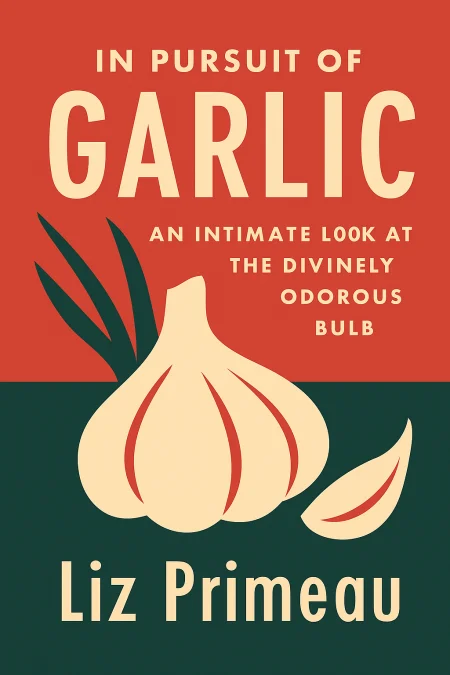
In Pursuit of Garlic
An Intimate Look at the Divinely Odorous Bulb
Book Edition Details
Summary
In the world of culinary delights, garlic reigns supreme—a bulb that has sparked both taste and mystery through the ages. "In Pursuit of Garlic" by Liz Primeau is a vibrant tapestry weaving together the allure of this pungent powerhouse. From healing ancient ailments to gracing modern gourmet dishes, garlic’s legacy is nothing short of legendary. Primeau invites readers on a flavorful journey through history, exploring garlic’s profound impact on art, medicine, and science. She shares personal anecdotes and offers savory recipes, all while unraveling the secrets behind the bulb’s mystique. This captivating narrative, rich with gardening tips and tales from garlic festivals, is a must-read for food lovers, gardeners, and history enthusiasts alike. Dive into a world where garlic is more than just an ingredient—it’s a lifestyle.
Introduction
Imagine walking into a kitchen where something magical is happening. The moment a clove of garlic meets the flat blade of a knife and gets crushed, an explosion of chemistry occurs that transforms this humble bulb into one of nature's most powerful flavor compounds. This transformation happens in just ten seconds, yet the story behind it spans ten thousand years of human civilization. From ancient Egyptian pyramid builders who were paid in garlic to modern scientists studying its cancer-fighting properties, this small, pungent bulb has been humanity's constant companion through history. What makes garlic so universally beloved that it appears in virtually every cuisine on Earth? Why do we instinctively reach for it when we feel a cold coming on, and what does modern science tell us about folk wisdom that has persisted for millennia? This exploration reveals how garlic became both a culinary cornerstone and a medical marvel, while uncovering the surprising complexity hidden within those papery white layers that most of us take for granted.
The Ancient History and Medicinal Powers of Garlic
The story of garlic begins in the harsh mountainous regions of Central Asia over ten thousand years ago, where wild ancestors developed powerful sulfur compounds not for our culinary pleasure, but as their own natural defense system. These chemical weapons protected the plants from predators and diseases, creating a survival strategy so effective that garlic spread across the ancient world faster than most civilizations could expand their borders. What makes this evolution fascinating is that garlic essentially traded its sex life for survival. While ancient garlic reproduced through both underground cloves and seeds from flowers, thousands of years of human cultivation gradually bred out the flowering ability as farmers selected plants that put all their energy into producing larger, more flavorful bulbs. The ancient world recognized garlic's power long before anyone understood the science behind it. Egyptian pyramid builders received daily rations of garlic to keep them strong and disease-free, while Roman soldiers marched across continents reeking of garlic breath because their commanders knew it helped prevent illness in their ranks. The mysterious compound responsible for garlic's medicinal properties, allicin, wasn't identified until 1944, but its effects had been documented for millennia. Ancient Chinese texts prescribed it for parasites and infections, while Sanskrit medical treatises praised garlic as a cure for everything from skin diseases to rheumatism. Modern science has validated much of this ancient wisdom, though with important caveats. Research shows that garlic demonstrates remarkable antibacterial and antifungal properties in laboratory settings, sometimes rivaling modern antibiotics in its ability to inhibit harmful microorganisms. Studies have found it effective against E. coli bacteria and various strains of yeast, while also showing promise in fighting the bacteria that cause gum disease and stomach ulcers. However, the gap between laboratory results and real-world medical applications remains significant, as many of garlic's beneficial compounds break down rapidly in the human digestive system. The cardiovascular benefits that ancient physicians attributed to garlic present a more complex picture under scientific scrutiny. While some studies suggest garlic might help lower blood pressure and reduce cholesterol, other rigorous clinical trials have found no significant effects. This doesn't diminish garlic's value as a food, but it does remind us that the difference between folk medicine and modern pharmacology lies in the careful measurement of cause and effect. What remains undisputed is garlic's remarkable journey from wild mountain plant to global phenomenon, powered by chemical defenses that humans learned to appreciate rather than avoid.
Growing and Cultivating Garlic: From Garden to Kitchen
Growing garlic transforms your understanding of this everyday ingredient from something that simply appears in grocery stores to a living plant with its own personality and needs. Unlike most vegetables that grow quickly from seed, garlic requires patience and planning, taking nine months from planting to harvest and following a growth cycle that mirrors the seasons. The process begins in fall when individual cloves are planted pointy-end up, about three inches deep, where they spend the winter developing roots while waiting for spring's warmth to trigger their upward growth into distinctive flat-bladed leaves arranged in perfect spirals. What makes garlic particularly fascinating to grow is how it reveals the difference between hardneck and softneck varieties through their dramatically different growth patterns. Hardneck garlics, which thrive in colder climates, produce curling flower stalks called scapes that perform an almost magical dance, coiling downward like question marks before straightening up to point toward the sky. These scapes must be cut off to allow the bulb to reach full size, creating an edible bonus crop that has recently gained popularity in farmers' markets. Softneck varieties, bred for milder climates, skip this theatrical display and focus their energy directly into producing bulbs with more numerous but smaller cloves. The key to successful garlic cultivation lies in understanding that this plant evolved as a survivor in harsh conditions, making it surprisingly forgiving for home gardeners who provide basic needs. Garlic requires full sun, well-draining soil enriched with organic matter, and consistent moisture during its growing season, but it can adapt to less-than-perfect conditions better than many vegetables. The plant's natural pest resistance comes from those same sulfur compounds that give it flavor, making it one of the few crops that actually repels many insects and diseases rather than attracting them. Harvesting reveals garlic's final surprise as the underground mystery is unveiled. Timing is crucial because harvesting too early yields small bulbs while waiting too long causes the protective papery skin to split, leaving bulbs vulnerable to rot. The perfect moment comes when about half the leaves have turned brown, signaling that the bulb has reached maturity but hasn't yet begun to deteriorate. After digging, the bulbs must be cured in a warm, dry, ventilated area for several weeks, allowing the outer layers to dry into the familiar papery wrapping while the flavors concentrate and develop the complexity that makes homegrown garlic so superior to store-bought alternatives.
Global Garlic Culture: Festivals and Culinary Traditions
Garlic's cultural impact extends far beyond the kitchen, manifesting in festivals and celebrations that reveal how deeply this humble bulb has embedded itself in human society worldwide. The Gilroy Garlic Festival in California exemplifies how garlic can transform an entire community, turning a small agricultural town into an international destination that attracts over 100,000 visitors annually for three days of garlic-infused everything, from ice cream to bread to elaborate cooking competitions. This festival represents the American approach to garlic celebration, big, bold, and commercial, where the focus is on spectacle and variety rather than tradition. Contrast this with the intimate Fête de l'Ail Rose in Lautrec, France, where the celebration centers on a single, specific variety of pink garlic that has been grown in the same region for over 500 years under strict regulations that rival wine appellations. Here, the festival becomes a meditation on terroir and tradition, where the soil, climate, and centuries of careful cultivation have created a garlic so distinctive that it commands premium prices in Parisian markets. The French celebration emphasizes quality over quantity, with ancient brotherhoods inducting new members through ritual soup tastings and community gatherings that feel more like religious ceremonies than commercial events. These contrasting approaches reflect broader cultural attitudes toward food and tradition. The global garlic trade has created complex political and economic tensions, particularly around Chinese garlic exports that have disrupted local industries worldwide through aggressive pricing strategies. What started as simple agricultural trade has evolved into international disputes involving tariffs, smuggling operations, and accusations of market manipulation that have forced governments to choose between protecting domestic farmers and providing cheap food to consumers. The cultural significance of garlic varies dramatically across societies, from Mediterranean and Asian cuisines that embrace it as a fundamental flavor building block to Northern European traditions that historically viewed it with suspicion as peasant food. Yet even in cultures where garlic was once scorned, changing immigration patterns and global food movements have gradually shifted attitudes. The transformation of North American garlic appreciation from the immigrant neighborhoods where it first found acceptance to mainstream adoption illustrates how food can serve as a bridge between cultures, gradually breaking down prejudices through the simple act of shared meals. Today's garlic festivals worldwide celebrate not just a vegetable, but the human capacity to overcome cultural boundaries through the universal language of flavor.
Cooking with Garlic: Techniques, Varieties, and Recipes
Understanding how to cook with garlic properly requires grasping the crucial relationship between preparation method and flavor outcome, because garlic literally creates its signature taste through violence. When garlic tissue is damaged by crushing, chopping, or pressing, two separate compounds stored in different parts of the cell suddenly combine to create allicin, the compound responsible for garlic's distinctive aroma and much of its health benefits. This chemical reaction happens within ten seconds of cell damage, meaning that how you handle garlic in those critical moments determines both its flavor intensity and therapeutic value. Raw garlic delivers maximum impact and health benefits but requires careful consideration of amount and application because its intensity can overwhelm dishes and digestive systems alike. The key lies in understanding that raw garlic's power diminishes when exposed to acids like vinegar or lemon juice, and disappears entirely when subjected to high heat for extended periods. This knowledge transforms cooking strategy, suggesting techniques like adding minced raw garlic to finished soups or sauces for maximum benefit, or creating compound preparations where raw and cooked garlic work together to provide both immediate punch and mellow background flavor. The explosion of garlic varieties now available to home cooks has revolutionized what was once a simple ingredient choice into a complex landscape of flavors and characteristics. Rocambole varieties offer sweet, complex flavors that shine when used raw, while Porcelain types pack more heat and maintain their intensity even when cooked. Understanding these differences allows cooks to match garlic variety to preparation method, using milder varieties for raw applications and stronger types for long-cooked dishes where some intensity will be lost to heat. Modern garlic trends reflect both genuine culinary innovation and marketing-driven novelty, from the recent popularity of garlic scapes as a delicacy to the emergence of fermented black garlic with its sweet, molasses-like complexity. While some trends represent genuine improvements in how we use this ancient ingredient, others remind us that the fundamental appeal of garlic lies in its ability to enhance other flavors rather than dominate them. The most successful garlic cooking acknowledges both the science of its chemistry and the art of balancing its intensity, creating dishes where garlic's presence enhances rather than overwhelms the overall flavor experience.
Summary
The story of garlic reveals how a simple plant's chemical defense mechanisms became humanity's culinary and medicinal treasure, demonstrating that the most profound relationships between humans and nature often develop through our willingness to embrace rather than avoid intensity. From ancient pyramid builders to modern cancer researchers, each generation has discovered new dimensions of garlic's power while building upon wisdom accumulated over millennia. What questions might arise if we applied similar curiosity and patience to other overlooked elements of the natural world around us? How might our understanding of nutrition and medicine evolve if we continued to bridge the gap between traditional knowledge and scientific investigation? This exploration serves as an ideal starting point for readers interested in food history, ethnobotany, or the fascinating intersections between culture, agriculture, and human health.
Related Books
Download PDF & EPUB
To save this Black List summary for later, download the free PDF and EPUB. You can print it out, or read offline at your convenience.
By Liz Primeau
