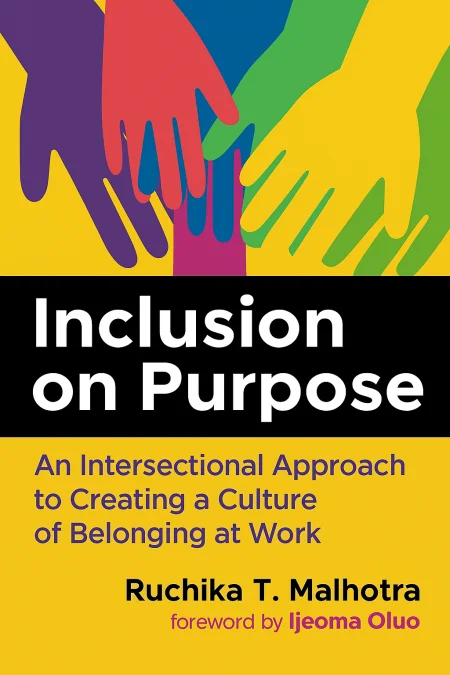
Inclusion on Purpose
An Intersectional Approach to Creating a Culture of Belonging at Work
byIjeoma Oluo, Ruchika T. Malhotra
Book Edition Details
Summary
In a world where the buzzwords "diversity" and "inclusion" often echo without action, Ruchika Tulshyan's "Inclusion on Purpose" stands as a clarion call for real change. This transformative guide doesn't just spotlight the systemic hurdles faced by women of color in the workplace; it challenges leaders to dismantle them with deliberate, impactful strategies. Tulshyan dismantles the myth of a "level playing field," advocating for bold moves beyond mere lip service—it's time to embrace "culture add" over "culture fit," to ensure that every voice not only joins the chorus but leads it. Here, inclusion is a practiced discipline, not a passive promise, offering a blueprint for workplaces that don't just survive on diversity but thrive because of it. This book is a must-read for those ready to make inclusion a relentless pursuit rather than a reluctant afterthought.
Introduction
Modern workplaces continue to perpetuate systemic barriers that prevent women of color from advancing to leadership positions, despite decades of diversity initiatives and corporate commitments to equality. The persistent underrepresentation of women of color in executive roles reveals a fundamental flaw in how organizations approach inclusion—treating it as an optional add-on rather than an essential leadership competency. This analysis challenges the prevailing narrative that places responsibility on individual women to "lean in" or overcome imposter syndrome, instead examining how institutional biases and everyday exclusionary practices create concrete barriers to advancement. The intersectional framework employed here demonstrates why generic diversity efforts often fail women of color, who face compounded discrimination based on both their gender and racial identities. Rather than relying on unconscious bias training or surface-level cultural initiatives, the argument centers on deliberate, purpose-driven inclusion practices that require leaders to actively dismantle existing power structures. Through examining both individual behavioral changes and organizational systemic reforms, this exploration reveals how creating psychologically safe environments for women of color ultimately benefits all employees while driving innovation and organizational success.
The Intersection of Gender and Race in Workplace Exclusion
The foundational argument establishes that women of color experience fundamentally different workplace challenges than either white women or men of color due to the unique intersection of gender and racial discrimination. While white women may face a glass ceiling, women of color confront what researchers term a "concrete ceiling"—a nearly impermeable barrier that combines racial bias with gender discrimination to create particularly hostile work environments. Statistical evidence demonstrates this compounding effect clearly: while white women represent 31% of entry-level corporate positions and 18% of C-suite roles, women of color comprise 18% of entry-level positions but only 4% of executive leadership. This dramatic drop-off cannot be explained by pipeline issues or individual choices, but rather reflects systemic exclusion that begins with recruitment and continues through every stage of career advancement. The concept of "prove-it-again" bias illustrates how women of color must repeatedly demonstrate their competence in ways that white male colleagues never face. Unlike their white counterparts, who benefit from assumptions of capability, women of color encounter constant questioning of their qualifications, ideas being ignored until repeated by white colleagues, and exclusion from informal networks where real business happens. These seemingly small incidents accumulate into significant career impediments that no amount of individual resilience can overcome. The intersectional analysis reveals why traditional diversity programs focusing solely on gender parity often inadvertently benefit white women while leaving women of color behind. Without explicitly addressing how racism compounds sexism, well-intentioned inclusion efforts can actually widen the gap between white women and women of color, creating new hierarchies rather than dismantling existing ones.
Individual Leadership Behaviors for Inclusive Purpose
Effective inclusive leadership requires a fundamental shift from unconscious bias awareness to conscious, deliberate action—what the framework terms "inclusion on purpose." This approach demands that leaders with privilege actively use their positions to create opportunities for women of color rather than waiting for organic change to occur. The BRIDGE framework provides a structured approach: Be uncomfortable with difficult conversations about race and privilege, Reflect on blind spots and missing perspectives, Invite feedback from marginalized team members, avoid Defensiveness when confronted with bias, Grow from inevitable mistakes, and Expect that meaningful change takes considerable time. Empathy development emerges as a crucial leadership skill, particularly for white leaders who may lack personal experience with discrimination. However, this empathy must extend beyond surface-level cultural awareness to deep understanding of how systemic barriers affect women of color's daily work experiences. Leaders must recognize that the same workplace that feels inclusive to them may be experienced as hostile by colleagues facing different stereotypes and expectations. The concept of "making room and getting out of the way" challenges traditional leadership models that center individual achievement. Instead, inclusive leaders actively redistribute speaking time in meetings, credit women of color's ideas explicitly, sponsor them for high-visibility projects, and disrupt patterns of interruption or idea appropriation. This requires leaders to examine their own habits of recognition and advancement, often revealing unconscious patterns of favoring those who remind them of themselves. Most critically, inclusive leadership demands courage to address exclusionary behavior when witnessed, even when the perpetrator is well-liked or high-performing. The complicity of well-intentioned bystanders often causes more lasting damage than overt discrimination, as it signals to women of color that they cannot expect support even from sympathetic colleagues. True allyship requires using privilege to amplify marginalized voices and challenge systems that maintain existing hierarchies.
Organizational Systems and Structural Change Requirements
Individual behavioral change alone cannot address systemic exclusion without corresponding organizational reforms. The ADAPT framework outlines essential structural changes: Analyze employee engagement data disaggregated by race and gender to identify specific pain points, Develop explicit codes of conduct that define acceptable behavior and consequences, Accept and learn from failure rather than punishing risk-taking, Propel and fund employee resource groups as strategic business partners, and establish Team tenets that prioritize inclusion when competing priorities arise. Hiring practices require fundamental redesign to eliminate culture fit assessments that systematically exclude women of color. The emphasis on finding candidates who would be comfortable "stuck in an airport" with existing team members perpetuates homogeneity by prioritizing social comfort over diverse perspectives and capabilities. Instead, organizations must focus on culture add—actively seeking candidates who bring different experiences and viewpoints that challenge existing assumptions. Compensation equity demands immediate attention through comprehensive pay audits that examine both equal pay for equal work and access to high-paying roles. The data reveals that while pay gaps for identical positions are relatively easy to correct, the larger issue involves women of color being systematically excluded from lucrative assignments and advancement opportunities. Without addressing both dimensions of pay equity, organizations perpetuate wealth gaps that extend far beyond individual careers. Performance evaluation systems must be redesigned to eliminate vague feedback that disproportionately harms women of color while providing concrete, actionable guidance for improvement. The Situation-Behavior-Impact framework ensures that feedback focuses on specific actions and outcomes rather than subjective assessments of cultural fit or leadership presence—concepts that often reflect bias rather than job performance.
Future Technology and Global Implementation Challenges
The technology industry's profound influence on global workplace culture makes inclusive leadership within tech companies particularly crucial for societal change. The homogeneity of technology leadership—dominated by white and Asian men—has created products and platforms that perpetuate bias at massive scale, from facial recognition systems that fail to detect darker skin tones to algorithms that discriminate against women and minorities in hiring and lending decisions. Women of color in technology face unique challenges that compound traditional workplace exclusion with industry-specific barriers. Despite often having superior technical qualifications, they encounter stereotypes that position them as competent individual contributors but lacking leadership potential. The combination of sexism and racism creates environments where their ideas are systematically devalued, their contributions minimized, and their career advancement blocked despite demonstrated excellence. Global implementation of inclusive practices requires cultural humility rather than one-size-fits-all solutions. Organizations must understand that professionalism standards developed in Western contexts often disadvantage employees from different cultural backgrounds, creating new forms of exclusion even within diversity initiatives. Effective global inclusion strategies must identify local power structures and marginalized groups rather than assuming universal applicability of Western diversity frameworks. The future of inclusive technology depends on centering women of color not just as users but as designers, leaders, and decision-makers who can identify and prevent harmful bias before it scales globally. This requires fundamental changes to venture capital funding patterns, leadership development programs, and product development processes that currently exclude the perspectives most needed to create equitable technological solutions.
Summary
The transformation of workplace culture from exclusionary to truly inclusive requires acknowledging that current systems were designed by and for a narrow demographic, creating structural barriers that no amount of individual effort can overcome. Meaningful progress demands both personal commitment from leaders to use their privilege actively and systemic organizational changes that redistribute power and opportunity. The evidence demonstrates conclusively that when organizations center the experiences of their most marginalized employees—particularly women of color—the resulting changes benefit everyone by creating more innovative, psychologically safe, and effective work environments. This approach offers a practical roadmap for leaders ready to move beyond symbolic gestures toward substantive transformation of workplace culture.
Related Books
Download PDF & EPUB
To save this Black List summary for later, download the free PDF and EPUB. You can print it out, or read offline at your convenience.
By Ijeoma Oluo
