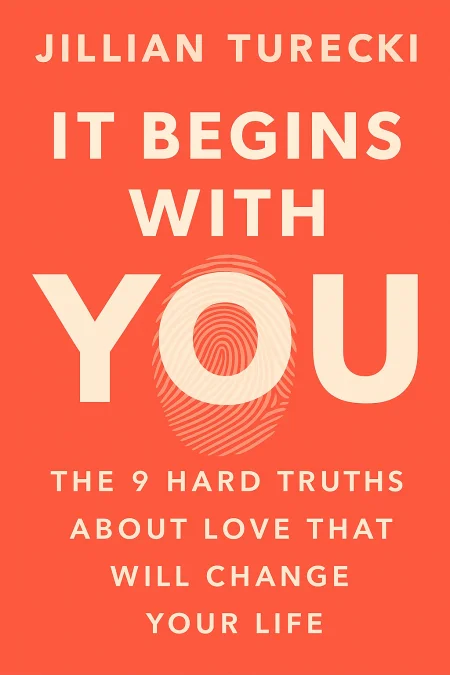
It Begins with You
The 9 Hard Truths About Love That Will Change Your Life
Book Edition Details
Summary
In the dance of love and self-discovery, the first step often begins within. Jillian Turecki, the voice behind a beloved relationship podcast, invites you to uncover the nine transformative truths that forge genuine connections. Her debut book, *It Begins with You*, is not just a guide; it's a call to arms for anyone yearning for deeper relationships. With a blend of compassionate insight and unyielding honesty, Turecki challenges readers to confront the battlefield of the mind, distinguish between lust and love, and embrace self-worth as the cornerstone of meaningful intimacy. Through therapeutic strategies and real-life stories, she maps out a path toward healing old wounds and crafting relationships that resonate with authenticity and joy. Are you ready to choose yourself and find the love you truly deserve?
Introduction
Sarah stared at her phone screen, watching the "delivered" status under her last three messages to Jake. Three weeks had passed since their last meaningful conversation, and she found herself caught in that familiar spiral of overthinking every interaction, replaying their last date for clues about what went wrong. The pattern was all too familiar, having repeated itself with Michael before Jake, and with David before Michael. Each relationship started with such promise, such intense connection, only to dissolve into confusion, mixed signals, and ultimately, heartbreak. What Sarah didn't realize was that she was living out a story shared by millions of people around the world. Despite reading countless relationship advice articles, attending therapy sessions, and having deep conversations with friends about dating strategies, she kept finding herself in the same emotional patterns. The common denominator in all her relationships wasn't the men she chose, but something much more fundamental: her relationship with herself. This book explores the profound truth that transforming our love lives begins not with finding the perfect partner, but with understanding and healing ourselves. Through real stories of individuals who broke free from destructive patterns, we'll discover how our deepest fears about worthiness, our unexamined beliefs about love, and our unhealed relationships with our parents continue to shape our romantic experiences. The journey ahead offers not just insight into why we struggle in love, but practical wisdom for creating the secure, fulfilling relationships we truly deserve.
The Foundation: Taking Responsibility for Your Love Life
Jennifer had been through it all by age thirty-seven. Three serious relationships, each ending with betrayal and infidelity. Her friends had started to joke, though not unkindly, that she had terrible luck with men. "All men cheat," had become her mantra, delivered with the weariness of someone who felt she had empirical evidence to support her claim. When she met Tony, a kind father who was transparent about his daily activities and eager to build something real, Jennifer should have felt hopeful. Instead, she felt terrified. Within weeks of their relationship becoming official, Jennifer transformed into someone she barely recognized. She would scroll through Tony's social media looking for evidence of other women. When he mentioned female colleagues, her stomach would twist into knots. She began creating elaborate scenarios in her mind about his potential betrayals, building cases against him based on the slightest delays in his text responses. During their couples sessions, she would present these concerns as fact, watching Tony's confusion and hurt as he tried to defend himself against accusations that had no basis in his actual behavior. The breakthrough came when Jennifer was asked to examine her pattern more closely. She made a list of all the red flags she had ignored in her previous relationships, the warning signs that had been there from the beginning. The list filled an entire page: alcoholism, histories of cheating, inability to maintain jobs, anger management issues. These weren't secrets that had been hidden from her. They were obvious problems she had chosen to overlook because she was so desperate to be loved. Jennifer realized that her story wasn't about all men being untrustworthy. It was about her consistently choosing untrustworthy men and then being shocked when they behaved exactly as they always had. This revelation represents the first and most crucial truth about transforming our love lives: it begins with us. Every relationship we've ever had shares one common element, and that element is ourselves. This isn't about self-blame or shame, but about reclaiming our power. When we take responsibility for our patterns, our choices, and our contributions to relationship dynamics, we move from feeling like victims of circumstance to becoming the architects of our own love stories.
Breaking Patterns: From Mind Battles to Authentic Love
Kelly's marriage was slowly dying, and she was convinced she knew exactly why. Her husband Mike didn't validate her feelings. He didn't understand her stress. He didn't care enough to support her when she felt overwhelmed. During their son's fifth birthday party, as Kelly orchestrated every detail with military precision, she watched Mike's relaxed demeanor with growing resentment. While she managed decorations, coordinated activities, and ensured everything ran smoothly, he seemed completely unaffected by the chaos that was consuming her mind. The story Kelly told herself was compelling and seemed supported by evidence. Mike's suggestion that she "just relax" when she expressed feeling overwhelmed felt dismissive. His failure to jump in and take control when she was clearly struggling seemed like proof that he didn't truly care about her wellbeing. In her mind, a loving husband would intuitively understand her needs and rush to meet them without being asked. His failure to do so could only mean one thing: he didn't love her the way she deserved to be loved. But Kelly's story was missing crucial pieces. She had never directly asked Mike for specific help. She had never explained what kind of support she needed when feeling overwhelmed. Instead, she had created an elaborate mental narrative where Mike was supposed to read her mind, anticipate her needs, and respond perfectly to emotional cues she wasn't even consciously sending. When reality failed to match her unspoken expectations, she interpreted this as evidence of his indifference rather than recognizing her own role in the communication breakdown. The conversation that saved Kelly's marriage began with a simple question: what if Mike's behavior wasn't about not caring, but about feeling overwhelmed himself by her intensity? What if his suggestions to relax weren't dismissive but were his genuine attempts to help her feel better? When Kelly finally approached Mike with curiosity instead of accusation, sharing her fears about feeling unloved rather than her certainties about his failures, everything changed. Mike revealed his own feelings of inadequacy, his confusion about how to help someone who seemed to reject every attempt at support he offered. Our minds can become battlefields where we fight wars against imaginary enemies, creating elaborate stories that justify our fears and resentments. But relationships thrive when we question our narratives, communicate our real feelings instead of our interpretations, and remember that the person we love is not the villain in our story.
Building Boundaries: Self-Worth and Truth in Relationships
Emma was the epitome of the "cool girl" at work, making decisive choices and advocating fiercely for her projects. But the moment she went on a date, she became someone else entirely. When men suggested restaurants she disliked, she'd enthusiastically agree. When they chose activities that bored her, she'd pretend to be fascinated. If they kissed her in ways that felt uncomfortable, she'd act as though it was exactly what she wanted. Emma had convinced herself that having needs made her needy, and being needy made her unlovable. This pattern had followed Emma through a series of casual relationships that left her feeling hollow and unfulfilled. She would attract men who seemed interested initially, but who inevitably became distant and uncommitted. Emma interpreted this as evidence that she needed to be even more accommodating, even more agreeable, even less demanding. She was trapped in a cycle where her attempts to be lovable were actually making her impossible to truly know or connect with. The transformation began when Emma was challenged to consider a radical possibility: what if her lack of authenticity wasn't making her more attractive, but less? What if men were pulling away not because she was too difficult, but because she was too artificial? The very qualities that made her successful professionally, her ability to advocate for what she believed in and make her needs known, were exactly what was missing from her romantic life. Emma's first assignment was terrifying in its simplicity: for two weeks, she would wear minimal makeup and casual clothes, representing her authentic preferences rather than what she thought men wanted to see. She would express her actual restaurant preferences instead of deferring to her dates' choices. She would share her genuine interests instead of mirroring theirs. The results were initially uncomfortable but ultimately revelatory. Some men lost interest, but Emma realized these were men who weren't truly interested in her anyway. Others responded with increased curiosity and engagement, drawn to the authenticity that had been missing from her previous interactions. The journey from people-pleasing to authenticity requires courage, but it's the only path to genuine connection. When we hide our true selves behind masks of agreeability, we rob both ourselves and our potential partners of the opportunity for real intimacy. Speaking our truth and setting boundaries isn't about being difficult; it's about being real.
Choosing Yourself: Independence and Making Peace with the Past
Amanda had spent over a year in an emotional limbo with Peter, a separated father who spoke constantly about his "toxic" wife and his dreams of freedom, yet never seemed to take concrete steps toward divorce. Amanda found herself in the role she knew well: the patient, understanding woman who would heal this wounded man with her stability and love. She canceled plans to be available when he needed to talk, offered endless emotional support during his "difficult" separation, and convinced herself that her unconditional care would eventually inspire him to choose her over his complicated circumstances. The pattern was familiar because it had defined Amanda's approach to love throughout her adult life. She was drawn to men who needed rescuing, who had compelling stories of hardship that explained their inability to fully commit. In her mind, she wasn't choosing unavailable men; she was choosing men with potential who just needed the right woman to help them become who they were meant to be. Amanda had unconsciously made herself indispensable to partners who were going through crises, believing that if she could just be supportive enough, patient enough, and understanding enough, they would realize she was exactly what they needed. But Amanda's story had deeper roots. After her father's death, she had felt lost and directionless in her own life. Her work in sales felt meaningless, and she had abandoned her dream of becoming a therapist when she met Peter. Focusing on his problems became a way to avoid confronting her own lack of direction. His uncertainty and drama provided a distraction from the uncomfortable reality that she had no idea what she wanted from her own life. The breakthrough came not from ending the relationship with Peter, but from choosing to pursue her own dreams regardless of where that relationship led. Amanda enrolled in a master's program in psychology while keeping her day job, slowly rebuilding her sense of purpose and identity. As her life became more meaningful on its own terms, her need for Peter's part-time attention diminished. When she finally ended their relationship, it wasn't out of anger or frustration, but from a place of clarity about what she deserved. True self-love isn't about learning to be alone; it's about learning to choose what's best for us even when it's difficult. When we stop trying to convince others to love us and start building lives we love, we naturally attract people who are capable of the same level of commitment to growth and authenticity.
Summary
The journey toward healthy love is ultimately a journey toward ourselves. Through these stories of transformation, we see that our relationship struggles rarely stem from bad luck or a shortage of good people to love. Instead, they arise from patterns we've unconsciously developed to protect ourselves from the very vulnerability that makes real intimacy possible. Whether we're fighting imaginary battles in our minds, hiding behind masks of false agreeability, or trying to heal others instead of ourselves, we're often running from the fundamental truth that love begins with self-acceptance. The path forward requires courage to look honestly at our contributions to relationship dynamics, to speak our truth even when it feels risky, and to choose what's best for us even when it means walking away from familiar but unfulfilling situations. It means recognizing that we can't convince anyone to love us, but we can become the kind of people who naturally attract healthy, available partners. Most importantly, it means understanding that no one is coming to save us from ourselves, and that's actually the most empowering news of all. When we take responsibility for our own happiness, healing, and growth, we stop being victims of our past and become architects of our future. The relationship we build with ourselves becomes the foundation for every other relationship we'll ever have, and that foundation can be stronger than any we've ever imagined.
Related Books
Download PDF & EPUB
To save this Black List summary for later, download the free PDF and EPUB. You can print it out, or read offline at your convenience.
By Jillian Turecki
