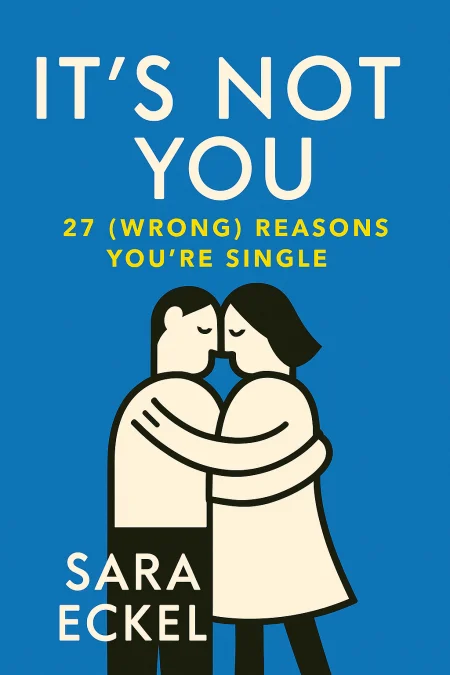
It’s Not You
27 (Wrong) Reasons You’re Single
Book Edition Details
Summary
Ever felt like the world is shouting all the wrong reasons for your singleness? "It's Not You" flips the script on traditional dating advice, offering a refreshing lens through which single women can view their relationship status. With wit and wisdom, Eckel dismantles the tired clichés that have long plagued the dating scene—like the myths of pickiness, neediness, and independence being barriers to love. Grounded in modern psychological insights and real-life stories, this book champions self-acceptance and the radical idea that you don't need to change to find love. For anyone weary of the conventional marriage narrative, this guide is your rallying cry to embrace who you are, just as you are.
Introduction
The narrative surrounding singlehood, particularly for women past a certain age, has become a labyrinth of contradictory explanations and prescriptive solutions. Society offers an endless catalog of reasons why someone remains unpartnered—too picky, too desperate, too independent, too needy—each diagnosis accompanied by its corresponding cure. This creates a peculiar phenomenon where intelligent, accomplished individuals find themselves constantly defending their relationship status or frantically attempting self-renovation projects designed to make them "marriage-ready." The fundamental premise underlying these explanations rests on a troubling assumption: that being single represents a personal failure requiring correction. This perspective transforms what might simply be a matter of circumstance into a character defect, forcing singles to navigate not only the practical challenges of dating but also the psychological burden of perceived inadequacy. The cultural obsession with pathologizing singlehood reveals deeper anxieties about autonomy, success, and what constitutes a meaningful life. Rather than accepting these explanations at face value, a more rigorous examination reveals how many of these supposed "truths" about single people crumble under scrutiny. The evidence suggests that factors beyond personal deficiency—timing, demographics, pure chance—play far larger roles in relationship formation than the self-help industrial complex would have us believe. This investigation challenges readers to question not only the validity of these cultural myths but also the underlying assumptions that make them seem plausible in the first place.
The Cultural Myths: Deconstructing Society's Explanations for Singlehood
Modern culture has developed an elaborate taxonomy of single-person pathologies, each more contradictory than the last. Singles are simultaneously accused of being too independent and too needy, too picky and lacking standards, too career-focused and insufficiently ambitious. These explanations share a common thread: they locate the "problem" of singlehood within the individual's psychology or behavior rather than acknowledging external factors. The persistence of these myths serves multiple social functions. For married individuals, they provide reassurance that their coupled status results from superior character or wisdom rather than luck or timing. For singles themselves, the myths offer the illusion of control—if personal defects cause singlehood, then personal improvement can cure it. This creates a massive market for relationship advice, self-help books, and transformation programs, all promising to unlock the secret to romantic success. Examining these cultural explanations reveals their internal contradictions and arbitrary nature. The same woman might be told she's "too intimidating" by one advisor and "lacks confidence" by another. A man could be simultaneously criticized for being "afraid of commitment" and "trying too hard." These shifting diagnoses suggest that the explanations themselves are post-hoc rationalizations rather than genuine insights into relationship dynamics. The mythologizing of singlehood also reflects broader cultural anxieties about changing demographics and social structures. As marriage rates decline and the average age of first marriage rises, society scrambles to explain these trends through individual psychology rather than examining structural factors like economic inequality, changing gender roles, or shifting cultural values around relationships and family formation.
The Reality Check: Evidence Against Personal Deficiency Theories
Research consistently undermines the notion that personal inadequacies primarily drive singlehood. Studies show that happily married individuals display the same neuroses, insecurities, and character flaws as their single counterparts. The idea that one must achieve psychological perfection before finding love contradicts both clinical evidence and common observation of actual couples. Marriage researcher John Gottman's longitudinal studies reveal that successful relationships depend far more on compatibility and communication patterns than on the absence of individual psychological issues. His research shows that everyday neuroses—anxiety, occasional selfishness, mood swings—have minimal impact on relationship success. Partners succeed not by eliminating their flaws but by finding someone whose quirks complement their own. Statistical analysis of marriage patterns further challenges personal deficiency theories. Women with higher education levels, greater career success, and more financial independence actually have higher marriage rates and lower divorce rates than their less accomplished peers. This directly contradicts cultural myths about career women being "too intimidating" or "too focused on work" to maintain relationships. The demographics of modern dating markets also play crucial roles that individual psychology cannot explain. In many urban areas, educational and professional imbalances create situations where accomplished women outnumber similarly accomplished men, or vice versa. Geographic mobility, changing social structures, and the decline of traditional meeting venues all influence relationship formation in ways that have nothing to do with personal worthiness or psychological readiness.
The Buddhist Alternative: Self-Compassion Over Self-Improvement
Buddhist philosophy offers a radical alternative to the endless self-improvement cycle that traps many singles. Rather than viewing singlehood as evidence of internal deficiency requiring correction, Buddhist thought suggests that the problem lies not in the circumstances themselves but in our relationship to those circumstances. The constant self-analysis and renovation projects often create more suffering than the original situation. The Buddhist concept of basic goodness posits that humans are fundamentally worthy and complete as they are. This perspective reframes the single person's situation from "what's wrong with me?" to "how can I relate skillfully to my current reality?" This shift eliminates the exhausting cycle of self-diagnosis and attempted personality reconstruction that characterizes much relationship advice. Self-compassion, as researched by psychologist Kristin Neff, provides practical tools for navigating the emotional challenges of singlehood without falling into self-improvement obsession. Rather than maintaining high self-esteem through constant achievement and comparison, self-compassion involves treating oneself with the same kindness one would show a good friend facing similar difficulties. This approach proves more psychologically sustainable than the brittle confidence required by "love yourself first" philosophies. Mindfulness practices help distinguish between primary emotional experiences—loneliness, disappointment, longing—and the secondary suffering created by judging these feelings as evidence of personal failure. When singles can experience difficult emotions without layering on shame or self-criticism, they often discover that the original feelings are quite manageable. The real pain comes from the stories we tell ourselves about what these feelings mean about our worth as human beings.
Embracing Present Reality: Living Fully While Remaining Open
The ultimate challenge for long-term singles involves learning to inhabit their current life fully while remaining open to change. This requires abandoning both the desperate search for partnership and the defensive insistence that singlehood is completely satisfying. Neither stance allows for authentic engagement with present circumstances. Living authentically as a single person means making genuine choices based on personal values and interests rather than strategic calculations about attracting partners. It means pursuing activities, friendships, and goals that have intrinsic worth rather than viewing everything through the lens of potential romantic networking. This paradoxically makes individuals more attractive precisely because they become more genuinely themselves. The practice of "holding loosely" to outcomes—wanting partnership without clinging desperately to the goal—allows for both hope and contentment. Buddhist teachings on impermanence remind us that all circumstances are temporary. Current singlehood will eventually end, either through meeting a partner or through accepting that life has taken a different direction than anticipated. Either outcome can lead to fulfillment when approached with wisdom and self-compassion. Research on happiness and life satisfaction shows that individuals who can appreciate their present circumstances while working toward desired changes report higher well-being than those who view their current situation as merely a holding pattern. This suggests that the goal should not be escaping singlehood but rather learning to live skillfully regardless of relationship status. Such individuals often find themselves better prepared for healthy partnerships when they do occur.
Summary
The elaborate mythology surrounding singlehood serves more to comfort societal anxieties than to explain actual human behavior. Most explanations for why people remain single—from psychological deficiency to lifestyle choices—crumble under careful examination, replaced by the more mundane reality of timing, demographics, and chance. The relentless focus on personal transformation as the path to partnership creates unnecessary suffering while distracting from the more fundamental work of learning to live skillfully with uncertainty. When singles abandon the exhausting project of self-renovation and instead cultivate genuine self-acceptance, they often discover that their lives are already rich and meaningful, regardless of their relationship status. The deepest insight may be that the question "what's wrong with me?" is itself the problem, not the singlehood it purports to explain.
Related Books
Download PDF & EPUB
To save this Black List summary for later, download the free PDF and EPUB. You can print it out, or read offline at your convenience.
By Sara Eckel
