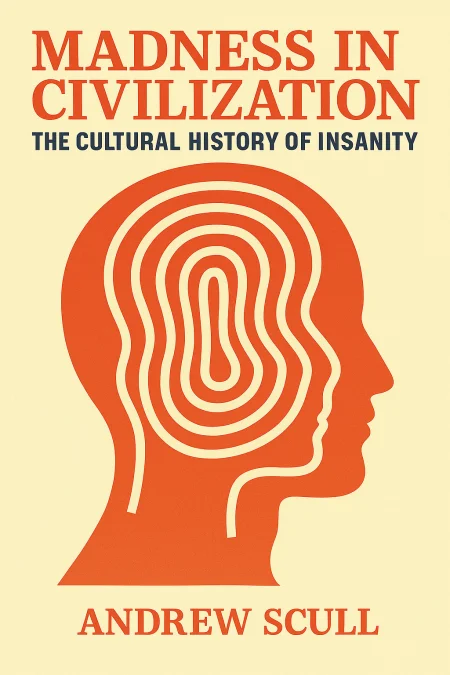
Madness in Civilization
A Cultural History of Insanity, from the Bible to Freud, from the Madhouse to Modern Medicine
Book Edition Details
Summary
In the kaleidoscope of human history, madness has been both a shadow and a muse, haunting civilizations with its elusive whispers. "Madness in Civilization" unveils the intricate dance between society and insanity, tracing an odyssey from ancient rituals to modern medicine. This vivid narrative, adorned with striking visuals, reveals how cultures have wrestled with the chaos of the mind, often casting the afflicted into the shadows or elevating them to mythic status. Through the ages, from biblical tales to Freud's analyses, the book delves into the myriad interpretations and treatments—exorcisms, asylums, and beyond. It captures the essence of how madness has not only challenged but also inspired creators across all art forms, leaving an indelible mark on the human psyche. Written by a distinguished historian, this work is a testament to our enduring struggle and fascination with the enigma of unreason.
Introduction
In the shadowy corridors of London's Bethlem Hospital in 1676, visitors paid a penny to gawk at the mad, chained and naked, as entertainment for their Sunday afternoon. Yet within two centuries, these same afflicted souls would find themselves in purpose-built asylums, treated by medical professionals who claimed scientific understanding of their condition. This dramatic transformation reveals one of history's most profound shifts in human understanding: how societies have grappled with the mystery of madness across millennia. The story of madness illuminates three crucial questions that continue to shape our world today. First, how have different civilizations determined who belongs within the boundaries of acceptable behavior, and who must be cast out? This reveals not just medical progress, but the evolution of power, social control, and our deepest anxieties about human nature itself. Second, why have treatments for mental illness so often reflected the broader values and fears of their time rather than genuine therapeutic insight? From exorcism to lobotomy, the history of psychiatric treatment exposes uncomfortable truths about how societies project their own pathologies onto the vulnerable. Finally, what can this sweeping historical perspective teach us about our current moment, when millions worldwide consume psychiatric medications and mental health has become a dominant cultural discourse? This exploration speaks to anyone seeking to understand how we define normalcy, manage human difference, and evolve our approaches to suffering. Whether you're interested in medical history, social evolution, or simply the human condition, this narrative reveals how our ancestors confronted one of humanity's most enduring mysteries.
Ancient to Medieval: Divine Madness and Sacred Healing
The ancient world understood madness through the lens of the supernatural, where gods and demons held sway over human minds. In Hebrew tradition, King Saul's descent into madness served as a cautionary tale of divine retribution, his violent rages and paranoid suspicions attributed to an evil spirit sent by the Lord. Only David's harp could temporarily soothe the tormented king, offering music as humanity's first recorded therapy for mental distress. Yet these same traditions revered prophets like Ezekiel, whose visions and ecstatic utterances might today earn a psychiatric diagnosis, reflecting a worldview where the line between divine inspiration and madness remained deliberately blurred. Greek civilization began humanity's first systematic challenge to supernatural explanations. Hippocrates boldly declared that epilepsy, the so-called "sacred disease," had nothing sacred about it, proposing instead that mental disorders arose from imbalances in bodily humors: blood, phlegm, yellow bile, and black bile. This revolutionary medical model, refined by Galen and other Roman physicians, represented the first attempt to understand madness through observation rather than superstition. Treatment involved restoring balance through bloodletting, purging, and dietary changes, establishing medicine's initial claim to jurisdiction over conditions previously belonging to priests. The rise of Christianity fundamentally complicated this emerging medical understanding. Medieval Europe increasingly viewed madness through the lens of sin and salvation, seeing mental disturbance as either divine punishment for moral failings or, paradoxically, as holy suffering that might bring one closer to God. Monasteries became the primary institutions caring for the mad, offering sanctuary while reinforcing the notion that madness was fundamentally a spiritual rather than medical condition. Islamic civilization preserved and expanded upon Greek medical knowledge, with physicians like Al-Razi making sophisticated observations about mental illness while maintaining dedicated hospital wards for the insane. This ancient foundation established competing frameworks that would echo through centuries: madness as divine communication, medical condition, or spiritual affliction. The tension between religious and medical explanations created a pattern that would persist throughout history, as each era struggled to balance supernatural beliefs with emerging scientific understanding, setting the stage for more dramatic transformations to come.
Enlightenment to Victorian Era: Asylum Rise and Moral Treatment
The eighteenth century transformed madness from a spiritual affliction into a medical condition, as Enlightenment thinkers embraced naturalistic explanations for human behavior. The English physician George Cheyne cleverly rebranded nervous disorders as "the English Malady," arguing that such afflictions were actually marks of superior civilization and refined sensibility. Rather than shameful weaknesses, conditions like hysteria and hypochondria became fashionable ailments among the educated classes, who could afford to cultivate their delicate nervous systems, fundamentally altering the social meaning of mental distress. This period witnessed the emergence of "moral treatment," pioneered at institutions like the York Retreat in England and refined by Philippe Pinel in Revolutionary France. Pinel's dramatic gesture of removing chains from patients at the Bicêtre hospital became legendary, symbolizing enlightenment values triumphing over medieval barbarism. This revolutionary approach abandoned the violence traditionally used to control the mad, instead employing kindness, routine, and psychological persuasion to encourage self-restraint. The discovery that lunatics could be managed through environmental manipulation rather than physical coercion represented a profound shift in understanding human nature and the possibility of cure. The success of moral treatment sparked an unprecedented wave of asylum building across Europe and North America. Reformers like Dorothea Dix documented horrific conditions in existing madhouses and jails, using these revelations to build support for purpose-built asylums operated according to humanitarian principles. The asylum became a symbol of civilized society, with advocates arguing that no nation could claim to be truly enlightened without providing humane care for its mentally ill citizens. Early superintendents reported cure rates of 80 or 90 percent, creating a "cult of curability" that justified massive public expenditure on institutional construction. Yet the asylum system contained inherent contradictions that would ultimately undermine its humanitarian goals. The same institutions designed to cure madness through kindness became overcrowded warehouses for the chronically ill, as the promise of cure gave way to the reality of custodial care. The medical profession's successful claim to authority over mental illness transformed madness from a human condition requiring compassion into a disease requiring expert treatment, establishing the foundation for modern psychiatric authority while simultaneously creating the conditions for future institutional failures.
Modern Revolution: Psychoanalysis, Drugs, and Deinstitutionalization
The twentieth century erupted with therapeutic optimism that would repeatedly crash against the stubborn realities of mental illness. Sigmund Freud's psychoanalytic revolution promised to unlock the mysteries of the unconscious mind, transforming madness from meaningless symptom into meaningful communication about repressed memories and unconscious conflicts. This "talking cure" gained particular traction in America, where it aligned with cultural values of individual self-improvement and psychological insight, fundamentally reshaping how society understood the relationship between mind and behavior. Simultaneously, biological psychiatry pursued more dramatic interventions through a parade of desperate remedies: insulin coma therapy, prefrontal lobotomy, and electroshock treatment. Each promised miraculous cures for conditions that had previously seemed hopeless, with physicians like Walter Freeman touring the country performing ice-pick lobotomies, convinced they were liberating patients from the prison of their own minds. The introduction of chlorpromazine in 1954 seemed to vindicate biological approaches, as this first "antipsychotic" medication could calm agitated patients without rendering them unconscious, leading many to proclaim the arrival of psychiatric penicillin. The final decades witnessed the most radical transformation since the rise of the asylum: deinstitutionalization. The mass discharge of psychiatric patients from state hospitals proceeded with breathtaking speed, as hospital census plummeted from over 550,000 in 1955 to fewer than 50,000 by 2010. This dramatic shift reflected converging forces: new psychotropic medications that promised outpatient management, fiscal pressures on state budgets, civil rights concerns about involuntary confinement, and genuine belief that community care would prove more humane and effective than institutional warehousing. Yet the reality proved far more complex than reformers anticipated. Many discharged patients found themselves homeless, cycling through emergency rooms, jails, and substandard boarding houses, as the promised community mental health centers materialized slowly and incompletely. The "revolving door" phenomenon emerged alongside growing concerns about diagnostic inflation and pharmaceutical industry influence. Today's mental health landscape reflects these unresolved tensions, as advances in neuroscience compete with awareness of social determinants, reminding us that the medicalization of human suffering remains an ongoing experiment with uncertain outcomes.
Summary
The history of madness reveals a fundamental tension that continues to shape our responses to mental illness today: the conflict between our desire to help those who suffer and our need to protect ourselves from what we perceive as threatening or incomprehensible. This tension has manifested differently across cultures and centuries, but its persistence suggests something essential about the human condition itself—our simultaneous capacity for compassion and cruelty, our yearning for scientific understanding and our susceptibility to prejudice and fear. Perhaps most importantly, this historical journey demonstrates that our current approaches to mental illness are neither inevitable nor necessarily superior to those of the past. The biological reductionism that dominates contemporary psychiatry, the reliance on pharmaceutical solutions, and the fragmented nature of mental health services all reflect specific historical circumstances rather than timeless truths. Understanding this contingency opens space for imagining different futures that might better balance individual needs with social concerns, integrate biological insights with psychological understanding, and treat those who suffer with both dignity and practical support. The recurring cycle of therapeutic enthusiasm followed by disillusionment offers crucial lessons for contemporary policy. Rather than seeking miracle cures, sustainable progress requires embracing the fundamental mystery of madness with humility and creativity. The future likely lies not in any single breakthrough but in synthesizing insights from neuroscience, psychology, and lived experience while maintaining genuine respect for the irreducible complexity of human consciousness. By understanding how our predecessors grappled with these challenges, we can approach our own efforts with greater wisdom, recognizing that caring for the human mind requires not just scientific knowledge but also compassion, patience, and acknowledgment that some aspects of human experience may forever elude complete understanding.
Related Books
Download PDF & EPUB
To save this Black List summary for later, download the free PDF and EPUB. You can print it out, or read offline at your convenience.
By Andrew Scull
