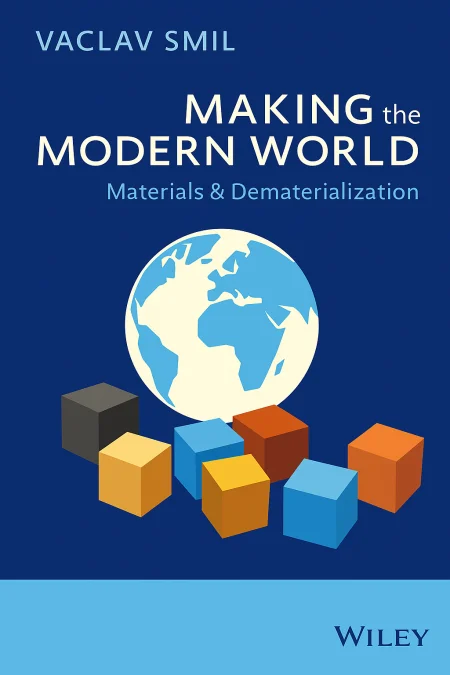
Making the Modern World
Materials and Dematerialization
Book Edition Details
Summary
In a world teetering on the edge of its own appetite, "Making the Modern Materials and Dematerialization" invites readers to ponder a pressing dilemma: Can we curb our insatiable thirst for materials before it's too late? This thought-provoking exploration delves into the evolution of material consumption, tracing humanity's journey from stone to silicon. As we stand at the crossroads of innovation and excess, the book examines whether our cutting-edge technologies and recycling efforts can truly outpace the relentless demands of a growing, ever-consuming population. Through a kaleidoscope of disciplines—resource economics, environmental studies, and beyond—this narrative dissects the intricate dance between progress and sustainability. It poses a critical question: are we on the cusp of a transformative shift towards dematerialization, or are the chains of material dependency too strong to break? An essential read for anyone curious about the future of our material world, this book challenges you to rethink the costs of our modern conveniences and envision a more sustainable path forward.
Introduction
Picture yourself walking through a Roman villa two thousand years ago, where marble columns stood beside bronze fixtures that took months to cast, and every piece of glass represented a luxury beyond most people's reach. Now imagine stepping into a modern home, where plastic components molded in minutes surround you, aluminum frames support massive windows, and synthetic materials unknown to previous generations fill every room. This dramatic transformation reveals one of history's most profound yet invisible revolutions: humanity's complete reimagining of the material world. This remarkable journey illuminates three fundamental questions that shape our modern existence: How did we evolve from societies that treasured every scrap of metal to civilizations that consume more materials in a decade than our ancestors used in millennia? What hidden forces drove this unprecedented acceleration in resource extraction and consumption? And perhaps most urgently, what does this material transformation mean for our planet's future and humanity's long-term survival? Understanding this material revolution is essential for anyone seeking to grasp the true foundations of modern civilization. Whether you're an engineer curious about the origins of today's advanced materials, a policymaker grappling with sustainability challenges, or simply someone who wonders how the objects around you came to exist, this exploration reveals the hidden material forces that continue to reshape our world in ways both magnificent and troubling.
From Stone Tools to Industrial Steel: Traditional Materials Era (Prehistory-1900)
The earliest chapter of human material use began with a simple yet revolutionary discovery: that stones could be deliberately shaped to serve human purposes. Around 2.6 million years ago in East Africa, our ancestors began the long journey from passive consumers of nature's offerings to active transformers of the material world. This moment marked the beginning of humanity's unique relationship with materials, setting us apart from every other species on Earth. For countless millennia, human material use remained constrained by what nature directly provided. Stone tools enabled hunting and food preparation, while the mastery of fire around 400,000 years ago opened new possibilities for material transformation. The controlled heating of clay created ceramics, while fire-hardened wooden spears improved hunting effectiveness. These innovations established a fundamental pattern: the application of energy to transform raw materials into more useful forms, a principle that would eventually reshape the entire planet. The agricultural revolution around 10,000 years ago dramatically expanded material needs and possibilities. Permanent settlements required new construction techniques, leading to innovations in brick-making, lime production, and the first metallurgy. The discovery that heating limestone could produce quicklime represented humanity's first successful industrial chemical process, requiring sophisticated understanding of temperature control and timing. Bronze working, beginning around 3500 BCE, demonstrated that combining different materials could create substances superior to either component alone. The rise of great civilizations pushed material innovation to new heights. Roman engineers developed concrete formulations that enabled massive domed structures, while their road networks required sophisticated understanding of stone selection and construction techniques. Medieval cathedral builders achieved architectural marvels that still inspire awe, pushing stone construction to its absolute limits. These achievements established the technical and organizational foundations for the material revolution that would transform the world after 1800, when humanity would finally break free from the fundamental constraints that had shaped material use for millennia.
The Chemical Revolution: Synthetic Materials and Mass Production (1900-1950)
The dawn of the twentieth century unleashed a material revolution that dwarfed all previous human achievement. The convergence of cheap steel production, abundant fossil fuel energy, and revolutionary chemical processes created possibilities that would have seemed magical to earlier generations. Steel production soared from thousands of tons annually to millions, while entirely new categories of synthetic materials emerged from chemical laboratories, fundamentally altering humanity's relationship with the natural world. The period's defining breakthrough came with the development of synthetic chemistry and the first artificial materials. Leo Baekeland's invention of Bakelite in 1907 created the world's first fully synthetic plastic, demonstrating that humans could engineer materials with properties that nature had never produced. Fritz Haber's process for synthesizing ammonia from atmospheric nitrogen revolutionized both agriculture and warfare, providing the fertilizers that would feed billions while also supplying the explosives that made twentieth-century conflicts so devastatingly destructive. World War I accelerated material innovation at unprecedented speed, as military demands pushed the boundaries of what was technically possible. The conflict required vast quantities of steel for weapons and ships, aluminum for aircraft, and chemicals for explosives and poison gases. Nations discovered that material superiority could determine survival itself, leading to massive investments in research and production capacity. The war's end redirected this industrial capability toward civilian purposes, fueling the consumer boom of the 1920s and establishing mass production as the dominant economic model. This era established the template for modern material-intensive civilization: centralized production facilities, global supply chains, and the systematic application of scientific research to material development. The period proved that planned innovation could accelerate material progress far beyond the pace of accidental discovery, setting the stage for the explosive growth in consumption and synthetic material production that would characterize the post-war decades. The chemical revolution had begun, and its consequences would reshape both human society and the Earth's fundamental systems.
Plastic Age and Global Flows: Post-War Material Explosion (1950-2000)
The post-1950 era witnessed what historians now call the "Great Acceleration" in material consumption, an explosion of production and use that exceeded all previous human history combined. Plastics evolved from laboratory curiosities to ubiquitous consumer products, aluminum production soared to meet aerospace and automotive demands, and global supply chains emerged to move materials across continents. This period established the consumption patterns and material flows that continue to define modern industrial civilization. The plastics revolution transformed daily life in ways both visible and invisible. Building on wartime innovations, chemical companies introduced a parade of new synthetic polymers: polyethylene, polypropylene, PVC, and dozens of specialized materials offering unprecedented combinations of properties. These substances were lightweight yet strong, flexible yet durable, and could be molded into virtually any desired shape. By the 1970s, plastic production was growing exponentially, enabling everything from disposable packaging to durable consumer goods that would have been impossible with traditional materials. The electronics revolution created entirely new categories of ultra-pure materials and exotic elements. Silicon, one of Earth's most abundant elements, became the foundation of the information age when purified to extraordinary levels for semiconductor applications. This transformation of common sand into the substrate for microprocessors represents perhaps the most dramatic value addition in human history, with processed silicon worth thousands of times more than the raw material. The computer age demanded not just new materials but entirely new standards of purity and precision. Globalization fundamentally altered material flows, creating supply chains that spanned continents and connected resource extraction in developing nations with consumption in wealthy countries. China emerged as the world's factory, consuming unprecedented quantities of steel, cement, and other basic materials while transforming its landscape with remarkable speed. This global material system enabled extraordinary prosperity and technological advancement, but also created new vulnerabilities and environmental challenges that would become increasingly apparent as the century progressed, setting the stage for the sustainability crises that define our current era.
Digital Materials and Sustainability Crisis: Modern Consumption Patterns (2000-Present)
The twenty-first century has revealed a fascinating paradox at the heart of modern material use: while individual products have become lighter, more efficient, and more capable, overall global consumption has continued to grow relentlessly. A smartphone contains more computing power than room-sized computers of previous decades, yet the global demand for the rare elements required to manufacture billions of these devices has created entirely new categories of resource pressure and environmental impact. China's rapid industrialization has fundamentally altered global material flows on a scale unprecedented in human history. The country consumed more cement between 2011 and 2013 than the United States used throughout the entire twentieth century, while its steel production now exceeds that of all other nations combined. This massive infrastructure buildout has driven commodity prices to historic highs, strained global supply chains, and created environmental impacts visible from space. The rise of Asian manufacturing has also shifted environmental burdens from consumption centers to production regions, creating new forms of global inequality. The digital revolution has created unprecedented demand for rare earth elements and specialized materials, while the transition to renewable energy requires vast quantities of materials for solar panels, wind turbines, and battery storage systems. Modern material flows now move approximately 100 billion tons annually, creating waste streams and environmental impacts that dwarf those of previous eras. Mining operations extract more rock and sediment than all natural geological processes combined, while plastic waste has formed continent-sized patches in the world's oceans. Current trends point toward a future where material challenges will likely intensify rather than diminish. Despite improvements in efficiency and recycling, the absolute scale of consumption continues to grow as billions of people aspire to material living standards long taken for granted in wealthy nations. The circular economy concept offers potential solutions, but implementing it at global scale requires fundamental changes in how materials are designed, produced, and consumed. The next phase of human development will be largely defined by how successfully we navigate the tension between material prosperity and planetary boundaries.
Summary
The great material acceleration reveals a central paradox that defines our modern predicament: each breakthrough that promised to solve resource constraints ultimately enabled even greater consumption, creating new challenges at unprecedented scales. From the steel that built industrial cities to the silicon that powers digital networks, material innovations have consistently expanded human capabilities while increasing our dependence on complex global systems of extraction, production, and distribution that now move more matter than all natural geological processes combined. This historical trajectory suggests that technological solutions alone cannot address our material challenges without fundamental changes in consumption patterns and economic structures. The story teaches us that efficiency gains are typically overwhelmed by increased demand, that environmental costs are often delayed but never eliminated, and that the benefits and burdens of material use are distributed profoundly unequally across the globe. These insights point toward three critical areas for action: developing truly circular material flows that minimize waste, redesigning economic incentives to reward conservation over consumption, and ensuring that the transition to sustainable material use doesn't perpetuate global inequalities. Perhaps most importantly, this material history reveals that our relationship with the physical world is not fixed but constantly evolving, shaped by human choices rather than technological inevitability. Understanding this empowers us to make more conscious decisions about the material foundations of civilization, recognizing that the choices we make today about extraction, production, and consumption will determine whether future generations inherit a world of abundance or scarcity. The next chapter of human material use remains unwritten, and its outcome depends on our willingness to learn from history while boldly reimagining what sustainable prosperity might look like.
Related Books
Download PDF & EPUB
To save this Black List summary for later, download the free PDF and EPUB. You can print it out, or read offline at your convenience.
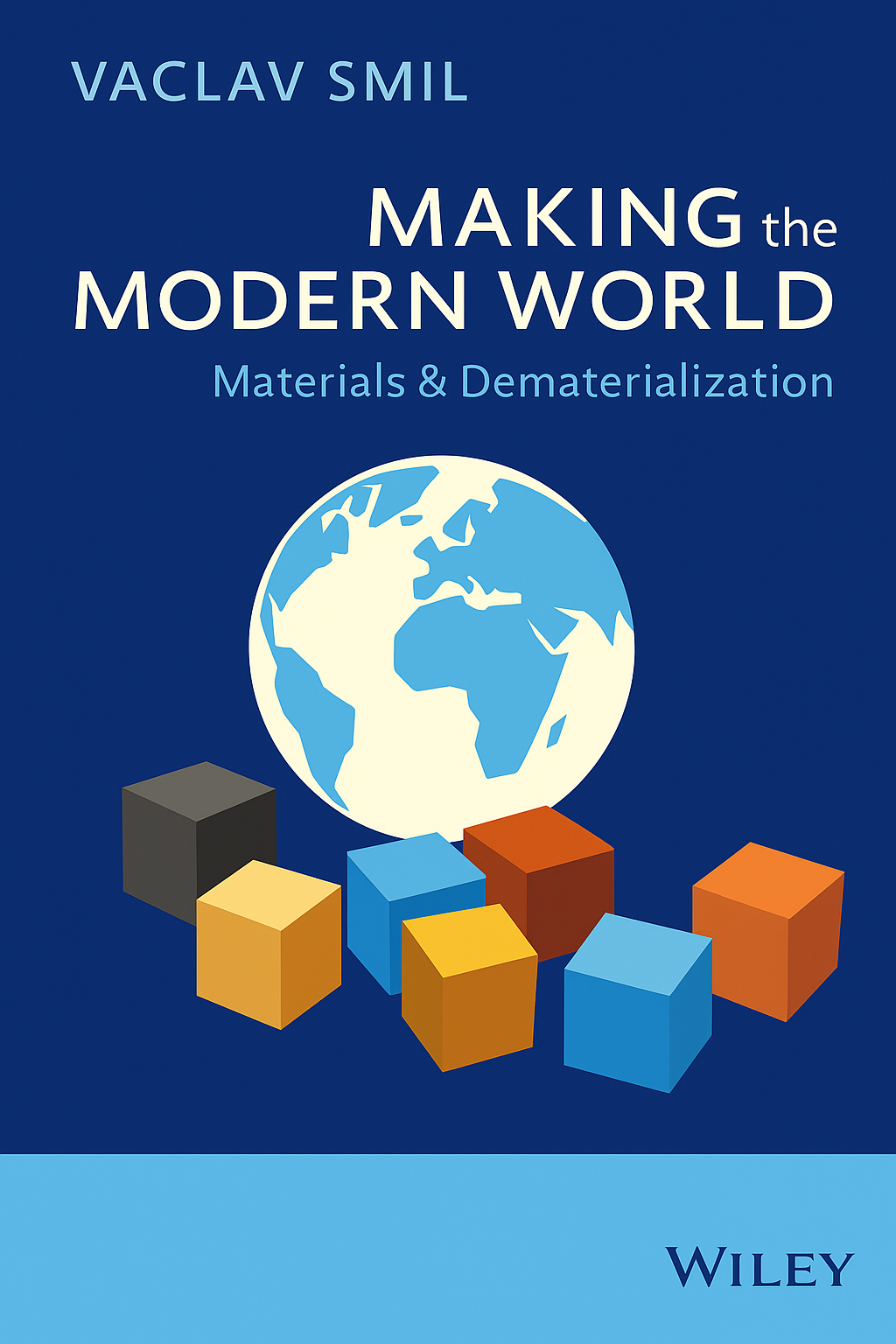
By Vaclav Smil
