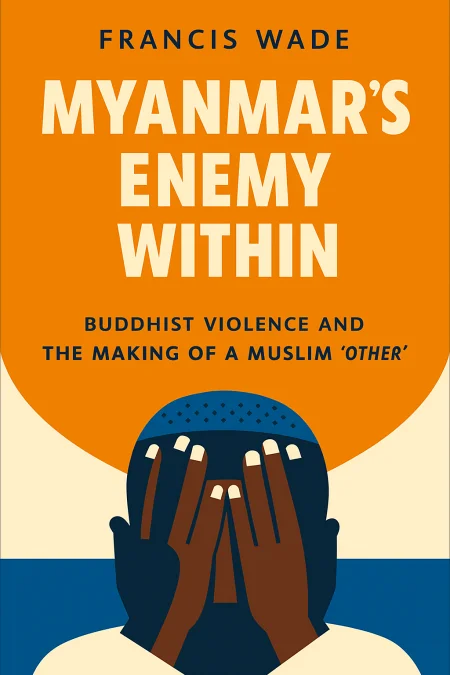
Myanmar's Enemy Within
Buddhist Violence and the Making of a Muslim “Other”
Book Edition Details
Summary
An intricate web of historical tensions unravels in "Myanmar’s Enemy Within," where revered champions of democracy paradoxically ignite a storm of violence against the Rohingya Muslims. As the nation tentatively embraces newfound freedoms, shadows of colonial past and fervent nationalism intertwine, revealing the volatile manipulations of a nervous elite. Francis Wade's gripping narrative plunges into the heart of this upheaval, exposing the chasms between Myanmar's once harmonious religious communities. This insightful exploration sheds light on the haunting transformation of celebrated figures into agents of chaos, leaving a trail of shattered lives and simmering unrest. Wade masterfully chronicles the tumultuous journey of a society teetering on the brink, compelling readers to confront the stark realities lurking beneath Myanmar’s fragile democratic facade.
Introduction
In the sprawling teashops of Yangon, where the clatter of plates mingles with heated conversations, a young university graduate leans forward with urgent intensity. "We aren't saying that violence is necessarily required," he explains, his words carrying the weight of conviction. "What we are saying is that we need to defend ourselves by building a fence with our bones, if it's necessary to do so." This striking declaration encapsulates one of the most perplexing paradoxes of our time: how Buddhism, a religion synonymous with peace, became entangled with violent nationalism in Myanmar's troubled transition to democracy. This transformation didn't occur overnight. It emerged from a complex web of colonial legacies, military manipulation, and the unintended consequences of democratic opening. Through meticulous documentation of personal stories and political machinations, we encounter the village administrator who helped bus neighbors to join violent mobs, the former prisoner-turned-Buddhist-settler who found himself implementing social engineering projects, and the interfaith activist who received death threats for promoting religious harmony. These intimate portraits reveal how ordinary people became participants in extraordinary violence, and how the very process meant to liberate Myanmar from military rule unleashed forces that threatened to tear the country apart. For anyone seeking to understand how democratic transitions can go awry, how religious identity becomes weaponized, or how societies fracture along communal lines, this exploration offers profound insights. It serves as both a warning about the fragility of pluralistic societies and a testament to the quiet heroes who risked everything to bridge divides in their communities.
Colonial Foundations: British Rule and Religious Division (1824-1948)
The seeds of Myanmar's contemporary religious violence were planted not in the monasteries of the 21st century, but in the colonial offices of 19th-century British administrators. When the East India Company's forces marched toward the Royal Palace in Mandalay in 1885 to depose King Thibaw Min, they inadvertently severed a sacred bond that had sustained Myanmar for nearly a millennium. The removal of the last Buddhist king didn't merely end a dynasty; it shattered the symbiotic relationship between Myanmar's monarchy and its Buddhist clergy that had provided both spiritual guidance and political legitimacy since the reign of King Anawratha in the 11th century. The British colonial project unleashed demographic changes that would echo through the centuries. With the western border between Myanmar and India effectively erased, Indian laborers, merchants, and civil servants flooded into Myanmar. By the 1930s, Indians comprised more than half of Yangon's population, transforming the capital into what felt like an Indian city. Bamar Buddhists found themselves minorities in their own land, watching as Indian moneylenders gained control of vast swathes of agricultural land in the fertile Ayeyarwady delta. This economic displacement bred resentment that would find expression in the rise of Buddhist nationalist movements. The colonial administration's obsession with racial classification created artificial boundaries between communities that had previously enjoyed fluid, overlapping identities. Where ethnic groups had once been able to shift allegiances and even identities based on political circumstances, the British imposed rigid categories that would calcify over time. This bureaucratic exercise in divide-and-rule transformed Myanmar from a society where ethnic Bamar and Mon soldiers might fight on either side of any conflict into one where ethnicity became destiny. The nationalist movements that emerged in the 1920s and 1930s crystallized around the rallying cry of "Amyo, Batha, Thathana!" – race, language, and the teachings of the Buddha. These three pillars would define who truly belonged in Myanmar and who remained forever foreign. The violence that erupted in 1938, when mobs attacked Muslim communities across Yangon following a religious dispute, established a template that would be tragically replicated decades later: inflammatory media coverage, the framing of local incidents as existential threats, and the swift transformation of neighbors into enemies.
Military Engineering: Identity Control and Rohingya Marginalization (1962-2011)
When General Ne Win seized power in 1962, he inherited a fractured nation but possessed a clear vision for its future: "One voice, one blood, one nation." The military's approach to achieving unity was through uniformity, systematically dismantling the ethnic and religious diversity that the British had catalogued and codified. The general's "Burmese Way to Socialism" became a vehicle for the most ambitious social engineering project in Myanmar's modern history, one that would ultimately push entire communities beyond the boundaries of belonging. The cornerstone of this project was the creation of the "135 national races" – an index that ostensibly recognized Myanmar's ethnic diversity while actually serving as a tool of exclusion. Communities not listed among these supposedly indigenous groups found themselves cast into legal limbo. The most dramatic victim of this systematic exclusion was the Rohingya population of western Rakhine State, who despite centuries of presence in the region, were erased from official recognition when Ne Win promulgated the 1982 Citizenship Act. The military's social engineering took on an almost surreal quality in its attention to detail and ruthless efficiency. In northern Rakhine State, Colonel Tha Kyaw's 11-point strategy outlined methods to "increase Buddhist population to be more than the number of Muslim people" through resettlement programs that transported prisoners from central Myanmar jails to newly constructed model villages. These former inmates, offered early release in exchange for relocation, became unwitting pawns in a demographic chess game designed to dilute Muslim influence in regions where Islam had taken root. Simultaneously, in the Christian-dominated hills of Chin State, another experiment unfolded through the Na Ta La school system. Hungry children were lured into Buddhist monastery schools where they were forced to shave their heads, don monks' robes, and memorize Buddhist scriptures. The Hill Regions Buddhist Mission operated like a counter-missionary force, using the same incentives of food, education, and legal documentation that had once drawn communities to Christianity, now to pull them toward Buddhism. These programs revealed the military's sophisticated understanding of how identity could be manipulated and manufactured. The regime discovered that ethnicity and religion, despite being presented as immutable characteristics, were surprisingly malleable when the right pressures and incentives were applied. Yet this manipulation came at enormous human cost, creating hierarchies of belonging that would poison inter-communal relations for generations to come.
Democratic Paradox: Transition Violence and Buddhist Nationalism (2012-2016)
The democratic opening that began in 2011 was supposed to herald an era of freedom and reconciliation. Instead, it unleashed the most systematic campaign of anti-Muslim violence in Myanmar's modern history. The transition revealed a bitter irony: the same democratic freedoms that allowed political opposition to flourish also empowered extremist movements to organize, propagandize, and mobilize with unprecedented effectiveness. The catalyst came in May 2012 with the rape and murder of Ma Thida Htwe, a young Rakhine seamstress. This horrific crime was transformed through inflammatory media coverage and strategic dissemination of propaganda into proof of an existential Muslim threat to Buddhist Myanmar. When Ko Myat, a fisherman from Par Da Lek village, boarded a bus to join the mobs attacking Nasi quarter in Sittwe, he believed he was defending his race from extinction. The careful orchestration behind these seemingly spontaneous explosions of violence became apparent in the systematic nature of destruction and the coordination of attacks across multiple locations. The violence spread like contagion from Rakhine State to central Myanmar, where towns like Meikhtila witnessed unprecedented brutality. The massacre at the Islamic boarding school, where police led 120 students to supposed safety only to abandon them to machete-wielding mobs, demonstrated how state institutions became complicit in communal violence. The emergence of the 969 movement and later Ma Ba Tha represented the institutionalization of Buddhist nationalism, complete with sophisticated organizational structures, mass rallies, and legislative agendas. These movements achieved what military propaganda had never managed: genuine popular mobilization around exclusionary ideology. Ma Ba Tha's success in passing discriminatory "Race and Religion Protection Laws" while intimidating political opposition into silence revealed how democratic institutions could be captured by extremist agendas. The organization's ability to dictate policy to parliament while simultaneously operating welfare networks in Buddhist communities showed how authoritarianism could emerge from below, dressed in religious robes and carrying democratic legitimacy. The tragedy of this period lay not just in the immediate violence but in the systematic dismantling of Myanmar's pluralistic traditions. Communities that had coexisted for generations found themselves segregated behind checkpoints and barricades. The democratic transition, rather than healing the wounds inflicted by military rule, opened new fissures that proved even more difficult to bridge.
Apartheid Reality: Segregation Systems and Lessons for Democracy
By 2016, western Myanmar had been transformed into an apartheid state where identity determined access to healthcare, education, and basic human dignity. The camps and ghettos that emerged after 2012 weren't temporary humanitarian responses but permanent fixtures designed to isolate and control Muslim populations. This system of segregation revealed how quickly democratic societies could slide toward systematic discrimination when extremist narratives went unchallenged. The architecture of control was both crude and sophisticated. Checkpoints monitored Muslim movement while Buddhist vigilantes enforced informal restrictions on where Muslims could travel, work, or seek medical treatment. The story of Aarif, forced to watch his wife die because hospitals were effectively off-limits to Rohingya patients, illustrates how administrative barriers became instruments of life and death. This structural violence claimed victims as surely as the machete attacks of 2012, but without attracting international attention or condemnation. Yet even within this system of apartheid, spaces of resistance and reconciliation emerged. In the old cinema hut of Buthidaung, Rohingya and Rakhine still gathered to watch football matches, their shared passion temporarily transcending religious division. The interfaith workshops in Kan Ywar village demonstrated how patient, grassroots efforts could begin to rebuild trust between communities. These small acts of bridge-building, often conducted in secret to avoid extremist retaliation, represented the quiet heroism of ordinary people refusing to surrender their humanity. The international community's response revealed the limitations of external intervention in internal conflicts. Well-meaning humanitarian aid sometimes exacerbated tensions by appearing to favor one community over another, while diplomatic pressure often backfired by allowing extremist groups to portray human rights concerns as foreign interference. The most effective interventions came from local actors who understood that sustainable peace required patient work to address underlying grievances rather than simply treating symptoms of violence.
Summary
The transformation of Myanmar from a hopeful democratic transition into a laboratory of religious violence offers sobering lessons about the fragility of pluralistic societies. The country's experience demonstrates how colonial legacies, military manipulation, and the unintended consequences of democratization can combine to create perfect storms of communal hatred. The systematic exclusion of the Rohingya and the broader assault on Muslim communities weren't aberrations but logical outcomes of decades of identity manipulation by state authorities. The rise of Buddhist nationalism reveals how even traditions associated with peace and compassion can be weaponized when combined with political opportunism and genuine grievances. The success of movements like Ma Ba Tha in capturing democratic institutions while maintaining popular legitimacy shows how extremism can emerge from below, not just from authoritarian impositions above. Their ability to frame exclusion as protection and violence as defense demonstrates the power of narrative in shaping political reality. Yet Myanmar's tragedy also illuminates pathways toward reconciliation. The quiet heroes who sheltered victims in monasteries, who continued trading across religious lines despite social pressure, and who organized interfaith dialogue in dangerous circumstances show that human connections can survive even systematic attempts to divide communities. Their example suggests that sustainable peace requires not just institutional reform but patient grassroots work to rebuild trust and shared narratives. For societies navigating their own democratic transitions, Myanmar's experience offers both warnings about the dangers ahead and inspiration from those who refused to abandon hope for a more inclusive future.
Related Books
Download PDF & EPUB
To save this Black List summary for later, download the free PDF and EPUB. You can print it out, or read offline at your convenience.
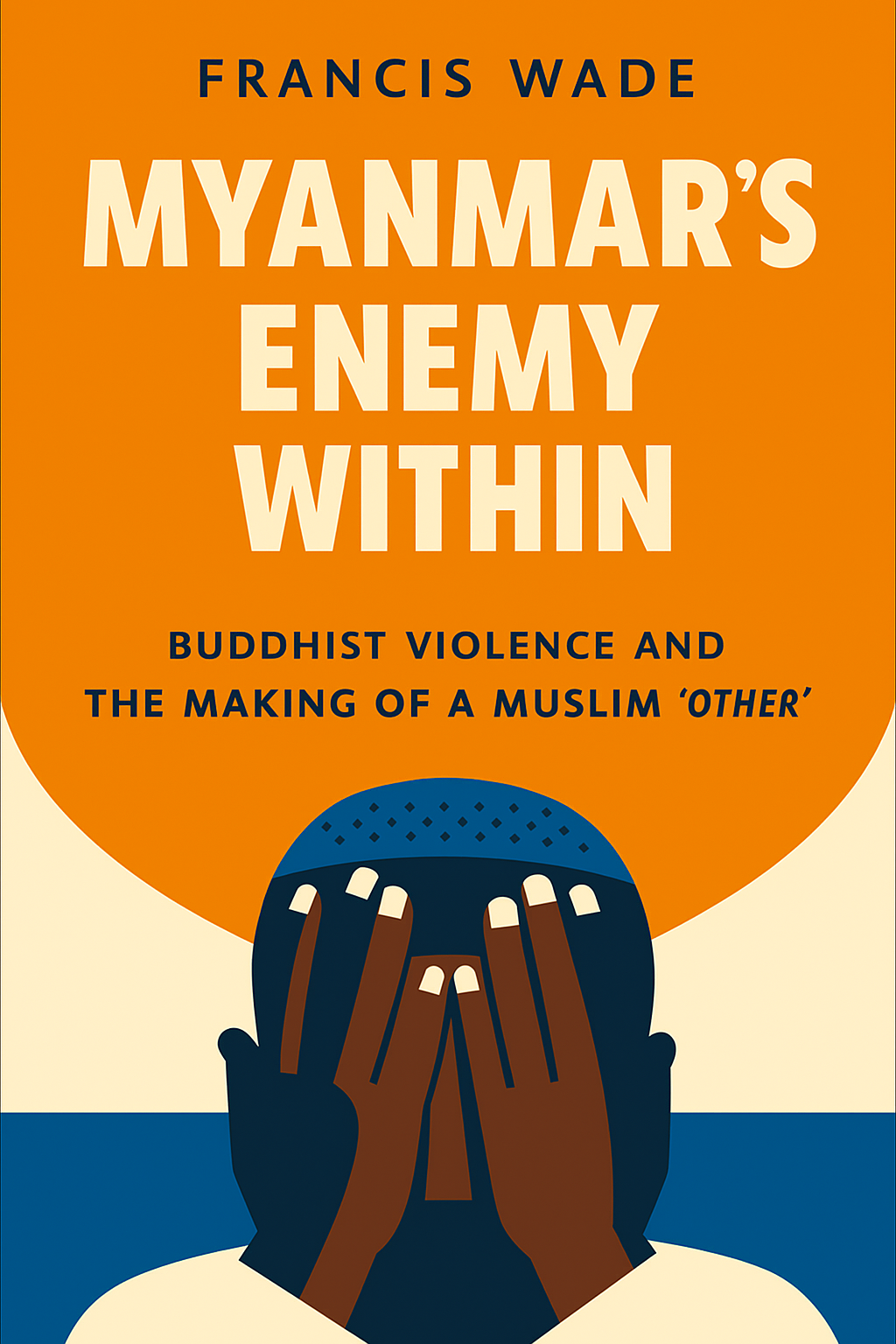
By Francis Wade
