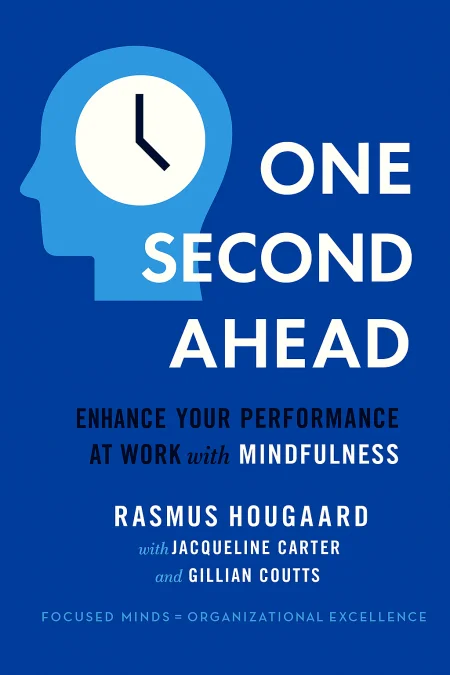
One Second Ahead
Enhance Your Performance at Work with Mindfulness
byRasmus Hougaard, Jacqueline Carter, Gillian Coutts
Book Edition Details
Summary
Racing through a whirlwind of endless tasks and digital deluge, the modern worker is ensnared in a relentless cycle of stress and inefficiency. But what if the secret to reclaiming clarity and control lies in a single, transformative moment? "One Second Ahead" by Rasmus Hougaard, Jacqueline Carter, and Gillian Coutts unveils a revolutionary approach to workplace sanity through mindfulness. This isn't about retreating to meditation mats but about integrating simple, potent strategies into the chaos of everyday office life. Backed by real-world success stories and practical tools, this guide empowers you to conquer distractions, refocus your mind, and turn the tide from mere survival to thriving productivity. Get ready to redefine your workday, one mindful second at a time.
Introduction
In today's hyperconnected world, we're drowning in digital noise. Every ping, notification, and urgent email pulls our attention in different directions, leaving us feeling scattered and overwhelmed. We've become slaves to our devices, constantly multitasking yet accomplishing less than ever before. The modern workplace has created what researchers call the PAID reality - we're under constant Pressure, Always on, experiencing Information overload, and perpetually Distracted. This isn't just making us less productive; it's fundamentally changing how our brains work and how we relate to our work and lives. But what if there was a way to reclaim your mental clarity and get one second ahead of the chaos? What if you could transform your scattered mind into a focused, aware, and highly effective tool? The ancient practice of mindfulness, refined for modern work life, offers exactly this transformation - not through complicated techniques or time-consuming rituals, but through simple, scientifically-backed methods that can be integrated seamlessly into your busy day.
Master Your Mind: Focus and Awareness
The foundation of mental effectiveness lies in understanding two fundamental rules: focus on what you choose, and choose your distractions mindfully. These aren't abstract concepts but practical tools that can revolutionize how you work and live. Research shows that our minds wander nearly 47% of our waking hours, creating a constant internal chaos that drains our energy and diminishes our performance. Jacob, a senior manager at a European financial services company, exemplified this modern struggle. He lived in perpetual reaction mode, jumping from email to meeting to urgent request without pause. When his phone buzzed, he answered immediately. When thoughts popped into his head, he followed them down rabbit holes. He was, as he described it, "living on autopilot without a clear sense of purpose and direction." After four months of mindfulness training, Jacob discovered something profound: he had gained one precious second between stimulus and response. That single second transformed everything. Where once he reacted automatically to every distraction, he now had the mental space to choose his response. "I can't always control what happens in my life," he explained, "but I've developed the freedom to choose my response to it." This one-second advantage allowed him to stay focused on priorities, manage interruptions skillfully, and approach challenges with clarity rather than reactivity. The path to this transformation begins with training your attention like a muscle. Just as you might strengthen your body through exercise, you can strengthen your mind's ability to focus and remain aware. The ABCD method provides a simple framework: find the right posture (Anatomy), use your breath as an anchor (Breathing), count your breaths to maintain focus (Counting), and learn to handle interruptions with the three R's - Relax, Release, and Return (Distractions). Start with just ten minutes daily, treating distractions not as failures but as opportunities to strengthen your awareness. Remember, the goal isn't to eliminate thoughts but to change your relationship with them. When you notice your mind wandering, celebrate that moment of awareness rather than criticizing yourself. Each time you gently return your attention to your chosen focus, you're literally rewiring your brain for greater effectiveness and peace.
Mindful Workplace Techniques
The real power of mindfulness emerges when ancient wisdom meets modern workplace challenges. Every email, meeting, and deadline becomes an opportunity to practice presence and make conscious choices rather than falling into automatic patterns. This isn't about adding more to your already full plate; it's about transforming how you engage with what's already there. Consider how mindfulness can revolutionize your relationship with email, one of the biggest sources of workplace distraction. Instead of checking email compulsively throughout the day, creating what researchers call "switch time" that fragments your attention, you can establish focused email sessions. Turn off notifications, schedule specific times for email processing, and apply the mindful minute technique before responding to emotionally charged messages. Mary-Ann, a European country director for a global advertising agency, transformed her team's creativity by introducing these principles. They discovered that managing attention was vital to creative thinking, leading to more innovative campaigns and a calmer work environment. Meetings, too, become transformed through mindfulness. Rather than multitasking through conference calls or mentally preparing for the next appointment during presentations, you can practice full presence. Begin meetings with a minute of mental preparation, allowing participants to settle and become fully present. During discussions, use the STOP technique for listening: be Silent, Tuned in, Open, and Present. When speaking, remember to ACT: be Appropriate, Compassionate, and Timed in your communications. The ripple effects extend beyond individual techniques. When you approach goal setting with mindfulness, you create specific, positively-framed objectives while holding them lightly enough to adapt when needed. Priority management becomes clearer when you recognize the difference between urgent busywork and truly important activities that align with your deeper purposes. Planning shifts from anxious rumination to purposeful preparation done in the present moment. Even challenging conversations become opportunities for deeper connection when approached with mindful communication principles. Start by choosing one area where distractions typically derail you. Apply mindful techniques consistently for one week, noticing the difference in your effectiveness and stress levels. Then gradually expand these practices to other aspects of your work, building a comprehensive approach to professional excellence.
Transform Your Work and Life
The ultimate promise of mindfulness extends far beyond workplace productivity into the realm of personal transformation and sustainable well-being. When you develop the capacity for present-moment awareness, you're not just becoming more efficient; you're reclaiming your life from the tyranny of automatic reactions and unconscious patterns. This transformation touches every aspect of your existence. Your relationship with stress changes when you understand the difference between pain and suffering. Pain is often unavoidable - deadlines, difficult conversations, and challenging circumstances are part of life. But suffering, which comes from our resistance to these realities, is optional. Through open awareness training, you learn to observe your thoughts and emotions without being consumed by them, creating space between yourself and your reactions. Thomas, a department head facing the difficult task of laying off 25% of his staff, discovered this principle firsthand. Instead of being overwhelmed by grief and anxiety, he used mindfulness to stay present and compassionate during these conversations. By accepting his own difficult emotions without resistance, he was able to serve his departing employees better, helping them navigate this transition with dignity and practical support. "I felt like I was genuinely being of service to my team rather than simply being caught up in my own emotions," he reflected. The practice deepens through training both sharp focus and open awareness. Sharp focus develops your ability to concentrate single-pointedly on chosen objects, while open awareness cultivates insight into the nature of your thoughts and experiences. Together, they create what mindfulness traditions call the three insights: everything changes, happiness is a choice, and everything is potential. These aren't philosophical concepts but lived realizations that emerge through consistent practice. Begin with ten minutes of daily training, preferably in the morning when your mind is fresh. Create a quiet space where you can sit comfortably with your back straight and eyes closed. Start with focus training, using your breath as an anchor, then gradually incorporate open awareness practices. Track your progress not by the quality of your meditation sessions but by how you show up in daily life - more present with loved ones, more skillful in challenging situations, and more at ease with the inevitable ups and downs of human experience.
Summary
The journey toward mindful excellence begins with a simple recognition: in our hyperconnected world, attention has become our most precious resource, and learning to manage it skillfully is perhaps the most important skill we can develop. As Viktor Frankl observed, "Between stimulus and response there is a space. In that space is our power to choose our response. In our response lies our growth and our freedom." This book illuminates how to claim that space, that one precious second of freedom that can transform reactive living into responsive mastery. The techniques, strategies, and training methods presented here aren't just tools for workplace productivity; they're pathways to reclaiming your life from the scattered, always-on existence that has become the modern norm. Start today with just ten minutes of daily mindfulness practice, approaching it not as another task to complete but as a gift you give yourself - the gift of presence, clarity, and the freedom to choose your responses to whatever life brings.
Related Books
Download PDF & EPUB
To save this Black List summary for later, download the free PDF and EPUB. You can print it out, or read offline at your convenience.
By Rasmus Hougaard
