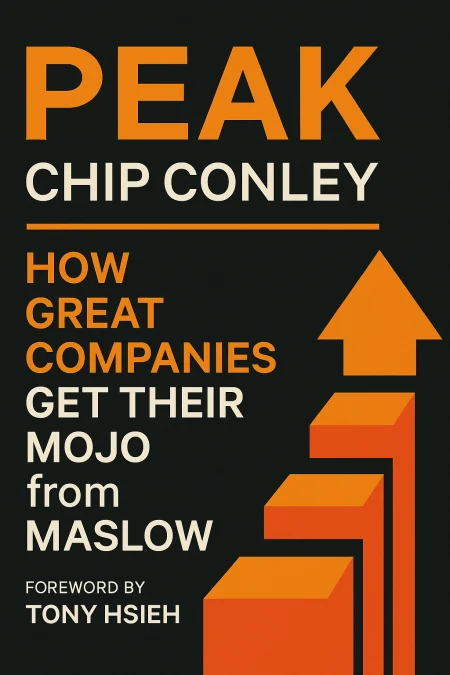
Peak
How Great Companies Get Their Mojo From Maslow
Book Edition Details
Summary
From the chaos of an economic downturn emerges a tale of transformation and resilience, where hotelier Chip Conley finds an unlikely ally in the wisdom of psychology. At the helm of Joie de Vivre Hospitality, Conley faced the specter of collapse post-dot.com bust and post-9/11. Yet, rather than succumb to despair, he harnessed Abraham Maslow's Hierarchy of Needs to breathe new life into his ailing company. Through a blend of personal anecdotes, theoretical insights, and practical applications, Conley reveals how a shift in focus—from mere profit to nurturing meaningful relationships—can ignite profound change. This narrative is not just about weathering a storm but crafting a lasting legacy of corporate culture that thrives on empathy and connection. "Peak" serves as both a memoir and a manual, offering readers a blueprint for achieving both business success and personal fulfillment.
Introduction
The morning light filtered through the conference room windows as Sarah, a mid-level manager at a struggling tech company, watched her team members shuffle in with downcast expressions. Revenue was plummeting, morale had hit rock bottom, and she felt utterly powerless to turn things around. Like so many leaders today, she found herself caught between the pressure to deliver immediate results and the growing awareness that her people were more than just productivity units—they were human beings with deeper needs and aspirations. This moment of crisis would become Sarah's gateway to understanding a revolutionary approach to business leadership. What if the secret to sustainable success wasn't found in the latest management fad or financial engineering, but in recognizing the fundamental human needs that drive every employee, customer, and investor? What if the path to peak performance lay not in pushing harder, but in understanding deeper? The principles explored in this journey reveal how visionary leaders have discovered that when we address people's highest aspirations—not just their basic requirements—we unlock extraordinary loyalty, creativity, and commitment. Through real stories of transformation, we'll uncover how companies have moved beyond mere satisfaction to create genuine inspiration, turning ordinary workplace relationships into engines of mutual growth and shared purpose. This is not about being nice; it's about being profoundly effective by honoring the full spectrum of human potential.
From Crisis to Clarity: Discovering Maslow in Business
The story begins with an entrepreneur facing his darkest hour. After fifteen years of building what had become one of America's most celebrated boutique hotel companies, the founder found himself personally broke, having gone without salary for over three years. The dot-com crash had devastated his San Francisco-based business, and industry experts were predicting his company's imminent collapse. While competitors filed for bankruptcy around him, he made a desperate trip to a bookstore, seeking inspiration or perhaps just escape from the relentless pressure. There, wandering through the psychology section, he discovered works by Abraham Maslow, the humanistic psychologist famous for his hierarchy of needs. As he read about self-actualization and peak experiences, something clicked. Maslow's insights about human motivation weren't just academic theory—they offered a practical framework for understanding what truly drives people in the workplace. The hierarchy that begins with basic survival needs and ascends to self-actualization could be applied not just to individuals, but to entire organizations and their relationships. This chance encounter with Maslow's work became the foundation for a remarkable turnaround. While other hotel companies focused solely on cutting costs and surviving the downturn, this leader began applying motivational psychology to every aspect of his business. He realized that in times of crisis, people don't just need their basic needs met—they crave meaning, recognition, and the sense that they're part of something larger than themselves. This insight would transform not only his company's fortunes but also reveal a universal truth about human nature in business: when we address people's highest needs rather than just their lowest common denominators, we unlock potential that transcends any economic challenge.
Building Employee Loyalty Through Recognition and Purpose
At one of the company's hotels, housekeeping staff began receiving an unusual gift from their CEO—copies of "The Little Engine That Could," personally inscribed with messages of appreciation. What seemed like a simple children's book became a powerful symbol of the company's belief in its employees' potential. The story resonated deeply with workers who, like the little engine, were often underestimated but possessed an indomitable spirit that could overcome any obstacle. This wasn't just feel-good symbolism. The company had discovered through extensive research that employee satisfaction scores directly correlated with guest satisfaction, which in turn drove profitability. But rather than focusing on the traditional approach of compensation as the primary motivator, they developed a sophisticated understanding of what Maslow called the hierarchy of needs applied to the workplace. Money addresses survival needs, but true loyalty emerges from recognition and meaning—the higher levels of the pyramid. During the industry's most challenging period, while competitors were cutting employee benefits and canceling holiday parties, this company doubled down on recognition programs. They created formal awards ceremonies where housekeepers and bellmen received the same celebration as senior executives. They implemented peer-to-peer recognition systems where employees could acknowledge each other's contributions. Most importantly, they connected every job, no matter how humble, to the larger purpose of creating joy and memorable experiences for guests. The transformation was measurable and profound. Employee turnover dropped to one-third of the industry average. Customer satisfaction scores soared above industry benchmarks. The company that many predicted would fail not only survived but gained market share while competitors struggled. This success revealed a fundamental truth: in the knowledge economy, where human capital matters more than physical assets, addressing employees' need for recognition and meaning isn't just nice to have—it's a competitive necessity that drives measurable business results.
Creating Customer Evangelists Beyond Satisfaction
A breakthrough moment came when the company realized they had been thinking too small about their relationship with customers. Traditional hospitality focused on meeting expectations—clean rooms, friendly service, reasonable prices. But this company discovered that customers who merely had their expectations met remained vulnerable to competitors with better deals or more convenient locations. The real opportunity lay in addressing needs that customers didn't even know they had. They developed what they called "identity refreshment"—the idea that a hotel stay could help guests reconnect with aspects of themselves they valued but rarely experienced in daily life. One property celebrated literary culture, hosting author readings and creating an atmosphere where guests felt more intellectual and worldly. Another focused on wellness and mindfulness, offering rooftop yoga and bamboo soaking tubs that helped stressed professionals rediscover inner peace. Each hotel became a stage for customers to experience an elevated version of themselves. This approach required deep customer anthropology. Instead of simply asking what guests wanted, they observed behavior, studied unspoken desires, and even held community meetings to understand the aspirations of their target audiences. They discovered that people weren't just buying accommodation—they were investing in experiences that affirmed their identity and values. A business traveler choosing their eco-conscious hotel wasn't just saving money; he was expressing his environmental values. A couple celebrating an anniversary at their romantic property wasn't just enjoying luxury; they were reconnecting with their love story. The results spoke louder than any marketing campaign. Guests became unpaid evangelists, recommending the hotels to friends and family. Online reviews overflowed with emotional language typically reserved for life-changing experiences, not hotel stays. Revenue per guest increased significantly because customers willing to pay premium prices for identity-affirming experiences. This transformation illuminated a crucial insight: in an age of endless choices, businesses that help customers become their best selves don't just win transactions—they win hearts, minds, and long-term loyalty that transcends economic cycles.
Transforming Investor Relationships Into Lasting Partnerships
The ultimate test of these principles came in the company's relationship with its financial backers. During the crisis years, when monthly cash flows turned negative and properties required additional capital injections, the conventional approach would have been purely transactional—focus on numbers, cut costs, and promise better returns. Instead, the leadership team applied the same human-centered thinking to their investor relationships. They began treating investors not as sources of capital but as partners in a meaningful enterprise. Regular communications included not just financial updates but stories of employee achievements and guest experiences. When they had to request additional funds, they didn't just send sterile memoranda—they created memorable presentations that included T-shirts with charts showing the market downturn alongside messages affirming their commitment to "restoring the sky." The humor and humanity in their communications during dark times actually strengthened investor confidence rather than undermining it. One investor, moved by the company's approach, later commissioned a thank-you T-shirt for the CEO that read "No Bankruptcies, No Defaults, No Salary"—acknowledging the personal sacrifice and integrity that had preserved everyone's investment. This wasn't just about financial alignment; it was about shared values and mutual respect. Investors began to see themselves as part of a larger story about business as a force for good, creating meaningful work and memorable experiences. The transformation in investor relationships paid dividends beyond mere capital preservation. These engaged investors became advisors, connectors, and advocates. They introduced new opportunities, provided strategic insights, and even helped recruit talent. Some investors brought their own networks to experience the hotels, becoming customers as well as capital providers. This evolution from transactional to transformational relationships created a virtuous cycle where engaged investors contributed far more than money—they brought wisdom, connections, and credibility that compounded the company's success long after the crisis had passed.
Summary
The journey from crisis to transformation reveals a profound truth about business success in the modern economy: sustainable performance emerges not from exploiting people's basic needs, but from inspiring their highest aspirations. When we move beyond treating employees as labor units, customers as revenue sources, and investors as capital providers, we unlock extraordinary potential for mutual growth and shared success. The three pillars of this approach—employee inspiration, customer evangelism, and investor partnership—work synergistically to create what can only be described as organizational magic. Companies that master this approach don't just weather storms; they emerge stronger, more resilient, and more profitable than their conventionally managed competitors. They prove that business can be both a force for good and a source of sustainable competitive advantage. The ultimate lesson is deeply hopeful: in a world that often feels disconnected and transactional, we have the power to create workplaces and relationships that honor the full spectrum of human potential. When we choose to lead with empathy, recognize the deeper needs that drive behavior, and build cultures that help people become their best selves, we don't just change business outcomes—we change lives. This is the path to peak performance through human connection, and it's available to any leader brave enough to climb higher than conventional wisdom suggests is necessary or practical.
Related Books
Download PDF & EPUB
To save this Black List summary for later, download the free PDF and EPUB. You can print it out, or read offline at your convenience.
By Chip Conley
