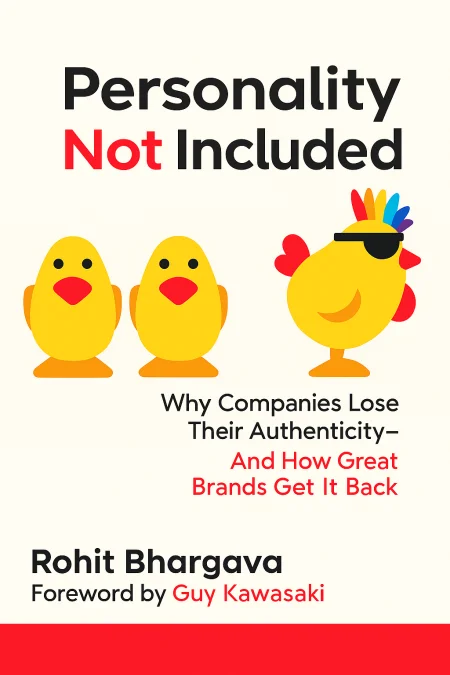
Personality Not Included
Why Companies Lose Their Authenticity and How Great Brands Get it Back
byGuy Kawasaki, Rohit Bhargava
Book Edition Details
Summary
In an era where the corporate mask is slipping, "Personality Not Included" by Rohit Bhargava is your blueprint for transformation. Gone are the days of bland, anonymous brands; the modern market demands a heartbeat, a pulse, a personality that resonates. Bhargava, a maestro of the digital age, dismantles the myth of safe, sterile marketing, guiding businesses to unveil their authentic selves. With insights spanning from the quirky soul of Austin to the revolutionary rise of Manga, and case studies of trailblazers like Intel and Dyson, this book equips you with tools to craft a compelling brand narrative. Uncover the secret sauce behind magnetic company personas and navigate the complexities of corporate storytelling with actionable strategies. This is not just a guide—it's a call to shed the mundane and embrace the extraordinary potential of your brand's true character.
Introduction
In today's hyper-connected marketplace, consumers are drowning in a sea of faceless corporations that treat them like numbers rather than individuals. Every day, we encounter automated phone systems, generic marketing messages, and sterile customer service interactions that leave us feeling frustrated and disconnected. The old model of hiding behind corporate policies and maintaining professional distance is not just outdated—it's driving customers away faster than ever before. The digital age has fundamentally shifted the balance of power. Consumers now have unprecedented access to information, countless alternatives at their fingertips, and powerful platforms to share their experiences—both positive and negative. They can research products thoroughly before making decisions, compare options instantly, and broadcast their opinions to thousands of people with a single click. In this environment, brands that continue to operate as faceless entities are fighting a losing battle. What separates thriving companies from struggling ones is no longer just product quality or competitive pricing. It's the ability to forge genuine human connections with customers, employees, and partners. The most successful organizations today are those that have learned to showcase their authentic personality, embrace their human side, and create meaningful relationships that transcend simple transactions.
Why Faceless Brands Fail Today
The corporate world once thrived on anonymity and standardization. For decades, businesses believed that appearing large, impersonal, and systematized conveyed reliability and professionalism. Companies deliberately created layers between themselves and their customers, viewing personal connections as potential liabilities rather than assets. This approach worked when information was scarce and consumer options were limited. Consider the transformation of customer service over the past few decades. Airlines routinely enforce policies that defy common sense, forcing passengers to navigate labyrinthine phone systems and speak with representatives who have no authority to solve problems. These same airlines then wonder why customer satisfaction scores plummet and negative stories go viral on social media. The disconnect is stark: while companies cling to faceless procedures, customers crave authentic human interaction. The rise of social media has made this disconnect particularly costly. A single frustrated customer can now reach thousands of people instantly, sharing detailed accounts of poor service experiences. Companies that respond with form letters or refuse to engage only amplify the damage. Meanwhile, organizations that respond personally and authentically often turn critics into advocates, demonstrating the power of human connection even in crisis situations. The solution begins with recognizing that facelessness is a choice, not an inevitable result of growth. Small businesses often make the same mistake as large corporations, hiding behind generic policies and impersonal communications when they could be leveraging their human scale as a competitive advantage. Success in today's market requires embracing individuality, empowering employees to act as authentic representatives, and building systems that prioritize genuine relationship-building over risk management.
Finding Your Authentic Voice
Authentic voice emerges from understanding what makes your organization genuinely unique, believable, and worth talking about. This isn't about crafting clever marketing messages or hiring charismatic spokespeople—it's about uncovering and amplifying the real personality that already exists within your company. Every organization has distinctive qualities, but most have become expert at burying them under layers of corporate speak and sanitized communications. The story of Virgin America illustrates this principle powerfully. When the airline finally received approval to operate domestic flights in the United States, it entered one of the most challenging and regulated industries imaginable. Customer satisfaction in airline travel had reached historic lows, and the market seemed saturated with competitors offering nearly identical services. Rather than trying to blend in with industry standards, Virgin America chose to amplify its distinctive personality at every touchpoint. The airline transformed routine elements of air travel into memorable experiences. Passengers could name aircraft through blog contests, enjoy custom lighting and entertainment systems, and even send messages to other passengers during flights. The staff weren't forced to follow rigid scripts but were empowered to be genuinely helpful and personable. These weren't expensive additions—they were expressions of the company's authentic commitment to making travel enjoyable rather than merely functional. To discover your authentic voice, start by examining what your employees naturally say about the company when they're not reading from approved scripts. Listen to how your most passionate customers describe your organization to their friends. Look for the moments when your team gets genuinely excited about the work they're doing. These organic expressions of enthusiasm and belief are the raw materials of authentic voice, far more powerful than any manufactured brand message.
Creating Compelling Brand Stories
Every memorable brand has a compelling backstory that gives customers a reason to believe in and connect with the company beyond its products or services. These aren't carefully constructed marketing narratives, but genuine accounts of how the organization came to exist and what drives it forward. The most powerful brand stories tap into universal human experiences: the passionate enthusiast pursuing a dream, the determined inventor overcoming obstacles, or the underdog challenging established giants. James Dyson's journey exemplifies the power of authentic storytelling. Frustrated by vacuum cleaners that lost suction, he spent over five years and built more than 5,000 prototypes developing his revolutionary bagless design. When no existing manufacturer would license his technology—fearing it would cannibalize their profitable replacement bag business—Dyson decided to manufacture and market the product himself. His story resonated with consumers because it reflected their own frustrations with inadequate products and their admiration for persistence in the face of rejection. The Dyson story succeeded because it was specific, credible, and emotionally compelling. Customers didn't just buy a vacuum cleaner; they supported an inventor who had refused to compromise on quality. The backstory transformed a functional purchase into a statement about valuing innovation and craftsmanship. This emotional connection enabled Dyson to command premium prices while building fierce customer loyalty in a commodity category. Creating your compelling story requires identifying the authentic characters, challenges, and triumphs that shaped your organization. Focus on moments of struggle and breakthrough rather than smooth success. Highlight the human qualities that drove key decisions: curiosity, frustration, hope, determination. The goal isn't to manufacture drama but to reveal the genuine human experiences that give your brand meaning and make customers want to be part of your continuing story.
Turning Personality Into Action
Personality becomes powerful when it moves beyond abstract concepts into concrete moments of human connection. These personality moments occur throughout the customer journey—during research, purchasing, using products, and sharing experiences. Most organizations focus their marketing attention and budgets on the research phase, trying to capture attention from potential customers. However, the most impactful opportunities often occur when you already have customer attention during and after the purchase process. Southwest Airlines transformed an industry notorious for poor customer service by treating every service failure as an opportunity to demonstrate personality. When flights are delayed or cancelled, Southwest employees are empowered to go beyond standard compensation formulas. They make personal apologies, offer meaningful remedies, and sometimes surprise passengers with unexpected gestures of goodwill. These responses turn potentially damaging situations into loyalty-building experiences that customers eagerly share with others. The key insight is that personality moments can't be scripted or mandated from corporate headquarters. They emerge when employees are empowered to act as individuals rather than as interchangeable representatives reading from approved responses. This requires hiring people with genuine empathy and communication skills, training them thoroughly on company values and decision-making authority, and creating systems that reward relationship-building rather than just efficiency metrics. Successful personality implementation also demands patience and consistency. Authentic relationships develop over time through repeated positive interactions. Companies must resist the temptation to abandon personality initiatives when they don't produce immediate measurable results. The most valuable outcomes—customer loyalty, positive word-of-mouth, and employee engagement—often take months or years to fully materialize but create sustainable competitive advantages that are difficult for competitors to replicate.
Summary
The era of faceless corporations is ending, swept away by empowered consumers who demand authentic relationships with the brands they support. In this new landscape, personality isn't a nice-to-have marketing tactic—it's an essential business strategy for survival and growth. Companies that learn to showcase their genuine human qualities while maintaining professional excellence will build the deep customer connections that drive long-term success. As the evidence throughout countless successful transformations demonstrates, "Personality is the key element behind your brand and what it stands for, and the story that your products tell to your customers." This isn't about becoming unprofessional or sacrificing quality standards. It's about recognizing that business is fundamentally about human relationships, and relationships thrive on authenticity, empathy, and genuine care. Start today by identifying one personality moment in your current customer interactions where you could respond more personally and helpfully. Empower one employee to solve customer problems with greater authority and creativity. Share one genuine story about why your organization exists and what drives your team's passion. These small steps toward authentic human connection will begin transforming your business from a faceless entity into a beloved brand that customers choose to support and recommend.
Related Books
Download PDF & EPUB
To save this Black List summary for later, download the free PDF and EPUB. You can print it out, or read offline at your convenience.
By Guy Kawasaki
