
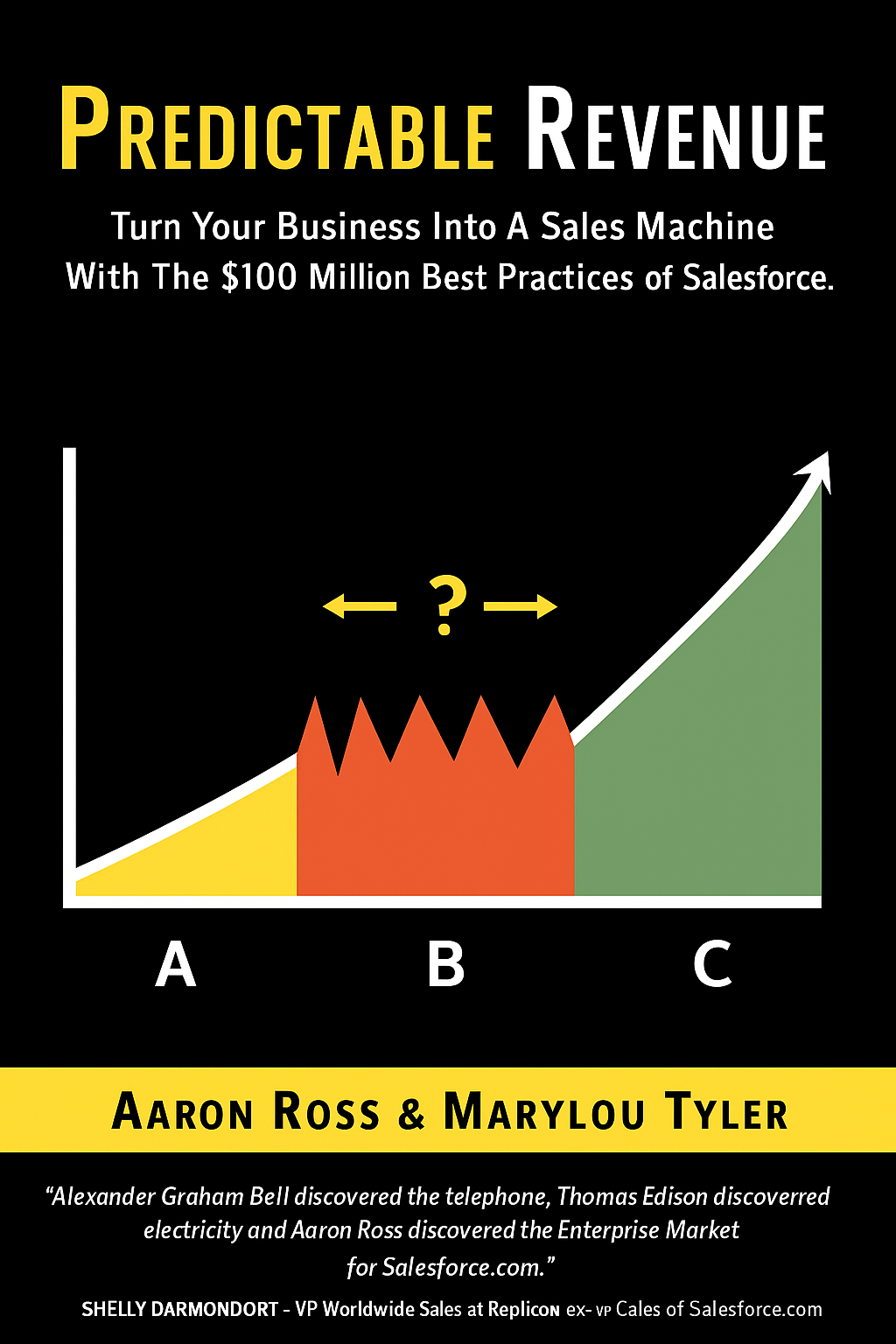
Predictable Revenue
Turn Your Business Into a Sales Machine with the $100 Million Best Practices of Salesforce.com
Book Edition Details
Summary
Sales isn’t a guessing game, and Aaron Ross knows that better than anyone. Enter the world of Predictable Revenue, where the art of selling meets precision. The man hailed alongside industry titans like Bell and Edison reveals a groundbreaking system that transformed Salesforce.com, skyrocketing its revenue with a fresh, no-cold-call approach. Forget everything you thought you knew about sales; this isn’t about dial lists or closing tactics. This is the blueprint for CEOs and sales leaders determined to build unstoppable sales engines. With a touch of humor and a dose of reality, Ross dismantles outdated methods and equips you with strategies to turn uncertainty into assured success. If you're ready to bury old-school sales techniques and embrace a future where your revenue forecasts are as solid as your product, this book is your compass.
Introduction
Traditional sales approaches are failing in today's market. The old tactics of aggressive cold calling and pushing prospects through rigid sales funnels are generating resistance rather than results. Today's buyers have more control, more options, and less patience for interruption-based selling. They research extensively before engaging with vendors and demand authentic, value-driven interactions. This fundamental shift has left countless sales teams struggling with unpredictable pipeline, lengthy sales cycles, and frustrated prospects who feel hunted rather than helped. The companies that thrive in this new landscape are those that have discovered how to create systematic, respectful, and genuinely helpful sales processes. These organizations have learned to generate consistent, high-quality opportunities while building trust and delivering value from the very first interaction. They've transformed their sales operations into predictable revenue engines that scale gracefully and sustainably.
Cold Calling 2.0: Generate Leads Without Cold Calls
The breakthrough that changed everything came through a simple experiment that challenged conventional wisdom. Cold Calling 2.0 represents a fundamental shift from interruption-based selling to permission-based prospecting. Instead of surprising prospects with unwanted phone calls, this approach uses targeted, respectful communication to earn the right to have conversations with decision-makers. Aaron Ross discovered this revolutionary method at Salesforce.com when traditional cold calling was producing disappointing results. Frustrated with the low response rates and negative reactions from prospects, he decided to test a radically different approach. On one Friday afternoon, he sent two different mass emails to Fortune 5000 executives. The first was a typical sales-focused message highlighting product features and benefits. The second was a simple, honest request asking executives to refer him to the right person in their organization for a conversation about sales automation. The results were astounding. The traditional sales email generated zero responses, while the simple referral request achieved a remarkable ten percent response rate. These weren't just any responses - they came from C-level and VP-level executives at major corporations, exactly the people he needed to reach. What's more, half of these responses were positive referrals that led to meaningful business conversations. To implement Cold Calling 2.0 effectively, start by crafting short, respectful emails that focus on asking for guidance rather than selling products. Target senior executives who can direct you to the right decision-makers, but don't try to sell to them directly. Use plain text formatting that reads well on mobile devices, and always be transparent about your purpose. Follow up on responses quickly and professionally, treating each interaction as an opportunity to build trust and demonstrate value. Remember that success comes from volume and consistency - send 50-100 targeted emails per week rather than attempting to perfect individual messages. The key to sustaining this approach is maintaining genuine respect for your prospects' time and intelligence. Focus on building relationships and providing value rather than pushing for immediate sales meetings. This methodology transforms prospecting from a numbers game into a relationship-building process that generates higher-quality opportunities and shorter sales cycles.
Build Specialized Sales Teams That Scale
Most sales organizations fail because they ask their salespeople to be generalists rather than specialists. The traditional model of having account executives handle everything from prospecting to closing to account management creates inefficiency and limits growth potential. Specialization is the foundation of any scalable sales machine. The transformation at Salesforce.com illustrates this principle perfectly. Initially, expensive field salespeople were expected to generate their own leads while also closing deals and managing existing accounts. This approach left talented closers spending precious time on activities they neither enjoyed nor excelled at. The company was burning through resources while achieving mediocre results across all sales functions. The solution was revolutionary in its simplicity: separate prospecting from closing. The company created dedicated Sales Development Representatives whose sole responsibility was generating qualified opportunities for Account Executives. These SDRs didn't close deals, handle customer service issues, or manage existing accounts. They focused exclusively on identifying prospects, initiating conversations, and qualifying opportunities before passing them to closers. This specialization allowed each role to develop deep expertise and achieve dramatically better results. Begin implementing specialization by identifying the core functions within your sales process: inbound lead qualification, outbound prospecting, deal closing, and account management. Even with just two salespeople, you can start specializing by having one focus primarily on generating opportunities while the other concentrates on closing them. As your team grows, continue breaking down functions into more specific roles that allow individuals to develop mastery in their areas of responsibility. The most critical aspect of building specialized teams is ensuring smooth handoffs between roles. Develop clear criteria for when opportunities should be passed from prospecting to closing, and create systematic processes that prevent leads from falling through the cracks. Measure each function separately and optimize for the specific outcomes that matter most at each stage. Remember that specialization requires patience and commitment to see results. It may take several months for your team members to develop expertise in their focused areas, but the long-term benefits of higher productivity and better results make this investment worthwhile.
Create Self-Managing Systems for Growth
The ultimate goal of any sales machine is to operate effectively without constant management intervention. Self-managing systems free leadership to focus on strategy and growth while empowering team members to take ownership of their results and professional development. The journey toward self-management begins with creating transparency and shared accountability. At Salesforce.com, Aaron Ross implemented a system where all sales results and compensation were published openly to the entire team. Rather than creating competition or resentment, this transparency built trust and encouraged peer learning. Team members could see exactly who was succeeding and why, making it easy to identify mentors and model successful behaviors. This transparency extended beyond just results to include processes, challenges, and decision-making. The team participated in designing their own compensation plans, setting performance standards, and solving operational problems. When team members raised concerns about the commission structure, instead of simply explaining the rationale, leadership facilitated a collaborative redesign process. The team ultimately concluded that the existing plan was optimal, but they now understood and owned the reasoning behind it. Start building self-managing systems by gradually shifting responsibility for routine tasks from managers to team members. Create rotating leadership roles for functions like training, reporting, and process improvement. Implement regular team meetings where members share best practices, solve problems collectively, and celebrate successes together. Establish clear metrics and reporting systems that allow everyone to track progress toward shared goals. The key to successful self-management is maintaining high standards while providing the support and resources people need to meet them. Set clear expectations for results rather than micromanaging activities, and trust your team members to find the best ways to achieve their objectives. Provide coaching and guidance when requested, but resist the urge to solve every problem for your team. Most importantly, remember that self-managing teams require ongoing development and refinement. Regularly assess what's working well and what needs improvement, and involve the entire team in making necessary adjustments. This collaborative approach to continuous improvement ensures that your systems evolve with your business and maintain their effectiveness over time.
Summary
The transformation from traditional sales approaches to predictable revenue generation requires fundamental changes in mindset, methodology, and management. As demonstrated throughout these proven strategies, success comes not from working harder or making more calls, but from working smarter with systematic, respectful, and value-focused processes. Aaron Ross emphasized this truth: "You can't have predictability without having repeatable processes." This insight captures the essence of building a sales machine that generates consistent results regardless of market conditions or individual personalities. The companies that embrace specialization, implement systematic prospecting methods, and develop self-managing teams will continue to thrive while their competitors struggle with unpredictable results. Take action today by choosing one element of this system to implement immediately - whether that's specializing your sales roles, testing Cold Calling 2.0 email techniques, or creating more transparent reporting processes. Start small, measure results, and build momentum toward creating your own predictable revenue engine.
Related Books
Download PDF & EPUB
To save this Black List summary for later, download the free PDF and EPUB. You can print it out, or read offline at your convenience.
By Aaron Ross
