
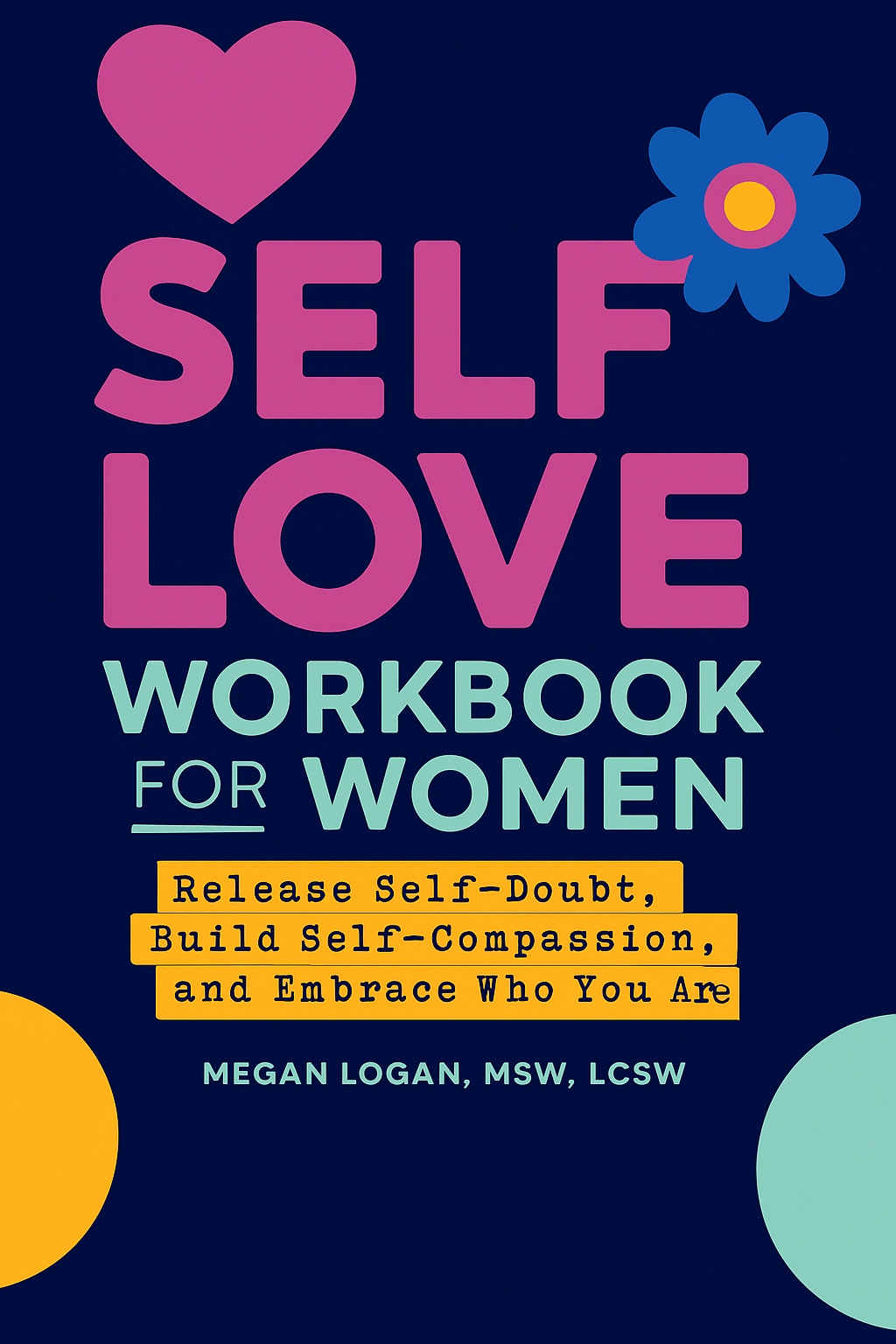
Self-Love Workbook for Women
Release Self-Doubt, Build Self-Compassion, and Embrace Who You Are
Book Edition Details
Summary
In a world where the loudest voices often drown out self-worth, "Self-Love Workbook for Women" offers a sanctuary for nurturing the soul. This illuminating guide invites women of all ages to embark on a transformative journey of self-awareness and empowerment. With a blend of mindfulness and positive psychology, the workbook weaves together introspective exercises and soul-stirring affirmations, crafting a tapestry of self-discovery and emotional liberation. Dive deep into a series of quizzes and journaling prompts designed to unearth hidden strengths and dissolve limiting beliefs. This isn’t just a workbook; it’s a heartfelt companion on your path to a more purposeful, love-filled life. Whether you're seeking to mend fragile self-esteem or simply fortify your inner peace, this book stands as a beacon of hope and healing, promising to cultivate a profound, enduring relationship with the most important person in your life—you.
Introduction
Do you ever find yourself being your own harshest critic, replaying conversations in your mind and wondering if you're truly enough? Many women today struggle with an internal voice that whispers doubts about their worth, their appearance, their decisions, and their place in the world. This persistent self-criticism creates a barrier between who you are and who you could become when fueled by genuine self-love. The journey toward loving yourself isn't about bubble baths and positive affirmations alone, though those have their place. It's about fundamentally transforming the relationship you have with yourself from one of criticism and doubt to one of compassion and acceptance. When you learn to treat yourself with the same kindness you'd offer a dear friend, when you set boundaries that honor your needs, and when you embrace your authentic self with all its beautiful imperfections, you unlock a wellspring of energy and confidence that radiates into every area of your life. This transformation doesn't happen overnight, but every small step you take toward self-love creates ripples that expand outward, improving your relationships, your career, your health, and your overall sense of purpose and joy.
Build Your Foundation of Self-Love
Self-love begins with understanding that it's not selfish or indulgent, but rather an essential foundation for living a fulfilling life. At its core, self-love means extending the same kindness, patience, and forgiveness to yourself that you would naturally offer to someone you care about deeply. Consider Sarah, a working mother who came to therapy feeling completely drained. She described her daily routine as running from one obligation to another, always putting everyone else's needs before her own. She would wake up early to prepare breakfast for her family, work long hours to prove her worth at the office, then come home to cook dinner and help with homework. By the end of each day, she felt like she had nothing left for herself. When she looked in the mirror, all she saw were flaws and shortcomings. Through our work together, Sarah began to recognize that her constant self-sacrifice wasn't actually serving anyone well. Her exhaustion made her irritable with her children, and her resentment toward her partner was growing. She realized that her belief that loving herself meant being selfish was actually preventing her from being the mother, partner, and person she wanted to be. Sarah started with small acts of self-care. She began waking up ten minutes earlier to enjoy a cup of coffee in silence, paying attention to its warmth and aroma rather than immediately diving into her to-do list. She practiced speaking to herself with the same gentle tone she used with her children when they made mistakes. Instead of berating herself for forgetting to pack her daughter's lunch, she would think, "Everyone forgets things sometimes. I'll remember tomorrow." To build your own foundation of self-love, start by becoming aware of your internal dialogue. Notice when you're being harsh with yourself and pause to ask, "Would I speak to my best friend this way?" Then consciously choose kinder words. Schedule small moments of joy into your day, whether it's listening to a favorite song or taking three deep breaths. Remember that self-love isn't a destination but a daily practice of choosing to treat yourself with dignity and respect.
Practice Self-Compassion Daily
Self-compassion differs from self-esteem in a crucial way: while self-esteem fluctuates based on your achievements and how you compare to others, self-compassion remains steady regardless of your circumstances. It involves treating yourself with kindness during difficult times, recognizing that struggle is part of the shared human experience, and maintaining awareness of your thoughts and feelings without being overwhelmed by them. Maria, a successful attorney, exemplified the difference between self-esteem and self-compassion. She had built her identity around being perfect, never making mistakes, and always exceeding expectations. When she lost a major case for the first time in her career, her self-esteem crumbled. She told herself she was a failure, that she had let everyone down, and that she didn't deserve her position. The shame was so overwhelming that she considered leaving law altogether. As Maria learned to practice self-compassion, she began to reframe this experience. Instead of seeing the lost case as evidence of her inadequacy, she recognized it as a normal part of any lawyer's career. She acknowledged her disappointment without drowning in it, treating herself with the same understanding she would offer a colleague facing similar circumstances. She realized that her worth as a person wasn't determined by her win-loss record, and that making mistakes was how she learned and grew. This shift allowed Maria to process the disappointment more quickly and extract valuable lessons from the experience. She became more effective in her subsequent cases because she wasn't paralyzed by the fear of imperfection. Her relationships improved as well, because she stopped hiding her struggles and began connecting with others more authentically. To cultivate daily self-compassion, try this three-step approach when you notice self-critical thoughts arising. First, acknowledge your pain with phrases like "This is a moment of suffering" or "This is really hard right now." Second, remind yourself that difficulty is universal by thinking "Struggle is part of life" or "I'm not alone in this." Finally, offer yourself kindness with statements like "May I be gentle with myself" or "May I give myself the compassion I need." Practice this consistently, and you'll find that self-compassion becomes your natural response to challenges.
Set Boundaries and Heal Relationships
Healthy boundaries aren't walls that keep people out; they're guidelines that teach others how to treat you while allowing you to honor your own needs and values. Many women struggle with boundary-setting because they've been taught that being accommodating and selfless is virtuous, but boundaries are actually essential for maintaining loving relationships. Jennifer discovered this when she found herself constantly overwhelmed by her friend Lisa's demands. Lisa would call at all hours expecting Jennifer to drop everything and listen to her problems. She would invite herself over without asking and stay for hours, even when Jennifer had other plans. Jennifer felt guilty saying no because Lisa often reminded her how much their friendship meant and how few people truly understood her. The turning point came when Jennifer realized that her resentment toward Lisa was growing stronger each day. She was avoiding Lisa's calls and dreading their interactions. Jennifer understood that if she continued without setting boundaries, their friendship would eventually end anyway, but it would end in bitterness rather than with love and respect intact. Jennifer began by setting small, clear boundaries. She told Lisa that she was available to talk between 7 and 9 PM on weekdays, but that she needed advance notice for visits. When Lisa pushed back, saying Jennifer was being selfish, Jennifer compassionately but firmly held her ground. She explained that boundaries weren't about caring less, but about caring in a sustainable way that honored both of their needs. Initially, Lisa resisted these changes, but over time, she began to respect Jennifer's boundaries. Their friendship actually deepened because Jennifer was no longer building resentment, and Lisa learned to be more considerate. Jennifer discovered that setting boundaries didn't damage her relationships; it improved them by creating space for mutual respect and genuine care. To set effective boundaries, start by identifying your limits in different areas of your life. Communicate them clearly and kindly, using "I" statements rather than accusations. Be consistent in maintaining your boundaries, even when others push back. Remember that boundary-setting is an act of self-love that ultimately serves everyone involved by creating healthier, more authentic relationships.
Embrace Your Authentic Self
Embracing your authentic self means accepting all parts of yourself, including the aspects you've been taught to hide or change. It involves recognizing your unique gifts, honoring your values, and allowing yourself to show up fully in the world without constantly trying to meet others' expectations. Rachel spent decades trying to be the person she thought others wanted her to be. In social situations, she would monitor her words carefully, laugh at jokes she didn't find funny, and agree with opinions that didn't align with her values. She had learned early in life that being agreeable made people like her, but the cost was losing touch with who she really was. The wake-up call came when Rachel realized she couldn't answer simple questions about her preferences without first wondering what others would think. She didn't know her favorite type of music because she only listened to what was popular. She couldn't identify her political views because she had spent so long mirroring those around her. She felt like a hollow version of herself, desperately seeking validation from others because she had no sense of her own worth. Rachel's journey to authenticity began with small experiments in self-expression. She started sharing her genuine opinions in low-stakes conversations and noticed that people didn't reject her as she had feared. In fact, many appreciated her honesty and began sharing more authentically with her in return. She explored activities that genuinely interested her rather than those that seemed impressive to others. She discovered a love for pottery, something she had always dismissed as impractical but found deeply satisfying. As Rachel became more comfortable with her authentic self, she noticed profound changes in her life. Her relationships became deeper and more meaningful because people were connecting with the real Rachel rather than her performed version. Her work became more fulfilling as she aligned her career choices with her values rather than external expectations. Most importantly, she developed an unshakeable sense of self-worth that didn't depend on others' approval. To embrace your authentic self, start by paying attention to moments when you feel most alive and genuinely yourself. Notice the activities, people, and environments that bring out your natural enthusiasm and joy. Practice expressing your true thoughts and feelings in safe relationships, gradually expanding your comfort zone. Remember that authenticity isn't about being perfect or having it all figured out; it's about being courageously honest about who you are in each moment, including your growth edges and uncertainties.
Summary
The journey to loving yourself is perhaps the most important adventure you'll ever embark upon, because it transforms not only how you experience life but how you show up for everyone around you. As the book emphasizes, "Self-love is the fuel that allows an individual to reach their full potential, and is filled with compassion, grace, and gentleness." When you commit to treating yourself with kindness, setting healthy boundaries, practicing daily self-compassion, and embracing your authentic self, you create a foundation from which genuine confidence and joy can flourish. The transformation doesn't require perfection or dramatic gestures. It begins with small, consistent acts of self-respect and grows through practice and patience. Start today by choosing one small way to honor yourself, whether that's speaking to yourself more kindly, setting a boundary you've been avoiding, or expressing an authentic part of yourself that you've kept hidden. Your future self will thank you for taking this first loving step.
Related Books
Download PDF & EPUB
To save this Black List summary for later, download the free PDF and EPUB. You can print it out, or read offline at your convenience.
By Megan Logan
