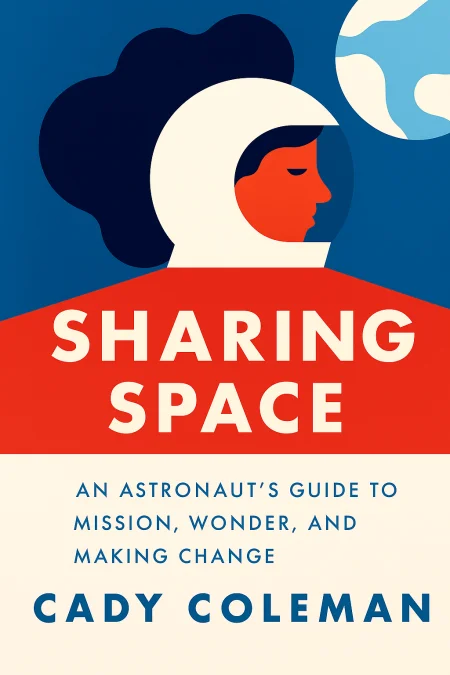
Sharing Space
An Astronaut's Guide to Mission, Wonder, and Making Change
Book Edition Details
Summary
In the boundless realm of outer space, Cady Coleman shattered expectations with each meteoric step she took. "Sharing Space" is more than a memoir; it’s a testament to the power of defying norms and embracing one's own path. From the breathtaking emptiness of zero gravity to the close-knit bonds forged in both celestial and underwater confines, Cady’s story captures the essence of determination and the art of being an unexpected yet essential piece of the puzzle. Her transformative insights—honed over years of breaking barriers as a female astronaut—reveal how to turn doubts into strengths, when to embrace change, and how to unify a team against the odds. For anyone feeling confined by others' perceptions, this narrative offers a beacon of inspiration, urging you to redefine what's possible and soar beyond the stars.
Introduction
Catherine "Cady" Coleman represents the embodiment of human curiosity reaching beyond Earth's boundaries. As a chemist, musician, mother, and NASA astronaut who spent six months aboard the International Space Station, Coleman's story transcends the typical narrative of space exploration. Her journey began not with childhood dreams of rockets and stars, but with a chance encounter at MIT that sparked the realization that someone like her—a woman in a male-dominated field—could reach for the impossible. Coleman's path from research laboratories to the cosmos illustrates how persistence, authenticity, and the courage to challenge expectations can transform both individual lives and entire industries. Through Coleman's remarkable career, readers discover the intricate balance between personal ambition and collective mission, the power of embracing one's authentic self while adapting to demanding circumstances, and the profound responsibility that comes with breaking barriers for future generations. Her story reveals how true leadership often emerges from those who navigate uncharted territories not just in space, but in reshaping cultural expectations about who belongs in positions of exploration and discovery. Coleman's experiences offer insights into building trust across diverse teams, maintaining family connections across impossible distances, and using unique platforms to expand opportunities for others.
From Dreams to Stars: Early Life and NASA Selection
Cady Coleman's path to space began with an unexpected moment of recognition. As an MIT chemistry student in 1982, she encountered astronaut Sally Ride at a campus lecture—the first time Coleman had seen someone who looked like her in a spacesuit. That encounter shattered assumptions Coleman hadn't even realized she carried about who could become an explorer. The ember of possibility that ignited that day would burn steadily through years of academic achievement, military service, and persistent applications to NASA's highly competitive astronaut program. Coleman's background defied conventional expectations for space explorers. While many astronauts emerged from military test pilot programs, she arrived through academic excellence in polymer chemistry and service as an Air Force research scientist. Her route required proving herself repeatedly to skeptics who couldn't envision a small-statured woman succeeding in the physical demands of space travel. The selection process itself became an exercise in overcoming systemic biases, as Coleman navigated not just technical qualifications but cultural barriers that questioned whether mothers and wives could commit fully to missions requiring years of training and months away from Earth. The rigorous astronaut training that followed her 1992 selection pushed Coleman to her physical and mental limits. From survival training in harsh wilderness conditions to mastering the complex systems of space shuttles and stations, every challenge seemed designed to test not just competence but belonging. Coleman's strategy involved meticulous preparation and maintaining what she called "cheerful competence"—never allowing others to see her struggle, even when equipment designed for larger bodies left her bruised and aching after training sessions. Her persistence paid off when she finally received her first mission assignment, but even then, the message was clear: she would need to prove herself worthy at every step. Coleman's early NASA years established patterns of excellence, adaptability, and advocacy that would define her entire career—demonstrating that sometimes the most unlikely candidates become the most essential crew members.
Mission Critical: Space Adventures and Scientific Achievements
Coleman's space missions revealed her unique blend of scientific precision and operational excellence under extreme conditions. Her first shuttle mission, STS-73, involved conducting dozens of microgravity experiments that could only be performed in space—work that advanced understanding of everything from protein crystal growth to combustion processes. The sixteen-day mission tested not just technical skills but the ability to troubleshoot complex problems while hurtling around Earth at 17,500 miles per hour, where spare parts and expert consultations weren't readily available. The stakes escalated dramatically with her second mission, STS-93, carrying the Chandra X-ray Observatory—a $1.6 billion telescope that would revolutionize astronomy. As the lead mission specialist responsible for deploying Chandra, Coleman faced immense pressure when their launch experienced multiple emergencies, including electrical shorts and engine failures that brought them dangerously close to catastrophic failure. The mission succeeded only through the crew's precise execution of emergency procedures while maintaining focus on their primary objective of delivering Chandra safely to orbit. Coleman's crowning achievement came with her six-month residency aboard the International Space Station as part of Expedition 26/27. Living in space required mastering not just the technical aspects of station operations, but the delicate interpersonal dynamics of international crews working in isolated, high-stress conditions. Her successful capture of the Japanese supply vessel using the station's robotic arm demonstrated the precision and composure that made her invaluable to complex space operations. Throughout her missions, Coleman distinguished herself through scientific contributions that extended far beyond her time in orbit. The experiments she conducted, the procedures she helped develop, and the international partnerships she strengthened created lasting impacts on space exploration. Her work helped establish protocols for long-duration missions that continue to benefit astronauts today, while her public engagement efforts brought the wonder and importance of space science to global audiences who might never have considered themselves part of the space community.
Breaking Barriers: Gender, Leadership and Making Space Inclusive
Coleman's career unfolded during a pivotal era when space exploration began confronting its demographic limitations. As one of relatively few women astronauts, she navigated constant scrutiny about her capabilities while simultaneously working to expand opportunities for others. Her approach involved what she termed "strategic authenticity"—being genuinely herself while carefully choosing when and how to challenge systemic biases that could limit her effectiveness or endanger her mission assignments. The challenges Coleman faced were often invisible but profound. Equipment designed for male bodies required creative adaptations, from spacesuits that didn't fit properly to procedures that assumed physical capabilities she had to develop through intense conditioning. Rather than complaining about these obstacles, Coleman developed workarounds while documenting the need for more inclusive design approaches. Her advocacy helped establish new standards that benefited not just women astronauts but anyone whose physical characteristics didn't match the traditional astronaut profile. Coleman's leadership style emphasized building trust across cultural and personality differences—skills that proved essential when working with international crews whose backgrounds, languages, and working styles varied dramatically. She learned to navigate complex dynamics where gender bias intersected with cultural differences, finding ways to contribute effectively while gradually earning respect from colleagues who initially questioned her presence. Her success in these environments demonstrated that inclusive leadership often requires patience, persistence, and the ability to see long-term change over short-term validation. Perhaps most significantly, Coleman used her platform as an astronaut to actively expand representation in space-related fields. From encouraging young women to pursue STEM careers to advocating for more diverse astronaut classes, she recognized that her achievements carried responsibilities beyond personal success. Her efforts contributed to NASA astronaut classes that achieved gender parity and opened pathways for people with disabilities and varied backgrounds to contribute to space exploration.
Beyond Earth: Legacy and Inspiring Future Explorers
Coleman's impact extends far beyond her individual missions through her commitment to expanding access to space exploration and STEM fields. Her post-NASA career has focused on storytelling as a tool for social change, using her unique experiences to challenge assumptions about who belongs in science and exploration. Through speaking engagements, media appearances, and educational initiatives, she works to ensure that the next generation of explorers reflects the full diversity of human potential. Her advocacy for inclusive design in space technology has influenced everything from spacesuit development to mission planning protocols. Coleman's documentation of the challenges faced by astronauts who don't fit traditional physical profiles has contributed to more thoughtful approaches to equipment design and crew selection. These changes benefit not just space exploration but numerous fields where inclusive design principles create better outcomes for everyone. Coleman's family life challenges conventional narratives about the sacrifices required for extraordinary careers. Her successful navigation of motherhood, marriage, and space missions demonstrates that personal fulfillment and professional excellence need not be mutually exclusive. Her approach required creative solutions, extensive support networks, and the courage to define family success on her own terms rather than conforming to traditional expectations. The ripple effects of Coleman's barrier-breaking career continue to expand as more diverse voices enter space exploration and related fields. Her emphasis on authentic leadership, inclusive practices, and the power of individual stories to create systemic change provides a model for anyone working to expand opportunities in traditionally exclusive domains. Coleman's legacy lies not just in her scientific contributions or space missions, but in her demonstration that making space for everyone—literally and figuratively—strengthens the entire endeavor of human exploration.
Summary
Cady Coleman's extraordinary journey from uncertain MIT student to accomplished astronaut illustrates that the most transformative explorers are often those who must first explore the boundaries of possibility itself. Her career demonstrates that authentic leadership emerges not from fitting existing molds, but from courageously reshaping those molds to accommodate the full spectrum of human potential and perspective. Coleman's experiences offer profound lessons for anyone navigating environments where they don't naturally fit: the power of meticulous preparation combined with graceful adaptation, the importance of building diverse support networks, and the responsibility that comes with opening doors others will follow through. Her story reveals how individual perseverance can create systemic change, transforming not just personal trajectories but entire organizational cultures and industry standards. For readers interested in leadership, space exploration, or the ongoing work of creating more inclusive institutions, Coleman's journey provides both inspiration and practical wisdom. Her life demonstrates that the highest achievements often require not just reaching for the stars, but ensuring that others have the opportunity to reach alongside us, bringing their unique perspectives to challenges that benefit from humanity's full range of talents and experiences.
Related Books
Download PDF & EPUB
To save this Black List summary for later, download the free PDF and EPUB. You can print it out, or read offline at your convenience.
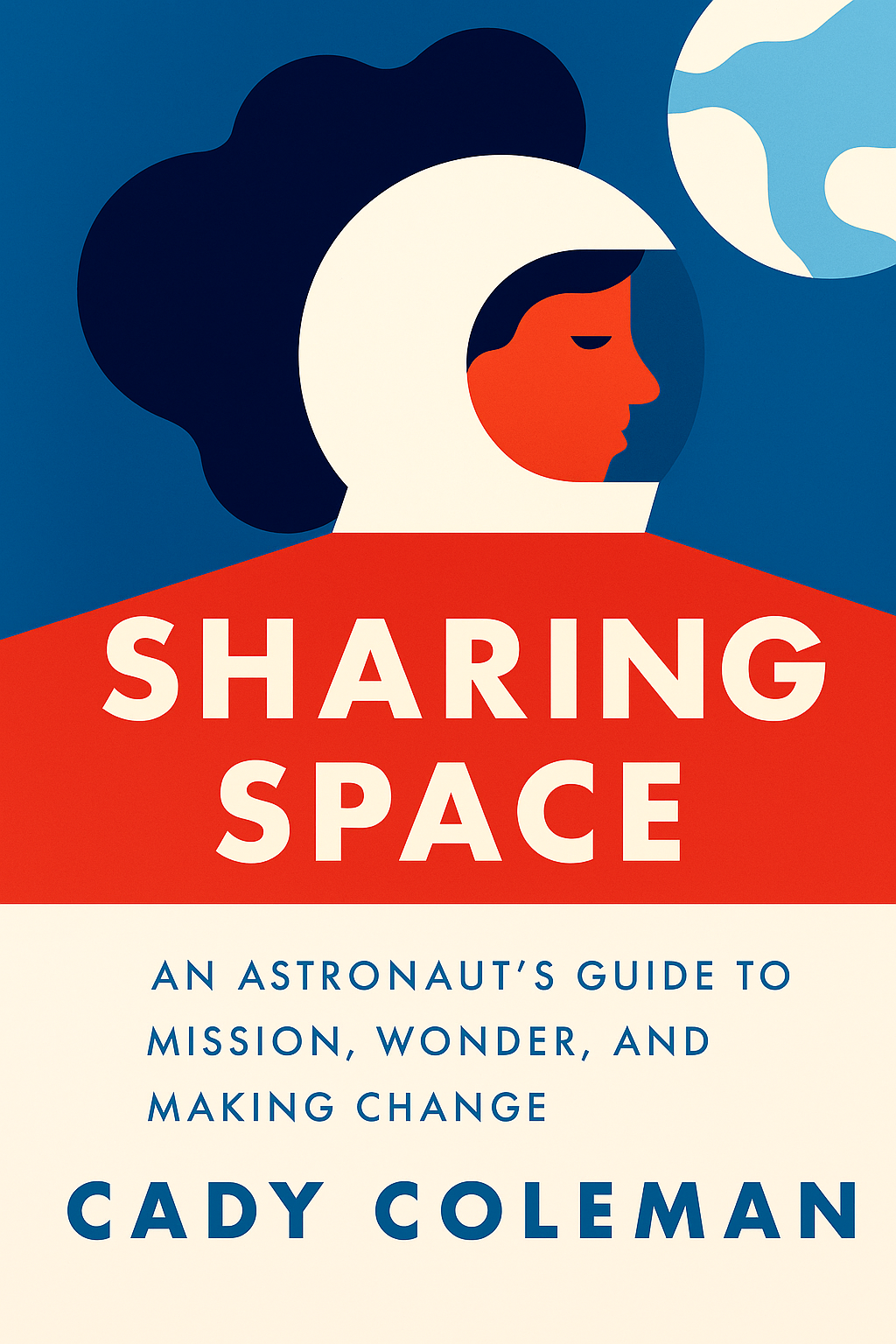
By Cady Coleman
