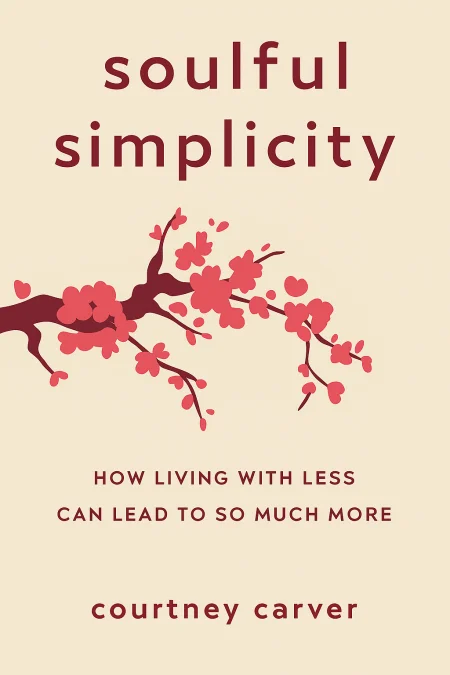
Soulful Simplicity
How Living with Less Can Lead to So Much More
Book Edition Details
Summary
When life throws you curveballs, sometimes the answer lies not in having more but in embracing less. Courtney Carver's "Soulful Simplicity" is a heartfelt manifesto for those seeking to reclaim their lives from the clutches of excess. Diagnosed with Multiple Sclerosis, Carver found that stress and clutter were her greatest adversaries. Her journey toward mindful minimalism is not just about shedding physical belongings but also about unearthing deeper emotional and relational connections. This transformative guide challenges readers to prioritize what truly matters, offering a path to greater clarity, serenity, and love. It's an invitation to create a life brimming with purpose and joy, all while carrying less baggage—both literally and figuratively. If you're ready to find freedom in simplicity, Carver’s insights may just be the beacon you need.
Introduction
Sarah stared at her overflowing closet, feeling overwhelmed by choices yet having nothing to wear. Her credit card bills piled up on the kitchen counter next to takeout containers from another rushed dinner. Despite having more than ever before, she felt empty inside, constantly chasing the next purchase, the next achievement, the next thing that might finally bring happiness. Sound familiar? In our culture of endless consumption and relentless busyness, millions of people find themselves trapped in this cycle of more leading to less satisfaction, more stuff creating more stress, and more obligations stealing precious time from what truly matters. The journey toward simplicity isn't about deprivation or living with nothing. It's about discovering that beneath all the clutter, debt, and chaos lies something far more valuable than any possession: the authentic self you've been searching for all along. When we strip away the excess that weighs us down, we create space for what our hearts actually crave—deeper connections, meaningful work, genuine peace, and authentic love. This isn't just about organizing closets or paying off credit cards, though those practical changes matter deeply. It's about remembering who you are beneath all the stuff you thought you needed to be happy. The transformation begins with a single brave decision to stop accepting overwhelm as normal and start believing you deserve better. Through gentle yet profound changes, you'll discover that living with less isn't about sacrifice at all. It's about creating room for everything that makes life worth living.
The MS Diagnosis That Changed Everything
She could feel the cold gadolinium contrast pushing through her vein as the MRI machine shook like ten thousand jackhammers around her trapped body. Just months earlier, she had been training for a cycling event to raise money for multiple sclerosis research, never imagining she would soon receive that same diagnosis herself. The irony was crushing. The vertigo, fatigue, and other symptoms she had dismissed as stress and overwork suddenly had a name and an uncertain future attached to them. For years, she had been the poster child for doing it all. Working long hours in advertising sales, chairing school auctions, traveling internationally, maintaining a perfect home, and keeping up with every demand on her time. She thought this was what success looked like. Her calendar was packed, her credit cards were maxed, and her energy was depleted, but she wore her busyness like a badge of honor. Everyone around her seemed to be living the same way, so surely this frantic pace was just part of adult life. The phone call came while she was at work. A casual delivery of life-changing news: "Oops. I was looking at the wrong chart. Yep, you have MS." No preparation, no gentle bedside manner, just a doctor's mistake corrected in real time. In that moment, everything she thought she knew about her future crumbled. Would she end up in a wheelchair? Would she go blind? Could she continue working? How would she tell her daughter that the mom who was supposed to protect her from everything was now facing something she couldn't control? But beneath the fear, something else began to stir. A quiet voice that had been drowned out by years of noise started to whisper that maybe this wasn't the end of everything. Maybe it was the beginning of something entirely different. The diagnosis that seemed like it would ruin her life would eventually become the catalyst that saved it, teaching her that sometimes our greatest crises become our most profound gifts.
From Clutter and Debt to Space and Freedom
Their two-thousand-square-foot home was filled to capacity. Every closet, drawer, and storage space contained items they barely remembered owning. She had saved memory boxes from fourth grade, kept clothes in three different sizes "just in case," and accumulated duplicate kitchen gadgets that promised to make life easier but only added to the overwhelming sense of drowning in stuff. The garage held sports equipment for hobbies they no longer pursued, while the storage shed in the backyard housed items that hadn't seen daylight in years. Meanwhile, the debt mounted as relentlessly as the possessions. Credit cards were used to pay other credit cards. Shopping had become her drug of choice, a temporary high that promised to fill the emptiness inside but only created deeper holes in her bank account and her heart. She told herself she deserved nice things after working so hard, but the shopping hangovers that followed each spending spree left her feeling worse than before. Every purchase was justified as necessary, as an investment, as something that would finally make her happy or help her become the person she wanted to be. The turning point came when they decided to get serious about becoming debt-free. It started with cutting up credit cards one by one, each snip feeling like severing ties to a destructive relationship. As they worked to pay down their debts, they realized they couldn't keep buying more things to fill the spaces they were trying to clear. For the first time, decluttering had a purpose beyond just making room for new stuff. They were making space for something far more valuable: freedom. Box by box, room by room, they began to let go. At first, it was easy to part with obvious clutter, but as they dug deeper, they confronted the emotional attachments that had kept them bound to possessions. Each item released created a little more breathing room, both physically and emotionally. They discovered that their home wasn't supposed to be a storage facility for their stuff; it was meant to be a sanctuary for their souls.
Trading Busyness for a Life of Meaning
The afternoon drive home from her daughter's school had become just another multitasking opportunity. Phone pressed to her ear, she navigated traffic while simultaneously returning client calls and half-listening to her daughter's stories about her day. She nodded at appropriate intervals and managed one-word responses, thinking she was efficiently handling her responsibilities. But when they pulled into the garage, she realized with horror that she couldn't remember a single detail of their conversation or even the drive itself. Her daughter's defeated expression as she slowly walked to the door with her backpack said everything. This wasn't unusual. Her phone had become a permanent appendage, demanding attention at dinner tables, during weekend family time, and in every spare moment. She checked emails constantly, responded to messages within minutes, and prided herself on being always available. The corporate culture demanded it, she told herself. Success required sacrifice. But watching her daughter's slumped shoulders that day, she finally understood what she was really sacrificing: the very relationships she thought she was working so hard to provide for. The next day, she made a radical decision. She banned her phone from the car. That simple act of choosing presence over productivity became the first step in her busy boycott. She braced herself for professional disaster, certain that clients would notice her delayed responses and her career would suffer. Instead, something miraculous happened. Her sales increased. Her relationships deepened. Her daughter began sharing stories again, knowing she had her mother's full attention. She began to notice how many hours were spent on activities that looked productive but accomplished nothing meaningful. Weekly meetings with no purpose, reports that no one read, and constant email checking that created the illusion of importance while stealing attention from work that actually mattered. The cultural addiction to busyness had convinced her that being frantically busy was the same as being successful, but now she could see the difference between motion and progress, between being busy and being effective.
Discovering That Simplicity Leads Back to Love
In the quiet spaces created by less stuff and less chaos, something unexpected began to emerge. At first, she couldn't name what was happening, focusing instead on the practical benefits of her simplified life: easier mornings, lower stress, better finances. But gradually, a deeper transformation became clear. Every item she released, every obligation she declined, every moment she chose presence over productivity was creating space for something that had been buried under years of accumulation and acceleration: love. Not the kind of love that needs to be purchased or proven, but the steady, quiet love that exists in shared meals without distractions, in conversations that meander without agenda, in mornings that begin with gratitude instead of rush. She discovered that she had been trying to buy love at the mall, prove love through achievements, and schedule love between more important commitments. But love doesn't live in those places. It lives in the spaces between, in the pauses, in the moments of simple presence that become possible when life isn't cluttered with everything else. The revelation came gradually. The clutter-free kitchen table became a gathering place for family meals and heartfelt conversations. The simplified wardrobe meant wearing favorite clothes every day instead of saving them for special occasions. The reduced debt created options to spend time differently, to choose work that aligned with values rather than just paying bills. Each simplification revealed that what she had been seeking through accumulation was already there, waiting to be discovered beneath the excess. Her relationship with her daughter deepened when she chose listening over multitasking. Her marriage strengthened when they began having regular conversations about their dreams instead of just their schedules. Her work became meaningful when she aligned it with her heart's priorities rather than society's expectations. The love had always been there, but it needed space to breathe, time to grow, and attention to flourish.
Summary
The path to a soulful life isn't found in adding more to our already overwhelming existence, but in courageously removing what doesn't serve our deepest values and truest selves. When we clear away the physical clutter, financial stress, and calendar chaos that weigh us down, we create space for what our hearts have been seeking all along: authentic connection, meaningful work, and the simple joy of being fully present in our own lives. This transformation isn't about perfection or deprivation; it's about having the wisdom to distinguish between what we think we need and what we actually need to thrive. The journey requires gentle honesty about the ways we've been living outside our hearts, using busyness to avoid intimacy and shopping to numb pain. But each brave step toward simplicity rewards us with something invaluable: the return to ourselves. When we stop trying to prove our worth through possessions and achievements, we remember that we've always been enough, just as we are. When we create margins in our schedules, we discover that the most precious moments happen in the spaces between our plans. When we align our choices with our values rather than our fears, we find that love was there all along, waiting patiently for us to make room for it to flourish. The invitation is simple but profound: begin where you are, with what you have, by choosing less of what depletes you and more of what fills you with genuine joy. Your authentic life is not somewhere you need to arrive; it's something you can uncover by removing everything that's been hiding it from view.
Related Books
Download PDF & EPUB
To save this Black List summary for later, download the free PDF and EPUB. You can print it out, or read offline at your convenience.
By Courtney Carver
