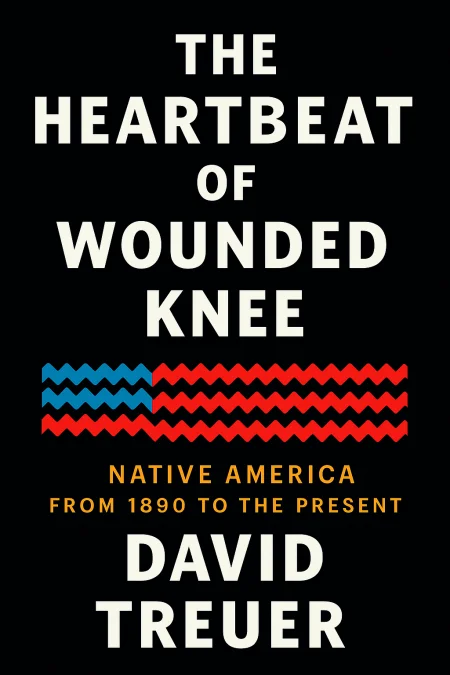
The Heartbeat of Wounded Knee
Native America from 1890 to the Present
Book Edition Details
Summary
Witness the vibrant pulse of a people who refuse to fade into the annals of history. In "The Heartbeat of Wounded Knee," David Treuer masterfully redefines the narrative of Native American resilience from the haunting echoes of the Wounded Knee massacre to the dynamic, culturally rich present. Casting aside the misconception that Native civilization perished alongside its fallen warriors in 1890, Treuer uncovers a tapestry of survival woven with threads of tenacity, identity, and reinvention. As tribes navigated the turbulent waters of forced assimilation and land seizures, they emerged with a sharpened resolve, crafting a unified voice in the legal and political arenas. Through a rich blend of memoir and meticulously researched history, this book challenges stereotypes and celebrates the enduring spirit of a people whose story is far from over. It's a testament to triumph, transformation, and the unyielding beat of a nation that continues to thrive.
Introduction
On a frozen December morning in 1890, the sound of gunfire at Wounded Knee seemed to echo the final chapter of Native American resistance. Yet more than a century later, tribal nations operate billion-dollar enterprises, govern millions of acres of land, and wield unprecedented political influence. This remarkable transformation from near-extinction to renaissance represents one of history's most extraordinary stories of survival and adaptation. The conventional narrative of American expansion portrays indigenous peoples as tragic figures swept aside by inevitable progress. But this perspective misses a deeper truth that challenges everything we think we know about Native American history. How did communities not only survive systematic attempts at cultural destruction but emerge stronger and more unified? What role did indigenous peoples play in shaping modern America while maintaining their distinct identities? And how do contemporary tribal nations balance ancient wisdom with cutting-edge innovation? This exploration reveals that Native American experiences are not footnotes to American history but central chapters that continue to unfold. The story offers profound insights for anyone seeking to understand resilience, cultural preservation, and the ongoing evolution of what it means to be American. Students, educators, policymakers, and citizens will discover how indigenous persistence and creativity have contributed to the nation's development in ways rarely acknowledged or understood.
From Contact to Conquest: Indigenous Homelands to 1890
When European explorers first encountered the Americas, they discovered a continent inhabited by millions of indigenous people organized into hundreds of distinct nations, each with sophisticated political systems, trade networks, and cultural traditions. The Aztec capital of Tenochtitlan rivaled European cities in grandeur, while the Haudenosaunee Confederacy had developed democratic principles that would later influence the American Constitution. From the Pacific Northwest's maritime cultures to the agricultural societies of the Southeast, Native America represented a vast mosaic of human achievement. The collision of worlds that followed Columbus's arrival in 1492 unleashed catastrophic changes that would reshape the continent forever. European diseases proved more devastating than any military conquest, reducing indigenous populations by an estimated ninety percent in some regions. Smallpox, measles, and typhus swept through communities with no immunity to Old World pathogens, causing entire civilizations to collapse within generations. Yet even as demographic catastrophe unfolded, survivors demonstrated remarkable adaptability that would become the hallmark of indigenous resilience. The transformation was perhaps most dramatic on the Great Plains, where tribes like the Lakota and Comanche completely reimagined their societies around the horse, an animal reintroduced by Spanish colonizers. These mounted warriors created new military strategies and hunting techniques that allowed them to resist European expansion for centuries. The Comanche built a vast empire that controlled trade routes across the Southwest, while maintaining their cultural identity and political independence. The final phase of conquest came with American expansion westward after 1776. The doctrine of Manifest Destiny provided ideological justification for policies that ranged from forced removal to outright genocide. The Indian Removal Act of 1830 drove southeastern tribes along the Trail of Tears, while the California Gold Rush triggered systematic violence against Pacific Coast peoples. The deliberate destruction of buffalo herds represented a calculated strategy to starve Plains tribes into submission, culminating in the Ghost Dance movement and the tragedy at Wounded Knee. Yet even in defeat, indigenous communities had preserved essential elements of their cultures and identities that would prove crucial for future renewal.
The Assault on Identity: Allotment and Assimilation 1891-1934
The period following Wounded Knee witnessed perhaps the most systematic assault on Native identity in American history. Federal policy shifted from military conquest to cultural warfare, seeking the complete transformation of indigenous peoples into individual property-owning Americans. The boarding school system, epitomized by institutions like Carlisle Indian Industrial School, implemented the philosophy of "kill the Indian, save the man" through forced separation of children from their families and communities. Students were forbidden to speak their native languages, practice traditional religions, or maintain any connection to their cultural heritage. The Dawes Act of 1887 represented an equally devastating attack on tribal identity through the destruction of communal landholding patterns. This policy divided reservations into individual allotments, with "surplus" lands opened to white settlement. Between 1887 and 1934, Native landholdings dropped from 138 million to 48 million acres, as many allottees lost their property through taxation, fraud, or simple inability to adapt to individual farming. The act struck at the heart of indigenous concepts of collective ownership and shared responsibility for future generations. Yet even during this nadir of federal policy, Native communities found ways to resist and preserve their cultures. Some boarding school graduates used their Western education to become advocates for their people, learning to navigate legal and political systems while maintaining their tribal identities. The peyote religion emerged as a pan-Indian spiritual movement that provided cultural continuity despite government suppression, creating new forms of indigenous identity that transcended traditional tribal boundaries. World War I marked a crucial turning point, as thousands of Native Americans volunteered for military service at rates exceeding the national average. Their distinguished service complicated narratives of the "vanishing Indian" and strengthened arguments for citizenship, which was finally granted to all Native Americans in 1924. The war experience also accelerated cultural exchange between tribes, as soldiers from different nations served together and returned home with expanded networks and shared experiences. The Indian Reorganization Act of 1934 under John Collier represented a dramatic policy reversal, encouraging tribal self-government and cultural preservation while laying the groundwork for modern sovereignty movements.
Warriors and Citizens: Military Service and Political Awakening 1914-1945
The two world wars of the twentieth century proved to be unexpected catalysts for Native American political awakening and cultural renewal. During World War I, indigenous men volunteered for military service at extraordinary rates despite not being American citizens, serving with distinction in integrated units and earning recognition for their courage and tactical skills. Their service challenged prevailing stereotypes about Native capabilities while reinforcing connections to warrior traditions that had sustained their communities for generations. The military experience exposed Native veterans to the wider world while strengthening their sense of distinct identity and purpose. Many returned home with new skills, broader perspectives, and enhanced confidence in their ability to compete in American society without abandoning their cultural heritage. The Indian Citizenship Act of 1924 recognized their contributions by granting citizenship to all Native Americans, creating the unique legal status of dual citizenship that would later prove crucial to tribal sovereignty arguments. World War II brought even more dramatic changes, as over 25,000 Native Americans served in all branches of the military. The famous Navajo Code Talkers used their language to create an unbreakable communication system that helped secure victory in the Pacific theater, demonstrating how indigenous knowledge could contribute to national defense. The war accelerated social change by bringing Native people into contact with diverse populations and exposing them to new technologies and organizational methods. The post-war period initially brought new threats in the form of termination policies designed to end the federal-tribal relationship entirely. The Termination Act of 1953 dissolved over 100 tribal governments and relocated thousands of Native Americans to urban centers like Chicago, Los Angeles, and Minneapolis. While intended to force assimilation, these policies often created cultural dislocation and urban poverty. However, they also inadvertently fostered new forms of pan-Indian identity as people from different tribes lived as neighbors for the first time, sharing experiences of discrimination and displacement that would fuel the activism of subsequent decades.
Rebuilding Nations: Tribal Governance and Self-Determination
The 1960s witnessed the emergence of Red Power activism that paralleled the African American civil rights movement but with distinctly indigenous goals centered on sovereignty and treaty rights rather than integration. The occupation of Alcatraz Island in 1969 captured national attention and inspired a wave of protests that included the Trail of Broken Treaties march on Washington and the 71-day siege at Wounded Knee in 1973. These dramatic actions, while controversial, succeeded in raising public awareness about Native issues and forcing policy changes. More significant than visible protests were the legal and political victories that established the foundation for modern tribal sovereignty. Court cases like Bryan v. Itasca County clarified the limits of state jurisdiction over tribal lands, while legislation such as the Indian Self-Determination Act of 1975 restored tribal authority over education, healthcare, and social services. The American Indian Religious Freedom Act of 1978 protected traditional spiritual practices, and the Indian Child Welfare Act addressed the crisis of Native children being removed from their communities through adoption and foster care. The Indian Gaming Regulatory Act of 1988 provided many tribes with unprecedented economic resources that enabled investments in education, healthcare, and cultural preservation. While casino revenues created wealth disparities within Indian Country, they also funded language revitalization programs, tribal colleges, and sophisticated legal advocacy organizations. Successful tribes like the Shakopee Mdewakanton in Minnesota and the Tulalip in Washington used gaming profits to diversify their economies and provide comprehensive services to their citizens. By the 1990s, the termination era had been thoroughly repudiated and replaced by policies of self-determination that recognized tribes as permanent governmental entities with inherent sovereignty. This transformation occurred not through revolutionary upheaval but through persistent legal advocacy, grassroots organizing, and the gradual education of American society about indigenous rights and history. A new generation of Native leaders emerged who combined traditional values with modern political skills, articulating visions of tribal sovereignty that went beyond mere survival to encompass genuine self-determination and cultural renaissance.
Summary
The five-century story of Native American survival and renaissance reveals fundamental truths about human resilience that challenge dominant narratives of American history. Rather than passive victims of inevitable historical forces, indigenous peoples emerge as active agents who continuously shaped their own destinies while influencing the broader trajectory of American development. The central theme throughout this history has been the tension between forces seeking to eliminate indigenous difference and Native communities' determination to maintain distinct identities while engaging productively with the modern world. This history offers profound lessons for contemporary challenges facing all Americans. Indigenous experiences with environmental stewardship provide crucial insights for addressing climate change and sustainability, while tribal governance models demonstrate alternatives to winner-take-all politics that emphasize consensus-building and long-term thinking. The Native American emphasis on collective responsibility and intergenerational obligation offers important correctives to excessive individualism and short-term thinking that characterize much of contemporary society. Moving forward, Americans must recognize that indigenous peoples are not historical artifacts but vital contributors to ongoing national conversations about democracy, justice, and environmental responsibility. Supporting tribal sovereignty and self-determination represents not merely a matter of historical justice but an investment in innovative solutions to shared challenges. The strategies that enabled cultural survival against impossible odds, from strategic adaptation to creative resistance, provide blueprints for any community seeking to maintain its identity while thriving in a rapidly changing world.
Related Books
Download PDF & EPUB
To save this Black List summary for later, download the free PDF and EPUB. You can print it out, or read offline at your convenience.
By David Treuer
