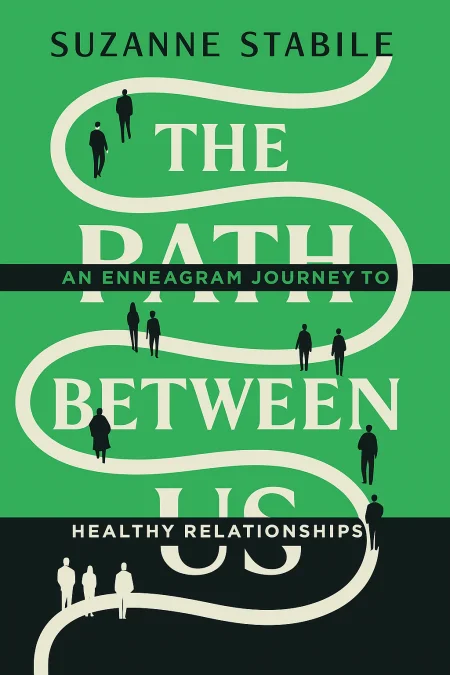
The Path Between Us
An Enneagram Journey to Healthy Relationships
Book Edition Details
Summary
What if the key to understanding the tangled web of human relationships lies in the ancient wisdom of the Enneagram? Suzanne Stabile, renowned for her expertise, invites you on a transformative journey through the nine distinct personality types. "The Path Between Us" isn't just a guide—it's a revelation. Why do certain personalities clash while others harmonize effortlessly? With her trademark blend of humor and insight, Stabile unravels the mysteries of our deepest motivations and fears, offering a fresh perspective that turns bewilderment into empathy. Whether it's demystifying the enigmatic Fours or deciphering the guarded Fives, this book promises to enrich your interactions and deepen your connections. It's not about labeling; it's about liberation—freeing ourselves from judgment and misunderstanding, and moving towards compassion and understanding. Dive in, and let the Enneagram be your compass to more fulfilling, harmonious relationships.
Introduction
Sarah stared at her husband across the dinner table, wondering how someone she loved so deeply could feel like such a stranger. They'd been married for twelve years, yet she found herself constantly surprised by his reactions, frustrated by his silences, and puzzled by what seemed like fundamental differences in how they approached life. When their friends recommended they explore something called the Enneagram, she was skeptical. Another personality test? But what they discovered changed everything. The Enneagram isn't just another way to categorize people—it's a profound map for understanding the hidden motivations that drive human behavior. Unlike other systems that simply describe what we do, the Enneagram reveals why we do what we do, uncovering the unconscious patterns that shape our relationships from the inside out. At its heart, this ancient wisdom tradition recognizes a beautiful truth: we all see the world through different lenses, and understanding these perspectives is the key to genuine connection. Each of us carries one of nine distinct ways of experiencing reality, and these patterns influence everything from how we communicate love to how we handle conflict, from what energizes us to what we fear most. When we begin to understand not just our own internal landscape but also the inner worlds of those around us, something remarkable happens. The behaviors that once seemed inexplicable suddenly make sense. The conflicts that felt insurmountable become opportunities for deeper understanding. The people we love become not just familiar, but truly known. This journey of discovery offers hope for every relationship in our lives—with spouses and children, friends and colleagues, even the brief encounters that color our days. When we learn to see through others' eyes and help them see through ours, we create pathways of compassion that transform how we connect with the world around us.
Understanding Our Differences: Stories of Nine Types
Joe and Suzanne had been married for years, yet a simple airplane encounter revealed how differently they experienced the world. As they watched an elderly couple struggle with language barriers and luggage placement, Suzanne felt an immediate impulse to help. She nudged her bilingual husband, certain he would spring into action. Instead, Joe calmly observed as the flight attendant managed the situation, insisting she could figure it out. Everyone ended up fine, but Suzanne felt bewildered and forgotten. Later, when she asked why he wouldn't help when he clearly could have, Joe's response illuminated their fundamental difference: "Honestly, it never occurs to me that I should help. I see that they are struggling, but I just don't think about getting involved." As a Two on the Enneagram, Suzanne automatically scanned for others' needs and felt equipped to meet them. As a Nine, Joe noticed the struggle but didn't feel personally called to action unless directly asked. This single exchange captures the essence of how our Enneagram type shapes our perception of responsibility, connection, and care. What feels natural and obvious to one person can feel foreign or even wrong to another. The Two sees helping as an expression of love; the Nine sees allowing others to manage as a form of respect. Neither perspective is right or wrong—they're simply different ways of moving through the world. Each of the nine types brings its own gifts and blind spots to relationships. The perfectionist One notices what needs improvement but may struggle with criticism. The generous Two intuitively meets others' needs but often neglects their own. The achievement-oriented Three adapts brilliantly to different situations but may lose touch with their authentic self. The depth-seeking Four craves genuine connection but fears being ordinary. The knowledge-gathering Five offers wisdom and objectivity but may withhold emotional availability. The loyal Six creates security for others but wrestles with anxiety and doubt. The enthusiastic Seven brings joy and possibility but may avoid life's inevitable pain. The powerful Eight stands up for justice but can overwhelm others with their intensity. The peaceful Nine sees all sides but may disappear when conflict arises. Understanding these patterns helps us appreciate both the beauty and the complexity of human nature.
Navigating Conflict and Connection Across Types
When Amanda and Christopher, both Ones, first heard their Enneagram type described in a workshop, their reactions surprised everyone watching. Instead of the usual nods of recognition, they seemed uncomfortable and distressed. Amanda began crying, and Christopher struggled to comfort her while managing his own overwhelming emotions. The facilitator recognized the signs—these were two people hearing their inner critic described out loud for the first time. For Ones, the revelation that others could see their relentless pursuit of perfection felt both validating and terrifying. Amanda later explained: "The main thing about a One is that nothing is ever good enough. I constantly strive for perfection, yet there is no way to achieve it. It's impossible." Christopher echoed her struggle: "Good enough is good enough for everybody else, but I've got to be right. And not just kind of right." Living with an internal voice that constantly finds fault creates unique challenges in relationships. Ones often extend this critical lens to their partners, believing that pointing out problems is a form of caring. Their well-intentioned efforts to help others improve can feel like constant judgment to types who don't share this perspective. Meanwhile, Ones themselves suffer under the weight of impossibly high standards that leave them feeling perpetually inadequate. The complexity multiplies when two Ones share a relationship. They understand each other's drive for excellence but may have different priorities about what needs perfecting. Their individual critical voices create a doubled burden of dissatisfaction, making it difficult to find peace in their shared life. Yet when Ones learn to recognize their patterns and extend grace to themselves and each other, their relationships can become laboratories for practicing unconditional love. This dynamic plays out differently across all type combinations. The nurturing Two might feel rejected by the independent Five's need for space. The spontaneous Seven could feel constrained by the security-seeking Six's need for plans. The intense Four might overwhelm the steady Nine with emotional volatility. Understanding these differences allows couples and families to create new patterns based on awareness rather than reaction.
Building Bridges: From Awareness to Acceptance
Dr. Chris Gonzalez, a marriage therapist and Nine, described a phenomenon that many people experience but few understand: "I have struggled to find or understand myself because I tend to change the expression of my personality dramatically depending on who I'm with and where we are." This shape-shifting, while often unconscious, represents his type's deep desire to maintain peace and avoid conflict at all costs. For Nines, adapting to others feels natural and caring, but it can leave their partners confused about who they really are underneath all that accommodation. When Chris is with emotionally expressive people, he becomes emotional. Around dominant personalities, he becomes submissive. This isn't deception—it's an automatic response to preserve harmony. Yet it can make authentic intimacy challenging when others never feel they're seeing the real person. The breakthrough comes when Nines like Chris learn that healthy conflict actually strengthens relationships rather than destroying them. As he discovered, "When I understand that I am averse to even healthy conflict, and healthy conflict actually produces intimacy, that insight lets me take intentional steps toward exploring conflict when necessary." This awareness allows him to risk showing up as himself, even when it might create temporary discomfort. Building bridges between types requires this kind of courageous self-awareness. It means recognizing our automatic patterns and consciously choosing different responses when our usual approach isn't serving the relationship. For the Eight, it might mean softening their intensity to create space for others. For the Four, it could involve managing their emotional volatility to avoid overwhelming their partner. For the Seven, it might mean staying present with difficult feelings instead of immediately reframing them into something more pleasant. True acceptance goes beyond mere tolerance of differences—it involves celebrating the unique gifts each type brings while acknowledging the growing edges we all face. When we stop trying to change others and instead focus on understanding them, we create space for genuine connection to flourish.
Transforming Relationships Through Enneagram Wisdom
Kenny, an Anglican priest and Five, painted a charming picture of his childhood relationship with knowledge: waking early to read encyclopedias before school, conducting chemistry experiments in his garage with equipment from his father's petroleum company, collecting maps from service stations. His delight in information and understanding shaped how he approached the world—through careful observation, thoughtful analysis, and measured engagement. As an adult, Kenny discovered something profound about his type's approach to relationships. While Fives might appear inaccessible due to their need for independence and privacy, their boundaries have gates. Their apparent withdrawal isn't rejection—it's conservation of limited energy resources. When Fives choose to open those gates and invite others in, the connection they offer is both precious and authentic because it's freely given rather than demanded. Understanding this dynamic transformed how others related to Kenny. Instead of pursuing him or taking his need for space personally, friends learned to extend invitations without pressure, to value the quality of their interactions over quantity, and to appreciate the unique gifts his perspective brought to their relationships. The key was recognizing that his way of loving looked different from more expressive types, but was no less real or meaningful. This principle applies across all type combinations. The Two's helping isn't manipulation—it's their natural expression of care, even when it feels overwhelming to more independent types. The Eight's directness isn't aggression—it's their way of showing respect by being honest, even when it feels harsh to more sensitive types. The Seven's optimism isn't denial—it's their genuine belief in possibility, even when it feels unrealistic to more practical types. True transformation occurs when we learn to translate between these different languages of love and connection. We begin to see that the behaviors that once frustrated us often represent our loved ones' best attempts to bridge the gap between their inner world and ours. When we respond to the intention behind the action rather than just the action itself, we create space for deeper understanding and more authentic relationship to emerge.
Summary
The path between us isn't straight or simple—it winds through the landscape of human personality with all its beautiful complexity and challenging differences. Through the lens of the Enneagram, we discover that the very traits that can create distance in our relationships also hold the keys to deeper connection. The perfectionist's critical eye, when understood and appreciated, becomes a gift for seeing potential. The peacemaker's avoidance of conflict, when gently challenged, reveals profound wisdom about harmony and acceptance. What emerges from this journey of understanding is both humbling and hopeful. We cannot change how others see the world, but we can change how we respond to their way of seeing. We cannot eliminate the differences between us, but we can learn to dance with them rather than fight against them. Most importantly, we discover that love isn't about finding someone who sees exactly as we do, but about choosing to see the world through another's eyes with curiosity rather than judgment. The invitation before us is both simple and revolutionary: to approach our relationships as opportunities for discovery rather than destinations for validation. When we meet others where they are instead of where we wish they were, when we honor their internal landscape while remaining true to our own, we create space for the kind of connection our hearts have always sought. In understanding the nine ways of being human, we find not just tolerance for our differences, but genuine celebration of the magnificent diversity that makes relationship both challenging and beautiful.
Related Books
Download PDF & EPUB
To save this Black List summary for later, download the free PDF and EPUB. You can print it out, or read offline at your convenience.
By Suzanne Stabile
