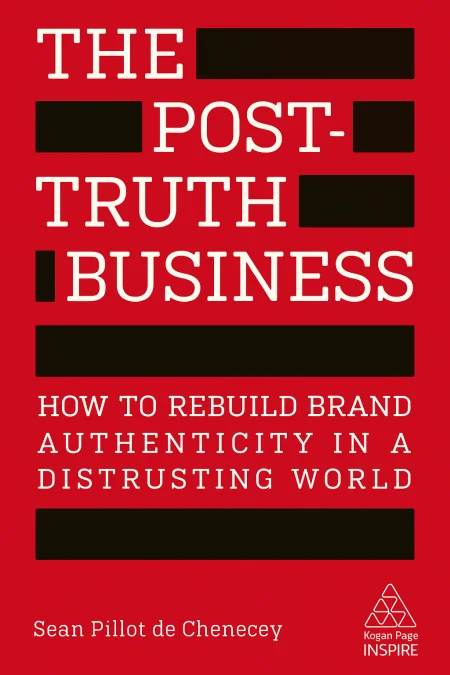
The Post-Truth Business
How to Rebuild Brand Authenticity in a Distrusting World
Book Edition Details
Summary
Trust in brands is crumbling in today's era of disinformation, but a beacon of hope shines through "The Post-Truth Business." This essential guide takes you into the heart of a world where authenticity is on the brink of extinction, unraveling how brands can restore faith and credibility amidst the chaos. With a sharp lens on pressing issues like fake news and the precarious dance between privacy and transparency, Sean Pillot de Chenecey offers a masterful roadmap for brands to craft meaningful connections. Explore riveting case studies across diverse industries, from fashion to technology, where pioneers are courageously bridging the credibility chasm. Through this transformative lens, discover how to navigate and thrive in the storm of modern skepticism, reigniting trust and forging genuine consumer bonds.
Introduction
The modern commercial landscape has been fundamentally transformed by an unprecedented crisis of institutional credibility that extends far beyond political discourse into the heart of consumer-brand relationships. This transformation represents more than a temporary disruption of traditional marketing practices; it signals a permanent shift in how trust is earned, maintained, and lost in an interconnected world where information travels instantly and deception is exposed with increasing frequency. The convergence of widespread misinformation, data privacy violations, and corporate scandals has created an environment where consumers approach all institutional claims with deep skepticism, forcing businesses to confront the uncomfortable reality that their traditional communication strategies may be actively undermining their credibility. The challenge facing contemporary organizations transcends simple messaging problems to encompass fundamental questions about corporate purpose, operational transparency, and the authentic alignment between stated values and actual behavior. When consumers can no longer rely on traditional gatekeepers to verify corporate claims, when social media algorithms amplify both genuine voices and manufactured narratives with equal intensity, and when privacy violations have become routine rather than exceptional, businesses must navigate a landscape where every statement is scrutinized and every action is potentially subject to global judgment. This analysis examines how forward-thinking organizations are responding to these challenges by embracing radical transparency, demonstrating genuine empathy for stakeholder concerns, and rebuilding trust through consistent action rather than persuasive rhetoric, ultimately revealing that authenticity cannot be manufactured or marketed but must be embedded in every aspect of organizational DNA.
The Erosion of Trust: From Alternative Facts to Brand Credibility Crisis
The contemporary trust crisis stems from a fundamental breakdown in the mechanisms that societies have traditionally used to establish and verify truth, creating an environment where competing narratives coexist without clear arbiters of accuracy or legitimacy. This phenomenon has profound implications for commercial communication, as brands can no longer rely on shared assumptions about factual reality or institutional authority to validate their claims. The normalization of "alternative facts" in political discourse has created a cultural context where consumers expect multiple versions of reality to compete simultaneously, undermining the foundation of shared truth that traditional marketing relationships required to function effectively. Corporate scandals have accelerated this erosion by repeatedly demonstrating that institutional claims cannot be taken at face value, with each revelation of environmental deception, labor violations, or financial misconduct reinforcing consumer suspicion that corporate communications are designed to obscure rather than illuminate. The damage extends far beyond the guilty parties to contaminate public perception of business generally, creating a defensive posture among consumers who assume deception until proven otherwise. This shift represents a fundamental reversal of the traditional burden of proof, where brands once enjoyed the benefit of the doubt but now must actively earn credibility through transparent action and consistent behavior. The speed and scale of modern communication networks amplify these trust deficits exponentially, enabling instant global distribution of both accurate information and deliberate misinformation while algorithmic filtering creates echo chambers that reinforce existing beliefs rather than challenging them with diverse perspectives. Social media platforms reward engagement over accuracy, creating incentive structures that favor emotionally charged content regardless of its truthfulness, while the collapse of traditional media gatekeepers removes institutional filters that previously helped distinguish credible sources from unreliable ones. The result is a marketplace where trust has become the scarcest and most valuable commodity, with organizations that recognize this shift and adapt their practices accordingly gaining significant competitive advantages while those that continue operating under outdated assumptions about consumer credulity face increasing rejection and irrelevance. This transformation demands nothing less than a complete reimagining of how businesses communicate and operate in a world where authenticity cannot be assumed but must be continuously demonstrated through transparent action.
Privacy Violations and Digital Manipulation: Undermining Consumer Confidence
The digital revolution has created unprecedented opportunities for data collection and behavioral manipulation that fundamentally alter the relationship between businesses and consumers in ways that most people neither fully understand nor meaningfully consent to participate in. The systematic harvesting of personal information for commercial purposes represents a form of surveillance capitalism that prioritizes corporate profits over individual privacy rights, creating a power imbalance that many consumers find deeply disturbing once they become aware of its scope and sophistication. When people discover that their private conversations, location data, purchasing patterns, and behavioral preferences are being continuously monitored, analyzed, and monetized without explicit permission, the violation feels intensely personal and betrays basic expectations of respect and dignity. The sophistication of modern manipulation techniques compounds this violation by using psychological insights and algorithmic precision to influence behavior in ways that bypass conscious decision-making processes, creating a form of commercial manipulation that feels invasive and unethical to consumers who value their autonomy. Micro-targeting capabilities allow brands to identify individual vulnerabilities and craft messages designed to exploit specific emotional triggers, reducing complex human beings to data points while systematically cataloguing and leveraging their psychological weaknesses for commercial gain. This approach generates resentment and defensive behavior among consumers who recognize that they are being manipulated rather than respected as autonomous individuals capable of making informed decisions. Regulatory responses like the General Data Protection Regulation represent attempts to restore balance between corporate data exploitation and individual privacy rights, but they also highlight how far the pendulum had swung toward extractive business models that prioritized data harvesting over ethical considerations. The fact that comprehensive legislation was necessary to establish basic principles of consent and transparency reveals the extent to which digital business models had normalized practices that many consumers consider fundamentally unacceptable. Even with new regulations in place, the technical complexity of data collection and processing makes it difficult for ordinary consumers to understand what they are agreeing to or how their information will ultimately be used. The long-term consequence is a fundamental shift in consumer expectations about privacy, control, and corporate responsibility, with brands that continue to operate extractive data models facing increasing resistance while those that embrace privacy-by-design principles and transparent data practices position themselves as trustworthy alternatives in an increasingly suspicious marketplace where respect for individual autonomy becomes a key differentiator.
Rebuilding Authentic Brands: Transparency, Purpose and Community Engagement
Authentic brand rebuilding requires moving beyond surface-level messaging adjustments to embed transparency into core business operations, making every aspect of organizational behavior visible and accountable to stakeholder scrutiny in ways that leave little room for the kind of hidden practices that systematically erode trust over time. This comprehensive transparency extends from supply chain practices and environmental impact assessments to executive compensation structures and decision-making processes, creating a level of organizational openness that may initially feel uncomfortable but ultimately provides the foundation for sustainable credibility. Organizations embracing this approach recognize that temporary discomfort from revealing imperfections and ongoing challenges is preferable to the long-term reputational damage caused by eventual exposure of concealed problems or deceptive practices. Purpose-driven branding represents a fundamental shift from transactional relationships focused on immediate commercial exchange to value-aligned partnerships where consumers choose brands based on shared beliefs and social commitments rather than purely functional benefits or price considerations. However, authentic purpose cannot be manufactured through marketing campaigns or public relations initiatives; it must emerge from genuine organizational values that influence hiring decisions, investment priorities, and strategic choices in ways that demonstrate consistent commitment over time. When purpose is authentic rather than performative, it creates natural alignment between business success and social benefit, generating sustainable competitive advantages that are difficult for competitors to replicate through superficial imitation. Community engagement provides the practical mechanism through which brands can demonstrate their values through concrete action rather than abstract rhetoric, creating tangible benefits for stakeholders while building emotional connections that transcend traditional customer relationships. This engagement takes many forms, from local environmental restoration projects and educational initiatives to employee volunteer programs and supplier development efforts that strengthen entire business ecosystems. The key distinction lies in ensuring that community involvement reflects genuine commitment to stakeholder welfare rather than calculated public relations gestures, with success measured by actual community impact rather than brand visibility or marketing metrics. The integration of radical transparency, authentic purpose, and meaningful community engagement creates a virtuous cycle where genuine behavior generates trust, which enables deeper relationships, which in turn provide the foundation for sustainable business growth that benefits all stakeholders rather than extracting value from them for short-term profit maximization.
The Path Forward: A Post-Truth Brand Manifesto for Trustworthy Business
The path forward requires acknowledging that traditional marketing approaches are not merely ineffective in the current environment but actively counterproductive, as they reinforce consumer suspicions about corporate manipulation and undermine the authentic relationships that sustainable businesses require to thrive over time. Trustworthy business practices must be embedded at the organizational level rather than relegated to marketing departments, influencing everything from product development and pricing strategies to customer service protocols and corporate governance structures. This comprehensive approach recognizes that brand authenticity cannot be compartmentalized or delegated to specialized functions but must permeate every aspect of organizational culture and daily operations. Successful organizations in this environment prioritize long-term relationship building over short-term profit maximization, understanding that sustainable competitive advantages emerge from earning and maintaining consumer trust rather than exploiting temporary information asymmetries or manipulating psychological vulnerabilities. This strategic shift requires patience and sustained investment, as authentic relationships develop slowly through consistent behavior and demonstrated reliability rather than dramatic gestures or clever promotional campaigns. The payoff, however, is customer loyalty that withstands competitive pressure and provides stable revenue streams even during periods of economic uncertainty or market disruption. The manifesto for trustworthy business emphasizes five interconnected principles that work synergistically to create organizational cultures capable of generating trust naturally rather than requiring constant effort to maintain credibility. Radical transparency in all business practices eliminates the information asymmetries that breed suspicion, while genuine empathy for stakeholder concerns ensures that business decisions consider broader impacts beyond immediate financial returns. Respect for privacy and individual autonomy demonstrates commitment to ethical behavior even when exploitation might be profitable, while authentic purpose provides consistent guidance for decision-making across diverse situations and challenges. Implementation of these principles requires leadership commitment and organizational transformation that may initially reduce operational efficiency or short-term profitability as systems are redesigned around transparency and stakeholder value creation rather than pure optimization metrics. However, organizations that successfully navigate this transition often discover that trustworthy practices ultimately prove more profitable than extractive alternatives, as they generate customer loyalty, employee engagement, and community support that provide sustainable competitive advantages in an increasingly skeptical marketplace where authenticity becomes the ultimate differentiator.
Summary
The fundamental insight emerging from this comprehensive analysis reveals that authenticity cannot be manufactured through marketing techniques or public relations campaigns but must be genuinely embedded in organizational DNA through transparent practices, authentic purpose alignment, and consistent behavior that demonstrates unwavering commitment to stakeholder value creation over pure profit maximization. In a post-truth environment where consumers have learned to assume deception until proven otherwise, the only sustainable path forward requires radical honesty combined with genuine dedication to creating value for all stakeholders rather than extracting maximum profit from information asymmetries or psychological manipulation. This transformation demands significant short-term sacrifices and comprehensive organizational change, but ultimately provides the most reliable foundation for long-term business success in an era of widespread institutional mistrust where authentic relationships become the scarcest and most valuable competitive advantage available to forward-thinking organizations.
Related Books
Download PDF & EPUB
To save this Black List summary for later, download the free PDF and EPUB. You can print it out, or read offline at your convenience.
By Sean Pillot de Chenecey
