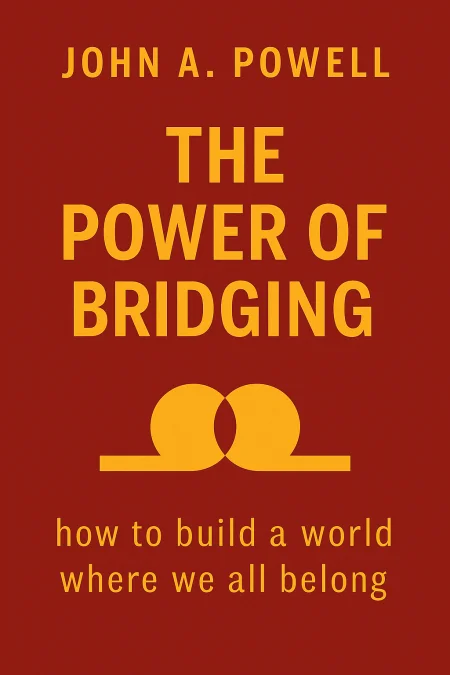
The Power of Bridging
How to Build a World Where We All Belong
Book Edition Details
Summary
What if the threads that seem to divide us could actually weave a tapestry of connection and understanding? Esteemed civil rights scholar john a. powell invites us to reimagine our fractured world through the lens of "bridging." In "The Power of Bridging," powell dismantles the barriers of "othering" and "breaking," introducing readers to the liberating practice of building bonds across differences. Through personal stories and actionable insights, he provides a roadmap to transform conflict into conversation, guiding us toward a future where every voice is honored. This book is not just a guide—it's a call to action for those yearning to unite disparate communities and foster a society where everyone truly belongs.
Introduction
Contemporary society faces an unprecedented crisis of fragmentation, where communities retreat into isolated camps and view differences as existential threats rather than opportunities for connection. This fragmentation manifests not merely as political polarization but as a deeper spiritual and social malaise that threatens the very fabric of human community. The central challenge lies in understanding how processes of "othering" create artificial separations between people, while practices of "bridging" can restore our fundamental interconnectedness. The analysis presented here challenges conventional approaches to social division by arguing that othering is neither natural nor inevitable, but rather a socially constructed process that can be consciously dismantled. Through examining the mechanisms by which societies create categories of belonging and exclusion, we can develop more sophisticated tools for building inclusive communities. The framework distinguishes between surface-level inclusion efforts and deeper transformation toward genuine belonging, where all people have agency to co-create their shared world. Readers will encounter a systematic deconstruction of assumptions about human nature, group identity, and social change, followed by practical guidance for implementing bridging practices across different contexts and scales of human interaction.
The Problem of Othering and the Promise of Belonging
Othering represents the fundamental challenge of our era, superseding even the color line that defined the twentieth century as the primary source of social fragmentation. This process involves more than simple prejudice or discrimination; it constitutes a systematic denial of full humanity to designated groups, relegating them to categories deserving less consideration, resources, and dignity than the dominant "we." The mechanics of othering operate through both explicit exclusion and subtle marginalization, creating hierarchies that position some people as fully human while rendering others as threatening, inferior, or invisible. The distinction between othering and related concepts like racism proves crucial for understanding contemporary social dynamics. While racism represents one manifestation of othering, the broader framework reveals how similar processes operate across lines of religion, nationality, sexuality, and other markers of difference. Susan Fiske's stereotype content model demonstrates how groups are systematically categorized along dimensions of perceived competence and warmth, with those deemed both incompetent and cold actually registering in brain scans as non-human objects of disgust rather than fellow people. Belonging emerges as the necessary antidote to othering, but not in the superficial sense of mere inclusion or tolerance. True belonging requires the fundamental right to participate in co-creating one's society, to have one's story valued and heard, and to exercise agency in shaping collective decisions. This vision extends beyond correcting historical exclusions to imagining entirely new forms of social organization where no one's dignity depends on another's subordination. The promise of belonging without othering represents both a practical necessity for addressing contemporary crises and a spiritual calling to recognize our fundamental interconnectedness. Such recognition demands moving beyond zero-sum thinking toward abundance-based approaches that expand rather than redistribute opportunities for human flourishing.
How Breaking Divides While Bridging Connects Communities
Breaking represents othering in action, the concrete practices through which societies maintain artificial divisions between groups. These practices range from hard breaking involving explicit violence and exclusion to soft breaking characterized by conditional acceptance and limited participation rights. The dynamics of breaking often emerge during periods of rapid social change, when anxiety about uncertainty gets projected onto designated others who become scapegoats for broader societal fears and insecurities. The relationship between breaking and belonging reveals a paradox: people often engage in othering precisely because they desperately need to belong somewhere themselves. Group membership frequently requires demonstrating loyalty through rejection of outsiders, creating cycles where the excluded respond by excluding others in turn. This understanding reframes many social conflicts from inevitable tribal warfare to manufactured divisions that serve particular power structures while undermining collective well-being. Bridging practices offer alternatives to breaking by maintaining openness to others' humanity even amid disagreement or conflict. Unlike superficial civility or false equivalence, bridging involves genuine curiosity about others' experiences, willingness to acknowledge their suffering, and commitment to finding ways forward that honor everyone's dignity. The practice requires distinguishing between people's essential worth and their particular beliefs or actions, creating space for both accountability and connection. Effective bridging must account for power differentials and historical context rather than assuming neutral starting points. Those with greater institutional power bear greater responsibility for initiating bridge-building, while marginalized communities retain the right to set boundaries around their participation. The goal involves creating conditions where authentic relationships can develop across difference rather than demanding premature reconciliation that ignores legitimate grievances.
From Short Bridges to Transformational Change Across Differences
Short bridges connect people who already share significant common ground but find themselves divided over strategy, emphasis, or specific disagreements within broader alignment. These bridges may appear simple from outside perspectives yet often prove surprisingly difficult to construct because familiarity breeds vulnerability to unique forms of hurt and disappointment. Family conflicts, denominational splits, and factional disputes within social movements exemplify how minor differences can generate major rifts when people's core identities feel threatened. Long bridges span much greater apparent distances between groups with seemingly incompatible worldviews, values, or interests. These require different strategies focused on discovering unexpected commonalities while acknowledging legitimate differences. Success often depends on leadership willing to model bridge-building despite potential costs to their standing within their own communities. The process involves moving beyond transactional exchanges toward transformational possibilities that can reshape the very terms of engagement. The continuum from transactional through transformational to spiritual bridging reflects deepening levels of commitment and risk. Transactional approaches focus on specific outcomes or mutual benefit, maintaining clearer boundaries around what each party is willing to offer. Transformational bridging opens possibilities for fundamental changes in relationships, institutions, and identities through the encounter with others. Spiritual bridging transcends instrumental calculations entirely, embracing connection as an expression of fundamental interconnectedness. Competition dynamics pose particular challenges for bridge-building when groups perceive their well-being as dependent on others' deprivation. Moving beyond zero-sum thinking requires expanding imagination about what constitutes success and security, often through concrete experiences of mutual benefit. This shift from scarcity to abundance consciousness underlies many successful peace-building and social change efforts that seemed impossible until they occurred.
Spiritual Practice and Structural Solutions for Universal Belonging
Bridging ultimately represents a spiritual practice grounded in recognition of fundamental interconnectedness among all beings. This perspective challenges dominant Western assumptions about autonomous individualism, suggesting instead that the separate self is largely illusory and that authentic well-being emerges through relationship and mutual care. Such recognition need not depend on specific religious beliefs but can emerge through direct experience of how personal and collective flourishing interweave. The spiritual dimension of bridging involves remaining open to others' humanity regardless of their response or recognition of ours. This unconditional orientation transcends transactional calculations while acknowledging the real risks and vulnerabilities involved in staying open amid conflict or hostility. The practice requires developing capacity to hold complexity, ambiguity, and even contradiction without rushing to premature closure or false certainty about others' motivations and character. Structural solutions complement spiritual practices by addressing systemic conditions that make othering more or less likely to emerge and persist. These include examining how institutions distribute resources, recognition, and power; how narratives about group differences get constructed and circulated; and how physical and social environments either facilitate or inhibit meaningful contact across difference. Policy interventions must account for both material inequalities and symbolic dimensions of status and belonging. Universal belonging as an aspiration guides both individual practice and collective organization toward futures where everyone has genuine opportunity to participate in co-creating their shared world. This vision requires moving beyond inclusion of previously excluded groups toward fundamental transformation of the systems and stories that created exclusion in the first place, while remaining grounded in concrete actions that begin wherever people find themselves in the present moment.
Summary
The central insight emerging from this analysis reveals that what appears as natural human tribalism actually represents socially constructed processes that can be consciously transformed through practices of bridging and commitment to universal belonging. The framework provides both spiritual grounding in interconnectedness and practical tools for addressing contemporary crises of fragmentation, offering hope that current polarization and conflict represent not inevitable human nature but transitional challenges in humanity's ongoing evolution toward more inclusive forms of community. This work particularly serves readers seeking both intellectual rigor and practical wisdom for navigating difference constructively in families, organizations, and broader society during times of rapid change and uncertainty.
Related Books
Download PDF & EPUB
To save this Black List summary for later, download the free PDF and EPUB. You can print it out, or read offline at your convenience.
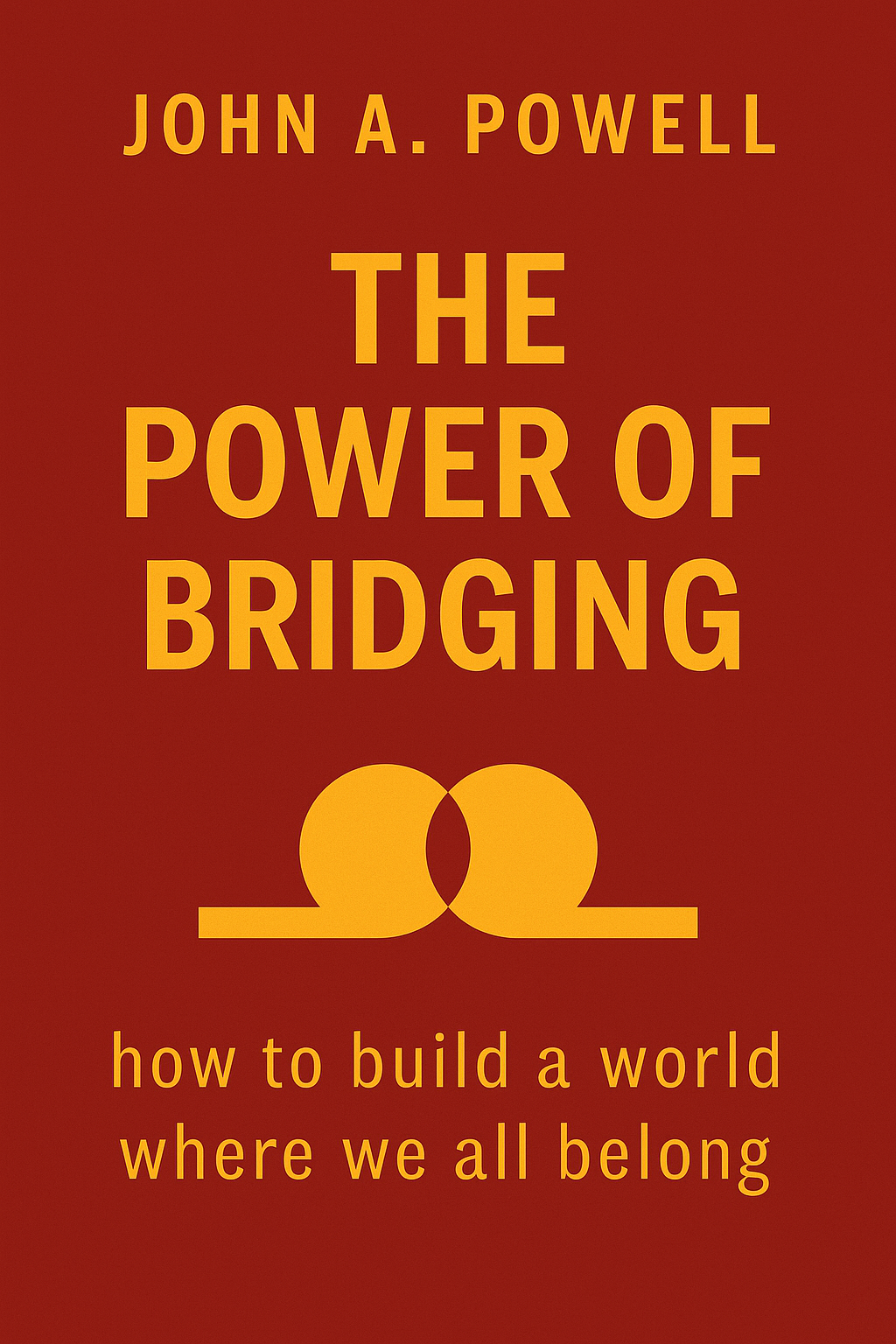
By John A. Powell
