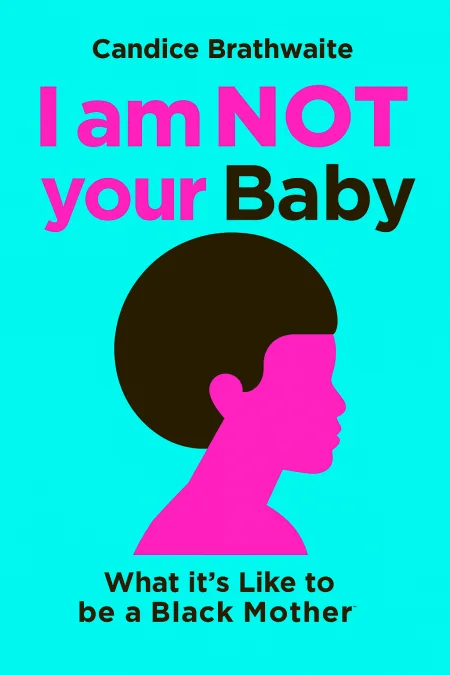
I Am Not Your Baby Mother
What it's like to be a Black British mother
Book Edition Details
Summary
A tapestry of wit and raw truth, "I Am Not Your Baby Mother" by Candice Brathwaite defies the glossy facade of modern motherhood to reveal a narrative both personal and profound. Here, Brathwaite embarks on an unapologetic exploration of her journey as a Black British mother, challenging the predominantly whitewashed portrayal of parenting in the media. Her memoir, a compelling blend of personal anecdotes and cultural critique, exposes the pervasive shadows of racial bias, from micro-aggressions to the more insidious grip of white privilege. This book not only chronicles her battles with postnatal depression and the painful epiphany of her children's inevitable encounters with racism but also stakes a claim for visibility and representation. Brathwaite's voice is candid and stirring, weaving humor with hard-hitting honesty, crafting a manifesto that demands to be heard.
Introduction
Candice Brathwaite's story begins with a simple yet profound declaration of identity that challenges everything society expects from young black mothers in Britain. Born into a world where her very existence would be scrutinized, judged, and reduced to harmful stereotypes, she refused to accept the narrow confines placed around her motherhood. Her journey from a young woman who never wanted children to becoming a fierce advocate for black British mothers reveals the complex realities of raising children while black in modern Britain. Through her unflinching honesty about pregnancy complications, systemic racism in healthcare, and the daily microaggressions her family faces, Brathwaite illuminates the unique challenges that black mothers navigate. Her evolution from silence to social media activism demonstrates how one voice can challenge institutional prejudices and create space for others. This is not just a personal memoir but a powerful manifesto about reclaiming narratives, protecting children, and refusing to be diminished by society's expectations. Readers will discover the intersection of race, class, and motherhood in contemporary Britain, the courage required to challenge established systems, and the transformative power of authentic storytelling in creating social change.
Breaking Stereotypes: From Fear to Motherhood
Brathwaite's path to motherhood was anything but conventional, marked by early resistance to the very idea of having children. Growing up surrounded by examples of struggling single mothers, she associated pregnancy with hardship and limitation rather than joy or fulfillment. Her first pregnancy ended in abortion, a decision she made without hesitation, viewing it as a necessary choice to avoid becoming another statistic in the cycle of young black women left to raise children alone. The weight of the "baby mother" stereotype haunted her consciousness, representing everything she feared about losing her independence and future prospects. Years later, when faced with her second pregnancy, something fundamental had shifted. The difference wasn't just her age or circumstances, but her partner Bode's unwavering commitment to fatherhood, demonstrated through his relationship with his existing daughter. This evidence of responsible black fatherhood challenged the narrative she had internalized about abandoned mothers and absent fathers. Her decision to proceed with the pregnancy became an act of faith, not just in her relationship but in the possibility of rewriting the script that had been handed to her. The transformation from someone who "never wanted children" to embracing motherhood revealed Brathwaite's capacity for growth and adaptation. Her journey illustrates how personal circumstances, supportive partnerships, and evolving perspectives can fundamentally alter life's trajectory. By choosing to have Esmé, she was not just accepting motherhood but actively rejecting the limiting beliefs about what young black mothers could achieve or become.
Navigating Racism: Fighting for My Children's Future
The harsh realities of raising black children in Britain became immediately apparent through Brathwaite's experiences with healthcare and education systems. Her near-death experience following Esmé's birth, where medical professionals repeatedly dismissed her complaints of severe illness, exposed the dangerous intersection of medical racism and maternal health. The statistics revealing that black women are five times more likely to die in childbirth became personal when she nearly became one of those numbers, fighting sepsis while healthcare providers attributed her symptoms to normal post-birth recovery. Educational racism emerged when five-year-old Esmé was ostracized by a classmate who declared her "too dark" to play with. The school's inadequate response, treating this as a minor incident warranting only a brief timeout, demonstrated how institutional racism operates through minimization and dismissal. Brathwaite's fury at this treatment of her daughter revealed the constant vigilance required of black parents, always preparing for the moment their children would first encounter racial prejudice. The family's decision to leave London for a predominantly white area, motivated by concerns about knife crime, created new challenges around racial isolation and identity. Moving her children from a diverse urban environment to a village where they were often the only black faces required careful consideration of the trade-offs between physical safety and cultural belonging. These experiences shaped Brathwaite's understanding that protecting her children meant constantly navigating between different forms of danger, from street violence to systemic discrimination.
Finding Voice: From Silence to Social Media Activism
Brathwaite's emergence as a social media activist stemmed from her frustration with the overwhelming whiteness of parenting content and advice available to new mothers. Recognizing that black British mothers were virtually invisible in mainstream parenting media, she began creating content that reflected her own experiences and those of women like her. This wasn't simply about representation but about survival, ensuring that black mothers had access to advice and community that understood their unique challenges. The creation of Make Motherhood Diverse marked her evolution from personal sharing to organized activism. This platform provided space for mothers from all backgrounds to share their stories, challenging the narrow definition of motherhood promoted by mainstream media. Her willingness to call out exclusionary practices, such as all-white judging panels for parenting competitions, demonstrated her commitment to using her growing platform for systemic change rather than personal advancement. The backlash she faced, including being labeled as "aggressive" and accused of "using race as a weapon," revealed the particular challenges faced by black women who dare to speak truth to power. These attacks, coming even from within the parenting community she was trying to diversify, illustrated how black women's advocacy is consistently reframed as aggression. Her decision to continue speaking out despite personal cost showed remarkable courage and commitment to creating space for future generations of black mothers.
Redefining Motherhood: Beyond Labels and Limitations
Brathwaite's ultimate achievement lies in her redefinition of what black British motherhood can look like, rejecting both external stereotypes and internal limitations. Her successful career as a content creator and author, built while raising two children, challenged assumptions about young black mothers' capabilities and aspirations. She proved that motherhood need not mean the end of personal ambition or professional growth, creating a model for other women to follow. Her approach to raising her children reflects a careful balance between protecting them from racism while building their confidence and resilience. The decision to move Esmé to private school represented both privilege and necessity, using financial success to access better opportunities while acknowledging the unfair reality that quality education often requires payment. Her openness about these choices, rather than shame, normalized the idea that black families deserve and can achieve excellence. The courage to write honestly about mental health struggles, relationship challenges, and parenting fears humanized the black motherhood experience in ways rarely seen in public discourse. By refusing to present a perfect image, she created permission for other black mothers to be honest about their struggles while maintaining dignity and strength. Her story demonstrates that black mothers can be complex, flawed, successful, and worthy of support and celebration.
Summary
Candice Brathwaite's journey represents a fundamental shift in how black British motherhood can be understood, celebrated, and lived. Her refusal to accept the limiting label of "baby mother" and her insistence on full humanity and complexity has opened doors for countless other women to tell their own stories without shame or apology. Through her advocacy, she has forced institutions from healthcare to education to media to acknowledge their failures in serving black mothers and children, creating pressure for meaningful change. Her work reminds us that representation matters not just for visibility but for survival, and that one person's courage to speak truth can catalyze broader social transformation. For anyone interested in understanding modern British society, the intersection of race and gender, or the power of authentic storytelling to create change, Brathwaite's experiences offer invaluable insights into resilience, advocacy, and the ongoing fight for equality and dignity.
Related Books
Download PDF & EPUB
To save this Black List summary for later, download the free PDF and EPUB. You can print it out, or read offline at your convenience.
By Candice Brathwaite
