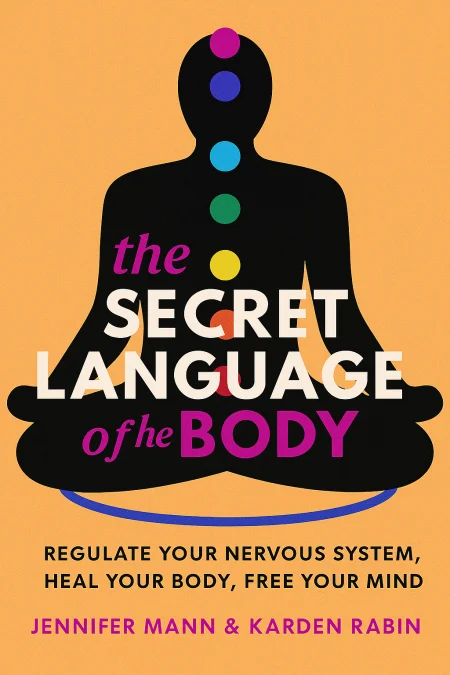
The Secret Language of the Body
Regulate Your Nervous System, Heal Your Body, Free Your Mind
Book Edition Details
Summary
In the intricate dance between mind and body lies the key to true healing. "The Secret Language of the Body" unveils this hidden dialogue, offering an innovative approach to reclaiming your health from the inside out. Mind-body maestros Jen Mann and Karden Rabin invite you on a transformative journey, where your autonomic nervous system takes center stage. This groundbreaking guide doesn't just skim the surface of stress relief; it dives deep into the heart of nervous system regulation, equipping you with science-based techniques to escape the shackles of chronic pain and trauma. Through vivid illustrations and accessible insights, Mann and Rabin arm you with the tools to decode your body's signals and shift from mere survival to thriving. Break free from the cycle of fear and confusion, and harness the power of your body’s innate wisdom to embark on a path of personal transformation.
Introduction
Sarah sat in her car after another doctor's appointment, tears streaming down her face. The test results were normal, the specialist assured her, but her body told a different story. Chronic fatigue, unexplained pain, and overwhelming anxiety had become her daily companions. She felt trapped in a body that seemed to be speaking a language she couldn't understand. Like countless others navigating similar struggles, Sarah found herself caught between the relief of "nothing's wrong" and the frustration of symptoms that felt devastatingly real. This disconnect between what we feel and what we're told points to a profound gap in our understanding of human health. While modern medicine excels at treating acute conditions, it often falls short when addressing the complex interplay between mind, body, and our deepest human needs. The secret lies not in more tests or treatments, but in learning to decode the sophisticated communication system that has been with us all along - our nervous system. Through compelling personal stories and scientific insights, this exploration reveals how our bodies constantly communicate with us through symptoms, sensations, and patterns of behavior. When we learn to listen to and respond in this secret language, we discover that what we thought were problems are actually messages pointing toward healing. The journey from disconnection to understanding, from surviving to thriving, begins with recognizing that our bodies are not breaking down randomly, but speaking to us with purpose and wisdom about what we need most.
From Chronic Illness to Self-Discovery: Understanding Your Nervous System
When Jen found herself bedridden with chronic fatigue syndrome at the height of her career as a physiotherapist, everything she thought she knew about healing was turned upside down. Despite her extensive medical training, she couldn't understand why her body had seemingly betrayed her overnight. The vibrant woman who once danced professionally was now unable to walk to the bathroom without exhaustion. Doctors offered little hope, suggesting she accept this as her new reality. But Jen refused to believe her story was over. In the depths of her illness, she began to notice something profound. Her symptoms weren't random - they followed patterns. The crushing fatigue often accompanied feelings of overwhelm. The pain in her back intensified when she felt unsupported. Her racing heart coincided with moments of fear about the future. What if these weren't separate problems but one intelligent system trying to communicate? This revelation led her to discover the polyvagal theory and understand that her nervous system had been stuck in survival mode for years. The high-achieving perfectionist who had learned to push through everything had a nervous system that finally said "enough." Through painstaking attention to the messages her body was sending, Jen learned to distinguish between the different states her nervous system occupied - the hypervigilant fight-or-flight, the shutdown and collapse, and the regulated state of safety and connection. The breakthrough came when Jen realized her chronic illness wasn't a malfunction but a sophisticated communication system. Her body had been whispering for years through smaller symptoms - tension headaches, digestive issues, sleep problems - but she had ignored these early warnings. The chronic fatigue was simply her nervous system shouting what it had been trying to say all along: "We need safety, rest, and a different way of being in the world."
Decoding Body Messages: The Science Behind Physical and Emotional Symptoms
Tom, a successful businessman, had been living with crippling back pain for over a decade. Despite seeing the best specialists and trying every treatment imaginable, the pain persisted. His life revolved around managing his condition until a radical idea emerged: what if his pain wasn't about his spine at all? When he finally paused to listen to what his body might be telling him, he discovered something remarkable. During a particularly intense episode, Tom noticed his back pain coincided with a work deadline that required him to say no to helping a family member. As he sat with this awareness, memories flooded back of childhood moments when he had to carry everyone else's emotional burdens. His mother's depression, his father's anger, his siblings' needs - young Tom had become the family caretaker, and his nervous system had learned that love meant taking care of everyone else at his own expense. The revelation was profound. Tom's back wasn't just holding up his physical body; it was holding up everyone else's emotional weight too. The pain intensified whenever he felt responsible for others' wellbeing and diminished when he practiced setting boundaries. His nervous system had been using physical pain as a messenger, trying to communicate about emotional boundaries that had never been established. Through careful attention to these patterns, Tom began to understand that symptoms aren't random occurrences but sophisticated communications from our nervous system about unmet needs. His back pain was asking for permission to put down burdens that were never his to carry. The body speaks in the language of sensation, emotion, and physical experience, and when we learn to translate these messages accurately, we discover that our symptoms often hold the keys to our healing.
Breaking Survival Patterns: Tools for Nervous System Regulation
When Charlotte, a perfectionist actress, found herself housebound with severe symptoms during the pandemic, her world collapsed. The high-achieving performer who had always managed stress through harder work and stricter control suddenly had nowhere to run. Her nervous system, which had been operating in overdrive for decades, finally crashed into a state of complete shutdown. Charlotte's journey began with learning to recognize when her nervous system was hijacked by old survival patterns. Through simple awareness practices, she started to notice the early warning signs - the shallow breathing that preceded panic attacks, the muscle tension that signaled her fight-or-flight response, the emotional numbness that indicated shutdown. But awareness alone wasn't enough; she needed tools to interrupt these automatic patterns. The breakthrough came through discovering nervous system modifiers - specific techniques that could directly influence her vagal tone and help her move between different states. When Charlotte felt the familiar rise of perfectionist panic, she learned to interrupt the pattern with bilateral stimulation, vagal toning exercises, and grounding techniques that spoke directly to her nervous system's language. The butterfly hug became her pathway back to safety. Humming and vocal toning restored her sense of calm. What amazed Charlotte most was how quickly her body responded to these interventions. Unlike years of therapy that worked primarily with her thoughts, these techniques created immediate shifts in her physiology. Her nervous system began to remember what safety felt like and develop new patterns of response. The woman who had lived in chronic hypervigilance for decades learned that regulation wasn't about controlling her environment perfectly - it was about teaching her nervous system that it could return to calm after activation.
Healing Childhood Wounds: Inner Child Work and Attachment Repair
Jordan's story began with a forgotten trigger - his wife forgetting to buy ketchup at the grocery store. What should have been a minor inconvenience sent him into a rage that surprised even him. As he lay in their bedroom afterward, he realized something profound was happening beneath his anger. Using the techniques he'd been learning, Jordan connected with the young part of himself that had been activated by this seemingly trivial event. In his mind's eye, Jordan saw himself as a seven-year-old boy, curled up alone on the living room floor, hungry and waiting for a mother who repeatedly promised to come home but never did. The forgotten ketchup had awakened the same feeling of abandonment that little Jordan had experienced countless times. His nervous system couldn't distinguish between his loving wife's simple mistake and his mother's pattern of broken promises and neglect. Through gentle inner dialogue, Jordan began to provide the attention and care that his younger self had never received. He visualized holding that frightened little boy, explaining that they were safe now, that they had people who truly cared about them. The transformation was remarkable - as he tended to his inner child's wounds with compassion rather than criticism, his adult relationships began to change dramatically. This work revealed how our earliest attachment experiences become the template for how our nervous system interprets safety and threat throughout our lives. When those early relationships lacked the attunement we needed, our nervous system develops coping strategies that may have helped us survive childhood but create problems in adult relationships. Healing happens when we can finally provide our inner child with the consistent, responsive love that teaches our nervous system what safety actually feels like. Through this deep repair work, we don't just heal symptoms - we transform the very foundations of how we experience ourselves and our relationships with others.
Summary
The secret language of the body reveals a profound truth that transforms how we understand healing: our symptoms are not problems to be eliminated but messages to be decoded. Through the stories of individuals who learned to listen to their nervous systems, we discover that chronic illness, anxiety, pain, and emotional struggles often represent a sophisticated communication system trying to guide us toward what we most need for healing and wholeness. The journey from confusion to clarity follows a recognizable pattern. First comes the awareness that our bodies are speaking to us through sensations, emotions, and patterns of activation. Then we learn to interrupt the automatic survival responses that keep us stuck in cycles of dysregulation. Finally, we redesign our internal landscape by addressing the root causes - often childhood wounds and unmet attachment needs - that created these patterns in the first place. Perhaps most importantly, these stories demonstrate that healing is not something that happens to us but something we actively participate in. When we learn to speak the secret language of the body, we reclaim our power as the authors of our own healing journey. We discover that the very symptoms that once felt like enemies can become our greatest teachers, pointing us toward the safety, connection, and authentic self-expression that our souls have always been seeking.
Related Books
Download PDF & EPUB
To save this Black List summary for later, download the free PDF and EPUB. You can print it out, or read offline at your convenience.
By Jennifer Mann
