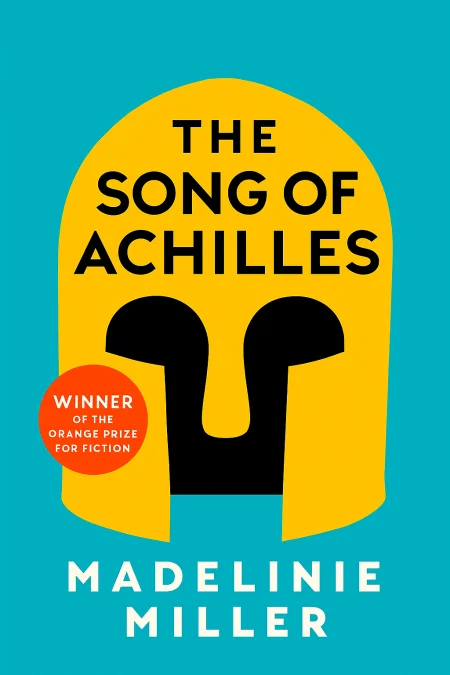
The Song of Achilles
A Novel
Book Edition Details
Summary
In the realm of ancient legends, the fate of two unlikely souls intertwines beneath the shadow of Troy's looming war. Meet Patroclus, a banished prince whose awkwardness is eclipsed by the radiance of Achilles, a demigod destined for greatness. Despite the chasm between their worlds, a tender friendship blooms into a profound love, defying even the wrath of the sea goddess Thetis. As the clarion call of war resounds across Greece, their bond is tested amidst the chaos of swords and prophecies. Achilles, lured by the siren song of glory, marches towards his fate, while Patroclus, torn between devotion and dread, stands steadfast by his side. This masterful reimagining of Homer’s Iliad captures the heart's struggle against the inexorable tide of destiny, weaving an unforgettable tapestry of love, courage, and sacrifice in the age of heroes.
Introduction
In the shadowed halls of ancient palaces, where gods walked among mortals and destiny was written in blood and bronze, a story unfolds that has captivated hearts for millennia. This is not merely a tale of war and heroism, but a profound exploration of love's power to both elevate and destroy, of the price of immortal fame, and of the bonds that define our humanity even in the face of divine will. Set against the backdrop of the legendary Trojan War, this narrative weaves together the threads of Greek mythology with an intimacy that transforms epic into something deeply personal. It is a story where the greatest warrior of his generation must choose between a long, quiet life and eternal glory purchased with an early death. Where a young exile finds purpose in devotion, and where the gods themselves are moved by mortal love and loss. Through this retelling, readers encounter not distant heroes carved in marble, but breathing, feeling individuals whose struggles mirror our own eternal questions about love, loyalty, and the meaning of a life well-lived. The ancient world becomes a mirror for contemporary hearts, revealing truths about sacrifice, friendship, and the courage required to love someone whose destiny leads inevitably toward tragedy.
From Exile to Divine Friendship: Patroclus and Achilles Unite
In the kingdom of Opus, a moment of childhood rage changes everything. Young Patroclus, son of King Menoitius, strikes down a boy in a quarrel over dice, the victim's head cracking against stone like an egg. The killing is accidental, born of humiliation rather than malice, but the consequences are absolute. Exile becomes his fate, and his father, caring more for political stability than paternal love, delivers his son to the court of King Peleus like unwanted cargo. The boy finds himself in Phthia, smallest of the Greek kingdoms, among other cast-off princes and noble sons. Here, Patroclus expects nothing but the familiar taste of rejection. He is unremarkable in every way that matters to their warrior culture—neither swift nor strong, neither beautiful nor bold. Yet it is here that destiny reveals its first surprise. Achilles, son of the sea-goddess Thetis and heir to Phthia, possesses everything Patroclus lacks. Golden-haired and divinely gifted, he moves through the world with unconscious grace that marks him as touched by the gods. When Achilles chooses the exile as his companion, the court whispers in bewilderment. What could the prophesied greatest warrior of his generation want with such an ordinary boy? But in quiet moments away from watching eyes, something extraordinary blooms between them. On the beaches of Phthia and in olive groves beyond the palace, they discover a friendship that transcends usual bonds of boyhood. Under the patient guidance of the centaur Chiron, they learn not only the arts of war and healing, but find in each other a completion neither knew they lacked. Their bond deepens beyond categories or conventions, becoming something that exists in its own sacred space. Patroclus offers what no one else can—acceptance without awe, companionship without agenda. In each other, they discover souls that understand completely, presences that make them more than they could ever be alone. Yet even in this sanctuary, shadows gather as prophecy speaks of choices that will test not only courage, but the very foundation of their devotion.
The Call to Glory: Troy's Fateful War Begins
The summons arrives like a storm wind, carrying news that will reshape the world. Helen, most beautiful of mortal women, has been stolen from Sparta by Paris, prince of Troy. Her former suitors, bound by ancient oath, must honor their pledge to defend her marriage. The call to war echoes across every Greek kingdom, and even in distant Phthia, the drums of conflict begin to beat with inexorable rhythm. Peleus receives the messengers with the weight of a father's knowledge. His son is no longer a child playing at heroics but a young man whose divine heritage marks him for greatness. Yet when the choice is offered—to lead Phthia's forces to Troy or remain safely at home—Achilles hesitates. The decision seems simple enough, but the goddess Thetis knows what mortals cannot: the threads of fate that bind her son to glory and death in equal measure. In desperation, she spirits Achilles away to the island of Scyros, disguising him among the daughters of King Lycomedes. For months he lives as Pyrrha, learning the arts of women while his divine nature chafes against the deception like a caged lion. But love proves stronger than a mother's protection. Patroclus, following his heart across the wine-dark sea, finds his companion and refuses to be parted from him again, even in the face of divine wrath. Their reunion is interrupted by the arrival of Odysseus and Diomedes, sent by Agamemnon to recruit the prophesied hero. With cunning worthy of his reputation, Odysseus lays a trap among gifts of jewelry and weapons. When a trumpet sounds in false alarm, only one of the "maidens" reaches instinctively for sword and spear. The greatest warrior of his generation stands revealed, and with him, the terrible choice that will define his legend and seal his fate.
Wrath and Sacrifice: Love's Ultimate Price
On the cliffs of Scyros, with salt wind whipping around them and the sea stretching endlessly toward Troy, Achilles learns the full weight of his destiny. His mother, appearing in all her divine terror, speaks the prophecy that will haunt their remaining days: if he goes to Troy, he will win eternal fame but die young; if he stays, he will live long but be forgotten like morning mist before the sun. The choice tears at the very fabric of who he is. Achilles has tasted his own power, felt the divine fire that burns in his veins, seen how men's faces light with wonder at his presence. To live unknown, to let that brightness fade into ordinary mortality, seems a death worse than any sword could bring. Yet the alternative means abandoning everything precious in life—his father's love, his homeland's peace, and most of all, the companionship that has become the center of his world. The beaches of Troy stretch before the assembled Greek fleet like a promise written in sand and blood. Here, where rivers meet the sea and great walls rise against the sky, the price of glory begins to exact its toll. Achilles' first kill comes from his ship's deck—a spear cast impossibly far, finding its mark in a Trojan archer's heart. The cheer that rises carries his name to the heavens: Aristos Achaion, best of all the Greeks. But it is not the Trojans who ultimately break the hero's spirit. When Agamemnon publicly strips Achilles of his war prize, the insult cuts deeper than any blade. The theft is not merely about possession, but about honor itself, the currency by which heroes are measured and remembered. In rage that shakes the Greek camp's foundations, Achilles withdraws from battle, and with his absence, the tide of war begins to turn against his countrymen with devastating consequences.
Beyond Death: Eternal Memory and Legend
As Trojan forces press their advantage, driving Greeks back to their very ships, desperation breeds desperate measures. The sight of his countrymen dying while Achilles remains consumed by wounded pride proves too much for Patroclus to bear. In a moment that will echo through eternity, he conceives a plan both brilliant and tragic, proposing to don Achilles's unmistakable armor and lead the Myrmidons into battle. The mere sight of the legendary war gear, he argues, will scatter the Trojans without requiring Achilles to break his oath. The deception works beyond their wildest hopes. Clad in bronze that gleams like captured sunlight, Patroclus charges into the fray with fury of a man fighting for everything he holds dear. The Trojans, believing they face the returned Achilles, break and flee before his advance. For precious hours, it seems the tide has turned, the ships are saved, and honor might be preserved without further sacrifice. But glory demands its price, and Patroclus pays it in full when Hector's spear finds its mark. The news of Patroclus's death reaches Achilles like a thunderbolt from Zeus himself, shattering the last vestiges of the golden prince who once laughed in rose-colored caves. The grief that consumes him transcends human understanding, becoming a force of nature that reshapes everything it touches. When he finally returns to battle, he brings with him the fury of a man with nothing left to lose, pursuing Hector three times around Troy's walls before ending him beneath the sacred laurel tree. Yet even in his madness, traces of the man Patroclus loved shine through. When old King Priam comes in darkness to beg for his son's body, Achilles finds himself moved by the father's grief, recognizing in it an echo of his own loss. The moment of mercy that follows becomes one of the war's most profound, as two enemies find common ground in shared understanding of love and loss. When Paris's arrow finally finds its mark, Achilles falls with thoughts not of glory, but of promised reunion with the soul that completed his own.
Summary
This ancient tale resonates across millennia because it captures fundamental truths about love, sacrifice, and the price of immortality that remain as relevant today as they were in the Bronze Age. At its core lies the recognition that true heroism is not found in the glory of battle or the accumulation of fame, but in the willingness to sacrifice everything for another's wellbeing. The story challenges conventional notions of masculine honor, suggesting that the greatest strength lies not in conquest but in devotion, not in dominance but in the courage to be vulnerable. The narrative's enduring power stems from its unflinching examination of how love can both elevate and destroy, how the very qualities that make us most human can also lead to our downfall. Through the lens of ancient myth, we see reflected our own struggles with mortality, meaning, and the desperate desire to be remembered. The tale reminds us that while glory fades and empires crumble, the bonds we forge with others possess a permanence that transcends even death itself, creating ripples that continue to move through time long after the original stone has sunk beneath the surface.
Related Books
Download PDF & EPUB
To save this Black List summary for later, download the free PDF and EPUB. You can print it out, or read offline at your convenience.
By Madeline Miller
