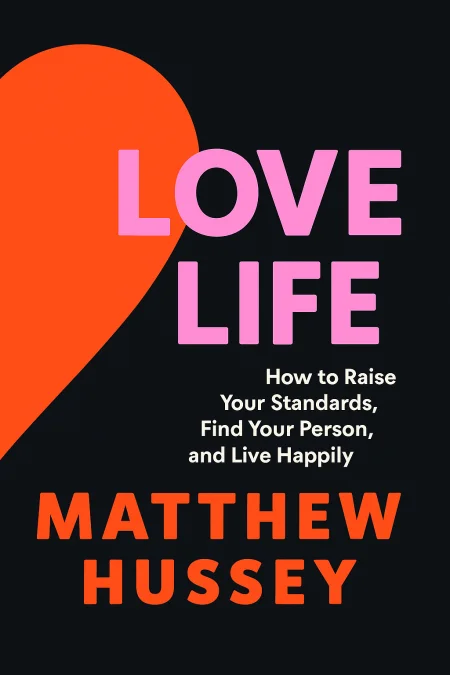
Love Life
How to Raise Your Standards, Find Your Person, and Live Happily (No Matter What)
Book Edition Details
Summary
In the captivating pages of "Love Life," Matthew Hussey invites readers to redefine their understanding of relationships by turning the lens inward. This isn't just another guide to romantic success; it's a deep dive into the most critical relationship you'll ever have—the one with yourself. Hussey deftly weaves his own transformative experiences with keen insights, questioning the choices we make when love leads us astray or when loneliness looms large. What if love is less a remedy and more a mirror reflecting our innermost struggles? "Love Life" challenges you to confront the fears that keep you anchored in unfulfilling relationships and to recognize your intrinsic worth beyond any partnership. It's a heartfelt journey towards self-discovery, aiming to empower you to embrace life’s fullness, whether you're single or in search of your perfect match.
Introduction
Sarah sat in her car after another disappointing date, staring at her phone as yet another "nice guy" sent mixed signals about wanting to see her again. At thirty-two, she'd been through this cycle countless times—the initial excitement, the gradual realization that something was off, and the inevitable fade-out that left her questioning her worth. Like millions of others navigating modern romance, Sarah found herself caught between wanting love and wondering if she was somehow broken for not finding it. The journey to meaningful connection isn't just about meeting the right person—it's about understanding the patterns that keep us stuck, the standards we're afraid to maintain, and the conversations we're too scared to have. Through real stories of heartbreak and triumph, we discover that love isn't something that happens to us, but something we actively create through conscious choices, clear boundaries, and the courage to value ourselves. This exploration reveals how our deepest struggles in dating often mirror our relationship with ourselves, and how transforming one inevitably transforms the other.
The Coach's Paradox: Teaching Love While Learning to Receive It
Standing in Beverly Hills with a publishing deal and millions of YouTube views, Matthew seemed to have all the answers about love and relationships. Yet the irony was inescapable—he was giving advice about healthy dating while being, by his own admission, terrible at it himself. He dated multiple people simultaneously without full disclosure, ghosted when things got complicated, and continued seeking attention from those who wanted more than he could give. The young coach who confidently dispensed wisdom about red flags was simultaneously creating them for others. The wake-up call came during his own devastating heartbreak years later. Reading through his journal entries from that relationship, he found notes like "If anyone can take it, I can" and "This is warrior training"—treating his own misery in love like Navy SEAL preparation rather than recognizing he was in the wrong situation entirely. The man who taught others to avoid toxic patterns had convinced himself that his problem wasn't unmet needs, but having needs at all. This painful reckoning revealed a fundamental truth about giving and receiving love advice: we often teach what we most need to learn. The expertise that comes from helping others navigate their pain doesn't automatically translate to wisdom in our own lives. Sometimes the very people who can see clearly into others' situations are the most blind to their own patterns, using their knowledge as a shield rather than a mirror.
From Red Flags to Real Standards: Choosing Wisely Over Wanting Desperately
During a live event in Dublin, a woman stood up with a question that made the entire audience laugh in recognition: "How do you get over someone you never dated?" Her words captured the modern dating dilemma perfectly—we often find ourselves emotionally invested in people who barely picked up our metaphorical handkerchief in the first place. Later that evening, another woman shared that she'd broken up with someone that very morning after staying in a relationship for over a year despite knowing "since the beginning" it was wrong, simply because she didn't want to be alone. These stories illuminate the dangerous gap between what we know intellectually and what we do emotionally. We can spot red flags from miles away when advising friends, yet ignore glaring warning signs in our own relationships. The woman who stayed despite early doubts represents countless others who mistake intensity for importance, confusing the drama of uncertainty with genuine connection. Her honesty about not wanting to be alone revealed the scarcity mindset that drives so many poor relationship choices. The path forward requires distinguishing between surface-level attraction and deeper compatibility. True importance in relationships isn't measured by how strongly we feel about someone, but by their consistent investment in our wellbeing. When we learn to value builders over poets—those who actually construct something meaningful rather than just talk beautifully about potential—we begin to make choices based on reality rather than fantasy.
Hard Conversations and Honest Boundaries: Creating Authentic Connection
Tanya had spent nearly a decade dating with the intensity of a second job, meeting countless men but never finding the committed relationship she craved. The breakthrough came when she made a radical decision: she would no longer have sex outside of a committed relationship. This wasn't about moral judgment but about alignment—ensuring her actions matched her deepest values and goals. When dates made sexual jokes, she'd casually mention her boundary, watching some men disappear immediately while others respected her clarity. The magic wasn't in the specific boundary but in her willingness to communicate her path unashamedly. She spoke about wanting marriage and children not as desperate pleas but as exciting personal goals, framing them in terms of her own journey rather than pressure on her dates. This approach naturally filtered out those who weren't aligned while attracting someone who shared her vision. Her eventual fiancé appreciated her authenticity and joined her in creating the relationship they both wanted. Hard conversations aren't obstacles to love—they're the foundation of it. When we learn to speak our truth with warmth and conviction, we stop wasting time with incompatible people and start attracting those who value our honesty. The relationships worth having are actually formed in the crucible of these challenging discussions, where two people discover whether they can build something beautiful together or need to wish each other well and move on.
When Love Means Letting Go: Choosing Peace Over Persistence
The Australian woman at the Sydney event had been single for eight years before meeting someone she was ready to "take a bullet for." Yet their relationship consisted of seeing each other only two days every two weeks, with arguments filling the time in between because she felt forgotten and neglected. Despite her deep love, she was living fifty-one weeks of anxiety for one week of happiness—a pattern that would steal decades of her life if left unchanged. Her situation revealed how we can become so identified with someone that we lose sight of our own wellbeing. She blamed herself for the arguments, convinced that her needs were the problem rather than recognizing that any relationship requiring her to go silent about what she wanted wasn't worth preserving. The hardest conversation wasn't the one she needed to have with him, but the one she needed to have with herself about accepting that love sometimes means letting go. True strength isn't measured by how much pain we can endure for someone, but by our willingness to choose our own peace and happiness. When we finally understand that the right person is someone who wants to meet our needs rather than someone who makes us feel guilty for having them, we stop settling for crumbs and start believing we deserve the whole feast. Sometimes the most loving thing we can do—for ourselves and others—is to walk away from what isn't working and trust that something better awaits.
Summary
Through stories of heartbreak and healing, we discover that finding love isn't about perfecting ourselves or finding the perfect person—it's about developing the courage to be authentic, maintain standards, and choose our own wellbeing. The journey teaches us that every painful pattern serves as preparation for something better, every hard conversation builds our capacity for intimacy, and every moment we choose ourselves over settling creates space for genuine connection to flourish. The path to lasting love requires us to become both vulnerable and boundaried, open-hearted yet discerning. We learn to trust that the right relationships improve when we communicate honestly, while the wrong ones reveal themselves through our willingness to speak our truth. Most importantly, we discover that our worth isn't determined by whether someone chooses us, but by our commitment to choosing ourselves—creating a foundation of self-love from which all other love can grow.
Related Books
Download PDF & EPUB
To save this Black List summary for later, download the free PDF and EPUB. You can print it out, or read offline at your convenience.
By Matthew Hussey
