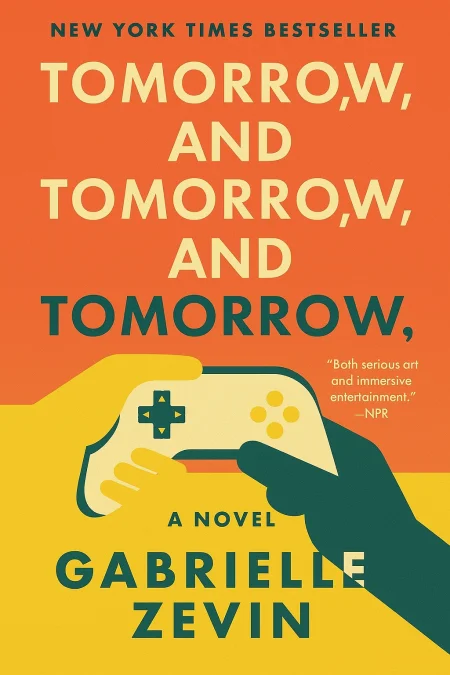
Tomorrow and tomorrow and tomorrow
A Novel
Book Edition Details
Summary
When childhood bonds are rekindled in the vibrant chaos of the digital age, magic happens. Sam, molded by the kaleidoscope of LA's Koreatown, and Sadie, the product of Beverly Hills’ opulence, reunite as adults, diving deep into the realm of video game creation. Their journey unfolds within the pulsating heart of the gaming industry at the dawn of a new millennium. Yet, it's within these pixelated landscapes that they find a closeness their real lives can't seem to offer. Gabrielle Zevin's "Tomorrow and Tomorrow and Tomorrow" is a stirring narrative of friendship, creativity, and the elusive intimacy found in imagined worlds. This tale of two dreamers exploring both personal and digital horizons captures the poignant dance between ambition and connection, leaving an indelible mark on the reader's heart.
Introduction
Picture two children in a hospital game room, controllers in hand, finding solace in digital worlds while their bodies heal. One has been silenced by trauma, the other carries the weight of family crisis. Between them, a simple Nintendo console becomes a bridge across isolation, creating a bond that will reshape both their lives. This moment captures something profound about human connection—how shared experiences in imaginary worlds can forge the most authentic relationships in the real one. This story explores the intricate dance between friendship and ambition, creativity and commerce, love and betrayal. It reveals how the games we play—both digital and emotional—shape who we become. Through the lens of three young people building something extraordinary together, we witness the beautiful complexity of creative partnerships, where personal dreams intersect with shared visions, and where success can be both a blessing and a curse. The journey ahead illuminates the price of artistic achievement and the enduring power of human connection. It reminds us that our most meaningful accomplishments are rarely solo endeavors, and that the relationships we forge in pursuit of our dreams often matter more than the dreams themselves.
From Hospital Games to Creative Partnership
In the sterile corridors of a children's hospital, an unlikely friendship bloomed between two wounded souls. Sadie, eleven years old, had been exiled from her sister's room during a cancer treatment visit. Sam, recovering from a devastating car accident that shattered his foot into twenty-seven pieces, hadn't spoken to anyone in six weeks. When Sadie wandered into the game room and found Sam playing Super Mario Bros with masterful precision, neither could have imagined they were meeting their creative soulmate. Their initial conversation revealed the peculiar honesty that trauma can bring to childhood. Sadie admitted her sister had cancer, not dysentery as she'd initially claimed—a reference to their shared love of Oregon Trail. Sam described his mangled foot with clinical detachment, explaining how the bones were now just "chips in a flesh bag." Yet in this exchange of vulnerabilities, they discovered something precious: someone who understood that games weren't mere entertainment, but lifelines to worlds where broken bodies could be whole, where impossible challenges had solutions. What began as community service hours for Sadie's Bat Mitzvah became something deeper. Sam would create intricate mazes for her to solve, each one a love letter disguised as a puzzle. Sadie would bring programming knowledge and fierce loyalty. For fourteen months, they built a friendship measured in logged hours—609 in total—until the transactional nature of their relationship was exposed, shattering their bond with the cruelty that only children can inflict. Years later, when they reunited by chance in a Boston subway station, both had carried the wound of that betrayal. Yet seeing each other again felt like coming home. The foundation they'd built in that hospital game room—built on shared wonder, mutual respect, and the understanding that games could be more than games—proved stronger than hurt feelings or wounded pride. This reunion teaches us that authentic connections, forged in vulnerability and tested by time, possess a resilience that transcends even our deepest disappointments.
Building Worlds, Breaking Bonds: Success and Its Costs
The Glass Flowers exhibit was closed the day Sam chose to propose their collaboration, but the metaphor was perfect anyway. Like those delicate botanical specimens preserved in glass, they would capture something ephemeral—childhood wonder, the feeling of being lost and finding your way home—and make it eternal through code and art. Their first game emerged from a moment of theatrical inspiration, watching Marx perform in Twelfth Night, where they were captivated by the opening shipwreck sequence. The summer of creation was a crucible of obsession and discovery. Working from Marx's apartment overlooking the Charles River, Sam and Sadie pushed themselves to physical and mental limits. Sam's fingers bled from constant typing; Sadie burst a blood vessel from staring at screens. They survived on takeout and determination, their world shrinking to the size of their shared vision. Marx became their lifeline to reality, handling everything from grocery runs to business incorporation, believing in their work with evangelical fervor. When success arrived, it came with strings attached and corporate executives who saw dollar signs where Sam and Sadie saw art. The transformation of their genderless Ichigo into definitively "a boy" for marketing purposes felt like a small betrayal, but it was only the beginning. As the game's success grew, so did the machinery of promotion that gradually separated the creators from their creation. Sam, whose appearance echoed their digital child, became the face of Ichigo while Sadie remained behind, crafting a sequel she didn't want to make. The sequel bore the marks of this fractured process—technically competent but creatively hollow, an echo of their original vision rather than an evolution. When Sadie announced she was done with Ichigo, the conversation revealed how success had changed them both. Sam couldn't understand why she would abandon their "child," while Sadie felt trapped by the very success they had worked so hard to achieve. Their story reveals that creative partnerships are among the most intimate relationships we can form, requiring constant negotiation between individual artistic vision and collaborative compromise.
Tragedy Strikes: When Virtual Worlds Meet Reality
On a December morning in 2005, the boundaries between the digital worlds Sam and Sadie created and the physical world they inhabited collapsed in the most violent way imaginable. Marx was in a meeting with potential collaborators when gunshots echoed through the Unfair Games office. Two young men, radicalized by online hatred and armed with deadly intent, had come seeking Sam, whom they blamed for corrupting their vision of America through his progressive politics in Mapleworld. Marx, ever the protector and peacemaker, descended to the lobby to negotiate with the gunmen while his colleagues evacuated to safety. In those terrifying moments, he embodied the same qualities that had made him such an effective producer: calm under pressure, willing to put others' needs before his own, believing that any conflict could be resolved through honest communication. But some conflicts exist beyond the reach of reason or compassion. The shooting left Marx fighting for his life in a medically induced coma, his body shattered by bullets meant for Sam. The attack forced Sam and Sadie to confront the real-world consequences of their virtual creations. The games they had made with such love and care had somehow inspired hatred in others. The communities they had built to foster connection had also become breeding grounds for division. The power they had wielded as creators of digital worlds came with responsibilities they had never fully considered. In the hospital waiting room where their friendship had begun, Sam and Sadie found themselves again, no longer children seeking escape from trauma but adults grappling with the trauma their success had created. The games that had once offered them refuge from a painful world had now brought that pain directly to their door. This devastating chapter reminds us that our creations carry weight in the world, that the stories we tell and the communities we build have the power to heal or harm, and that with great creative influence comes equally great responsibility.
Second Chances: Redemption Through Play and Connection
Years after their world collapsed, Sam and Sadie found their way back to each other through the very medium that had first brought them together: games. Sam, in his grief and loneliness, created a virtual world specifically designed to appeal to Sadie's sensibilities—a gentle, pastoral environment where players could farm, build relationships, and find peace. When Sadie, struggling with depression and new motherhood, discovered this world, she didn't initially realize it was Sam's creation. She simply knew that it felt like home. Through their avatars, they began to rebuild their friendship without the weight of their shared history and trauma. As virtual characters, they could be vulnerable with each other in ways they couldn't manage in person. They married in the game, raised a virtual child, and rediscovered the joy of collaborative creation. When Sadie finally realized that her virtual partner was Sam, she felt both betrayed and deeply moved by the elaborate gesture of love and friendship he had created for her. Their eventual reunion in the physical world was tentative but genuine. They had both been changed by their experiences—Sam by loss and responsibility, Sadie by motherhood and grief. But they had also been reminded of what they meant to each other and why their partnership had been so powerful. When they finally decided to work together again, it was with a deeper understanding of both the possibilities and the limitations of their relationship. Their return to collaboration wasn't about recapturing their youth or recreating past successes. Instead, it was about honoring what they had learned through pain and using that wisdom to create something new. They had discovered that true friendship isn't about avoiding conflict or maintaining perfect harmony, but about choosing to return to each other again and again, even after the worst has happened. This final chapter teaches us that redemption is always possible when we approach each other with humility, forgiveness, and the willingness to begin again.
Summary
Through the intertwined stories of Sam, Sadie, and Marx, we discover that the most profound creative partnerships are also the most fragile, requiring constant care and mutual understanding to survive the pressures of ambition, success, and tragedy. Their journey reveals that games—whether digital or the complex social games we play with each other—are fundamentally about connection, empathy, and the human need to imagine better worlds than the ones we currently inhabit. The story offers three essential insights for anyone navigating creative collaboration and deep friendship. First, that true partnership requires both individuals to maintain their distinct voices while creating something larger than themselves. Second, that success and recognition, while rewarding, can become obstacles to authentic connection if we're not careful to prioritize relationships over achievements. Finally, that even the most devastating losses and betrayals don't have to be permanent endings—with patience, forgiveness, and genuine care, it's possible to rebuild what seemed irreparably broken. Ultimately, this narrative reminds us that the games we create and the relationships we build are both acts of faith in the possibility of joy, connection, and meaning in an often difficult world. Whether we're designing virtual worlds or simply trying to understand each other better, we're all engaged in the same fundamental human project: imagining and building spaces where we can be our best selves together.
Related Books
Download PDF & EPUB
To save this Black List summary for later, download the free PDF and EPUB. You can print it out, or read offline at your convenience.
By Gabrielle Zevin
