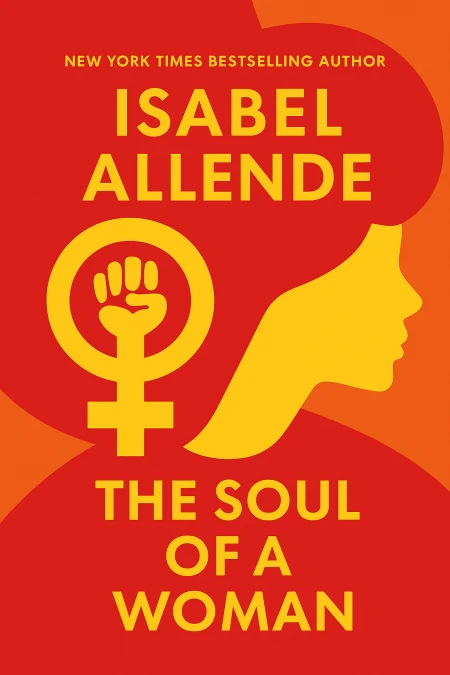
The Soul of a Woman
A personal meditation on life, feminism, and what it means to be a woman
Book Edition Details
Summary
Isabel Allende invites readers into the labyrinth of her extraordinary life, tracing the fierce evolution of a woman who refuses to be silenced. From witnessing her mother’s struggles to becoming a trailblazer in journalism amidst the fervent 1960s feminist wave, Allende crafts a narrative that resonates with the universal quest for autonomy and love. Her personal journey through three marriages reveals not just the trials, but the triumphs of embracing one's sexuality and strength. The Soul of a Woman is a heartfelt manifesto that challenges societal norms and lights the way for future generations, urging them to continue the relentless pursuit of equality and self-discovery. This is not just Allende’s story—it’s the story of every woman striving for a world where they are valued and free.
Introduction
In 1942, when feminism was barely a whisper in most households, a baby girl was born in Peru who would later declare she had been a feminist since kindergarten. Isabel Allende's life story reads like one of her magical realist novels, filled with exile, revolution, heartbreak, and triumph. Born into a world where women were expected to be silent and submissive, she instead chose to roar. Her journey from a rebellious child questioning male authority in her grandfather's Chilean mansion to becoming one of the world's most beloved authors represents more than personal success—it embodies the revolutionary transformation of women's consciousness in the twentieth century. Through her remarkable life, we witness the evolution of feminist thought from its embryonic stages to its full flowering, discovering how one woman's refusal to accept limitations became a beacon for millions. Her story illuminates the courage required to challenge ancient patriarchal systems, the price of speaking truth to power, and the profound joy found in living authentically. From her early days as a pioneering journalist to her emergence as a literary force, Allende's path reveals the interconnected struggles of personal liberation and social change that defined an entire generation of women.
Early Rebellion: A Feminist Born
Isabel Allende's feminist awakening didn't emerge from books or political movements, but from the raw reality of watching her mother's powerlessness in 1940s Chile. When her father abandoned the family, leaving her mother Panchita with three small children and no resources, young Isabel witnessed firsthand how society punished women for men's failures. In her grandfather's imposing Santiago mansion, she observed the stark contrast between the men who held all authority and decision-making power, and the women who lived dependent on male charity and approval. Even at age six, Isabel's questioning of this unfair system got her expelled from school for "insubordination." While her brothers' defiant behavior was celebrated as natural masculinity, her resistance was deemed pathological. Her mother desperately sought medical explanations for Isabel's "aberrant" character, consulting doctors who might cure this strange girl who refused to accept her prescribed role. The family worried that she would never find a husband, which in their world meant social death. This early rebellion wasn't intellectual but visceral—a deep, angry recognition that the world was unjust to women. Isabel's grandfather, despite his traditional views, inadvertently nurtured her independence by teaching her that she must never depend on anyone. His harsh lessons about self-reliance, though meant to protect her from vulnerability, instead forged the steel that would later make her fearless in challenging convention. The absence of her biological father, who had made his complete abandonment a condition of the marriage annulment, left Isabel with a fundamental distrust of male promises. This early wound became a source of strength, teaching her that women must be their own salvation. Her childhood anger, rather than being suppressed, would eventually fuel her lifelong commitment to justice and equality.
Finding Her Voice: From Journalism to Literature
The transformation of Isabel's feminist fury into purposeful action began in 1967 when she joined Paula magazine, Chile's pioneering feminist publication. At twenty-five, married with two young children, she had been slowly suffocating under the weight of domestic expectations. The magazine became her lifeline, connecting her with like-minded women who shared her conviction that the world needed changing. Under editor Delia Vergara's guidance, four young women set out to shake Chilean society's conservative foundations. Isabel discovered her weapon: humor. Her column "Civilize Your Troglodyte" used wit to make feminist ideas palatable, even to men who would have rejected direct confrontation. She learned that laughter could open minds that logic alone could not reach. The magazine tackled forbidden topics from female sexuality to domestic violence, challenging sacred notions about motherhood and marriage that demanded women's total self-sacrifice. This journalistic period taught Isabel that anger without action was useless. She channeled her childhood rage into concrete change, writing with what she called "a knife between her teeth." The magazine's mission was nothing less than transforming the entire world, and with youthful arrogance, they believed they could accomplish this in a mere decade or two. Though that timeline proved naive, their work planted seeds that would bloom across generations. The experience revealed Isabel's true calling as a storyteller who could make the political personal. Her ability to weave individual stories into larger social critiques would later define her literary career. At Paula magazine, she learned that women's liberation required not just legal changes but a fundamental shift in consciousness—a revolution that would take not years but generations to complete.
Love, Loss, and Liberation in Later Life
Isabel's understanding of feminism deepened through personal upheavals that tested every principle she held dear. Her passionate affair with an Argentine musician in 1976 led her to abandon her family temporarily, a decision that haunted her for years and taught her hard lessons about the cost of following one's heart without considering consequences. This period of reckoning forced her to examine how even liberated women could be enslaved by romantic obsession. The death of her daughter Paula in 1992 marked a profound transformation in Isabel's feminist consciousness. Grief stripped away superficial concerns about beauty, success, and social approval, revealing what truly mattered. At fifty, she finally escaped the prison of caring what others thought, embracing a deeper understanding of feminine strength that came not from competing with men but from honoring distinctly female values of nurturing, connection, and collaboration. Her later marriages, particularly to Roger, whom she met at seventy-four, demonstrated that feminist principles and romantic love need not be incompatible. With Roger, she found a partnership based on mutual respect and shared domestic responsibilities—a relationship that would have been impossible without decades of personal growth and social change. Their courtship, initiated through her direct question about his intentions, showed how age had freed her from conventional feminine passivity. Isabel's seventies brought an unexpected gift: the realization that invisibility could be liberation. No longer subject to male sexual attention or social expectations about female behavior, she discovered a freedom to be authentically herself. This stage of life allowed her to mentor younger feminists while maintaining her own passionate engagement with justice, proving that feminist fire need not dim with age but could burn more brightly when freed from external constraints.
The Revolutionary Legacy of Feminine Power
Isabel Allende's life embodied the larger transformation of women's consciousness in the twentieth century, but her vision extends far beyond personal liberation to civilizational change. She recognized that feminism isn't simply about women gaining access to male-dominated systems but about fundamentally altering those systems to reflect feminine values of collaboration, sustainability, and life-affirming rather than destructive power. Her foundation's work with vulnerable women worldwide demonstrates this philosophy in action. Through her literary success, Isabel proved that feminine perspectives could command global attention and respect. Her novels, populated by strong women who refuse victim status, offered millions of readers new models of female agency and power. Despite facing decades of critical dismissal—one male writer famously called her a "typist" rather than a real author—she persisted until even her critics could no longer ignore her impact on world literature. Isabel's understanding of intersectional feminism, though she might not have used that term, emerges clearly in her foundation's work. She recognized that women's liberation must include all women, regardless of race, class, or nationality. Her commitment to refugees and victims of violence demonstrates how true feminism cannot be limited to privileged women but must address systemic oppression wherever it occurs. Her vision for the future rests on what she calls "good witches"—awakened women who understand their power to heal rather than dominate. Isabel believes that the current global crises, from climate change to political authoritarianism, can only be solved through feminine leadership that prioritizes life over profit, connection over competition, and wisdom over aggression. Her legacy lies not just in her books but in her demonstration that one woman's refusal to be silenced can echo across generations.
Summary
Isabel Allende's remarkable journey from a rebellious child to a globally celebrated author and feminist leader demonstrates that the personal is indeed political, and that individual liberation can spark collective transformation. Her life reveals that authentic feminism requires not just demanding equal rights but fundamentally reimagining how society values feminine wisdom, creativity, and ways of being. Through seven decades of refusing to accept limitations, she proved that women's voices, when raised fearlessly and consistently, can indeed change the world. Her story offers two essential lessons: first, that anger at injustice, when channeled constructively, becomes a powerful force for positive change; and second, that true liberation comes not from imitating masculine models of success but from celebrating and elevating distinctly feminine strengths. Isabel's legacy challenges every woman to ask not just what she can achieve within existing systems, but how she can help create new systems that honor all of humanity's potential. Her life stands as testament that revolution begins with a single woman deciding she will not be silenced, and that such decisions, multiplied across millions of lives, can indeed transform civilization itself.
Related Books
Download PDF & EPUB
To save this Black List summary for later, download the free PDF and EPUB. You can print it out, or read offline at your convenience.
By Isabel Allende
