
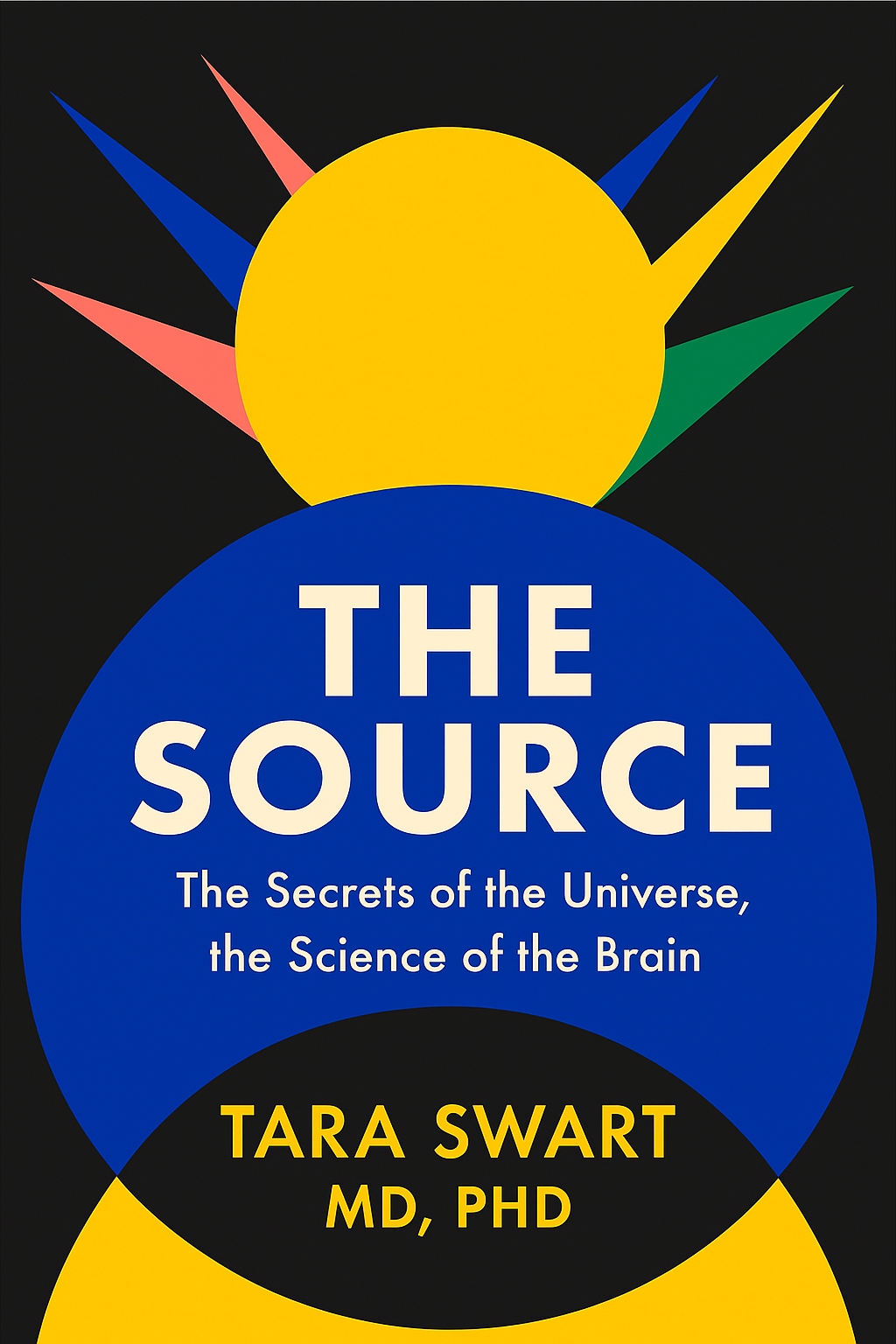
The Source
The Secrets of the Universe, the Science of the Brain
Book Edition Details
Summary
In a world where daily opportunities slip through our fingers, Dr. Tara Swart presents a groundbreaking manifesto that merges ancient wisdom with cutting-edge neuroscience. "The Source" dares to strip away the mystique of self-help lore, transforming it into a scientifically-backed guide for the modern seeker. Here, Swart distills the essence of The Secret and The Master Key System into a practical, four-step blueprint designed to rewire your brain for success. Whether you're yearning for happiness, prosperity, or love, this book empowers you to take the reins of your destiny with the confidence of a newly discovered self. Dive into the insights of a renowned neuroscientist whose expertise has shaped the lives of business magnates and creative visionaries alike, and discover how to harness your mind's potential to its fullest.
Introduction
Sarah stared at her reflection in the bathroom mirror at 6:30 AM, dark circles under her eyes telling the story of another restless night. At thirty-four, she was successful by most measures - a marketing director at a prestigious firm, owner of a beautiful apartment, surrounded by friends who envied her lifestyle. Yet something fundamental felt missing. She moved through her days on autopilot, making decisions that seemed logical but left her feeling empty. Her relationships felt superficial, her work uninspiring, and her dreams increasingly distant. What Sarah didn't realize was that she was operating on only a fraction of her brain's true potential. This scenario reflects a profound truth about human consciousness: we possess an extraordinary organ capable of reshaping reality itself, yet most of us live as prisoners of our own neural patterns. The human brain contains 86 billion neurons, each one a gateway to limitless possibility, yet we typically access only a small portion of this magnificent network. We've been conditioned to believe that logic alone should guide our decisions, that emotions are weaknesses to be suppressed, and that our circumstances define our destiny. But groundbreaking neuroscience research reveals something revolutionary: we can literally rewire our brains to create the life we truly desire. Through understanding the intricate dance between science and consciousness, you'll discover how to harness neuroplasticity, develop brain agility across six critical pathways, and transform limiting beliefs into empowering realities. This journey isn't about positive thinking or wishful dreaming - it's about understanding and directing the biological mechanisms that create your experience of life. When you unlock this source of power within your own mind, you'll find yourself naturally attracting opportunities, making decisions from a place of clarity and confidence, and creating a life that reflects your deepest values and aspirations.
The Science Behind Manifestation and Abundance
Maria had always dismissed the concept of manifestation as new-age nonsense. As a data analyst, she lived by spreadsheets and statistics, trusting only what could be measured and verified. But when her company downsized and she found herself unexpectedly unemployed, a friend convinced her to try something different. Instead of frantically applying for similar positions, Maria decided to visualize her ideal work environment: a small, innovative company where her analytical skills could contribute to meaningful social impact. She spent twenty minutes each morning creating vivid mental images of herself in this role, feeling the satisfaction of purposeful work, seeing herself collaborating with passionate colleagues. Within three weeks, something unexpected happened. At her local coffee shop, Maria overheard a conversation between two women discussing their struggle to find a data expert for their nonprofit organization focused on educational equity. Instead of walking past as she normally would, Maria found herself approaching them. The conversation led to an interview, which led to her dream job. What she initially attributed to luck was actually her brain's selective attention system at work, priming her to notice opportunities that aligned with her visualized intention. The neuroscience behind this transformation reveals a fascinating truth about how our brains filter reality. Every second, we're bombarded with millions of bits of sensory information, but our thalamus acts like a sophisticated screening system, allowing only relevant data to reach our conscious awareness. When Maria repeatedly visualized her ideal work scenario, she was literally programming her brain's attention filters to prioritize information related to that goal. Her reticular activating system began highlighting conversations, job postings, and networking opportunities that previously would have been ignored. This isn't mystical thinking - it's the brain's pattern recognition system responding to focused intention, creating what appears to be serendipity but is actually directed neural processing working to manifest desired outcomes.
Rewiring Your Brain: From Autopilot to Intentional Living
For forty-two years, David had been the angry man. Quick to snap at his children, impatient with his wife, and notorious at work for his explosive reactions during meetings. His colleagues walked on eggshells around him, his family had grown distant, and his marriage was hanging by a thread. David believed this was simply his personality - inherited from his hot-tempered father and reinforced by decades of stress. When his wife threatened divorce unless he sought help, David reluctantly agreed to explore whether he could actually change his deeply ingrained patterns. Working with a neuroscience-based coach, David learned something that shocked him: his brain was not fixed. Through consistent practice of emotional regulation techniques, he began to literally rewire his neural pathways. When he felt anger rising, instead of letting it explode, he learned to pause and breathe deeply for sixty seconds. This simple practice activated his prefrontal cortex, allowing rational thought to override his amygdala's fight-or-flight response. Initially, this felt forced and unnatural. But after three months of deliberate practice, something remarkable happened. His default response to frustration began to shift from aggression to curiosity. His wife noticed the change first - instead of snapping when the children were being loud, David would ask himself what they might need. David's transformation illustrates neuroplasticity in action - the brain's remarkable ability to form new neural connections throughout life. Every time he chose a calm response over an angry reaction, he was strengthening new neural pathways while allowing old destructive patterns to weaken. His brain was literally changing its structure based on his repeated behaviors. Within six months, his colleagues began seeking his input on challenging projects, recognizing his newfound ability to remain composed under pressure. His children started coming to him with their problems, and his marriage began to heal. The man who once believed he was destined to repeat his father's patterns had proven that with understanding and practice, we can rewrite the neural code that shapes our lives.
Building Brain Agility: Mastering Six Pathways of Thinking
Jennifer was known as the brilliant strategist who could solve any logical problem but struggled with everything else. As the newly promoted CEO of a tech startup, she excelled at analyzing market data and developing business models, but she couldn't understand why her team seemed demoralized. Her presentations were flawlessly logical, yet investors remained unengaged. She made decisions based purely on data, ignoring the subtle cues her body was sending about stress and burnout. Jennifer's success had been built on overdeveloping her logical thinking pathway while neglecting five other crucial ways her brain could operate. Through assessment of her brain agility, Jennifer discovered she was operating like a race car with only one cylinder firing. Her logical pathway was highly developed, but her emotional intelligence, intuition, creativity, motivation, and body awareness were significantly underutilized. She began a systematic program to strengthen these neglected pathways. She practiced reading facial expressions and tone of voice to develop emotional intelligence. She learned to notice physical sensations like tension in her shoulders or butterflies in her stomach as valuable information rather than distractions. She scheduled time for creative thinking without immediate practical applications, allowing her mind to wander and make unexpected connections. The transformation was remarkable. As Jennifer developed emotional intelligence, she began to truly listen to her team members, understanding not just their words but their underlying concerns and motivations. Her newfound creativity helped her envision innovative solutions that pure logic had missed. By tuning into her body's wisdom, she recognized early warning signs of stress and made adjustments before reaching burnout. Her presentations became compelling narratives that engaged investors both intellectually and emotionally. Most importantly, she discovered that accessing all six pathways simultaneously - emotions, physicality, intuition, motivation, logic, and creativity - created an exponential increase in her problem-solving capacity and leadership effectiveness. Jennifer learned that true intelligence isn't about maximizing one type of thinking, but about orchestrating all pathways in harmonious collaboration.
The Four-Step Journey: From Awareness to Transformation
Marcus had been stuck in the same patterns for years - unfulfilling job, shallow relationships, and a persistent sense that he was living someone else's life. He knew something needed to change but felt overwhelmed by the magnitude of transformation required. Then he discovered a systematic approach that broke the seemingly impossible journey into four manageable steps, each building upon the previous one like ascending a mountain with clear waypoints. Step one involved raising awareness of his autopilot behaviors. Marcus began journaling daily, noticing how he automatically said yes to requests that drained his energy while avoiding opportunities that excited him. He identified the childhood conditioning that had programmed him to prioritize others' approval over his own fulfillment. Step two required creating an action board - a visual collage of images representing his ideal life. Unlike simple goal-setting, this process engaged his brain's powerful visual processing centers, making his desires feel tangible and achievable. He found himself naturally gravitating toward opportunities that aligned with the images on his board. Step three focused attention through mindfulness practices that strengthened his ability to stay present rather than operating on autopilot. Through meditation and body awareness exercises, Marcus developed the capacity to notice his thoughts and emotions without being controlled by them. This focused attention became the foundation for step four: deliberate practice of new behaviors. Instead of waiting for motivation to strike, Marcus committed to small daily actions that reinforced his emerging identity. He spoke up in meetings, joined social groups aligned with his interests, and gradually built the confidence to pursue work that truly mattered to him. Within eighteen months, Marcus had transformed from a passive observer of his life into its active creator. The four-step journey reveals that lasting change isn't about dramatic overnight transformation but about systematically reprogramming the neural patterns that shape our reality. Each step reinforces the others, creating a positive feedback loop that makes continued growth feel natural and sustainable. Marcus discovered that the power to create an extraordinary life had always been within him - he simply needed the right roadmap to access it.
Summary
These stories illuminate a profound truth that neuroscience is now confirming: we are not victims of our circumstances, genetics, or past conditioning, but architects of our own reality through the conscious direction of our brain's incredible capabilities. The human brain's 86 billion neurons form a network more complex than anything else known in the universe, yet most of us operate as if we're driving a Ferrari in first gear. By understanding how selective attention shapes our experience, how neuroplasticity allows us to rewire limiting patterns, how brain agility multiplies our problem-solving capacity, and how systematic practice creates lasting change, we can transform from passive passengers to active creators of our lives. The integration of rigorous neuroscience with practical application offers three essential insights for anyone seeking meaningful change. First, your brain is constantly rewiring itself based on what you repeatedly focus on and practice - this means every moment offers an opportunity to strengthen the neural pathways that serve your highest good. Second, optimal functioning requires developing all dimensions of intelligence rather than over-relying on logic alone; when emotion, intuition, creativity, motivation, logic, and body awareness work together, they create exponential rather than additive results. Third, transformation happens through consistent small actions rather than dramatic gestures; the four-step process of awareness, visualization, focused attention, and deliberate practice provides a scientifically grounded path for anyone willing to commit to their own growth. Your brain is not your master but your most powerful tool for creating the life you truly desire. Every limiting belief can be rewired, every stuck pattern can be transformed, and every dream that resonates with your authentic self can be manifested through understanding and applying these principles. The source of unlimited potential doesn't exist somewhere external to you - it is you, waiting to be awakened through conscious engagement with your own magnificent neural architecture.
Related Books
Download PDF & EPUB
To save this Black List summary for later, download the free PDF and EPUB. You can print it out, or read offline at your convenience.
By Tara Swart
