
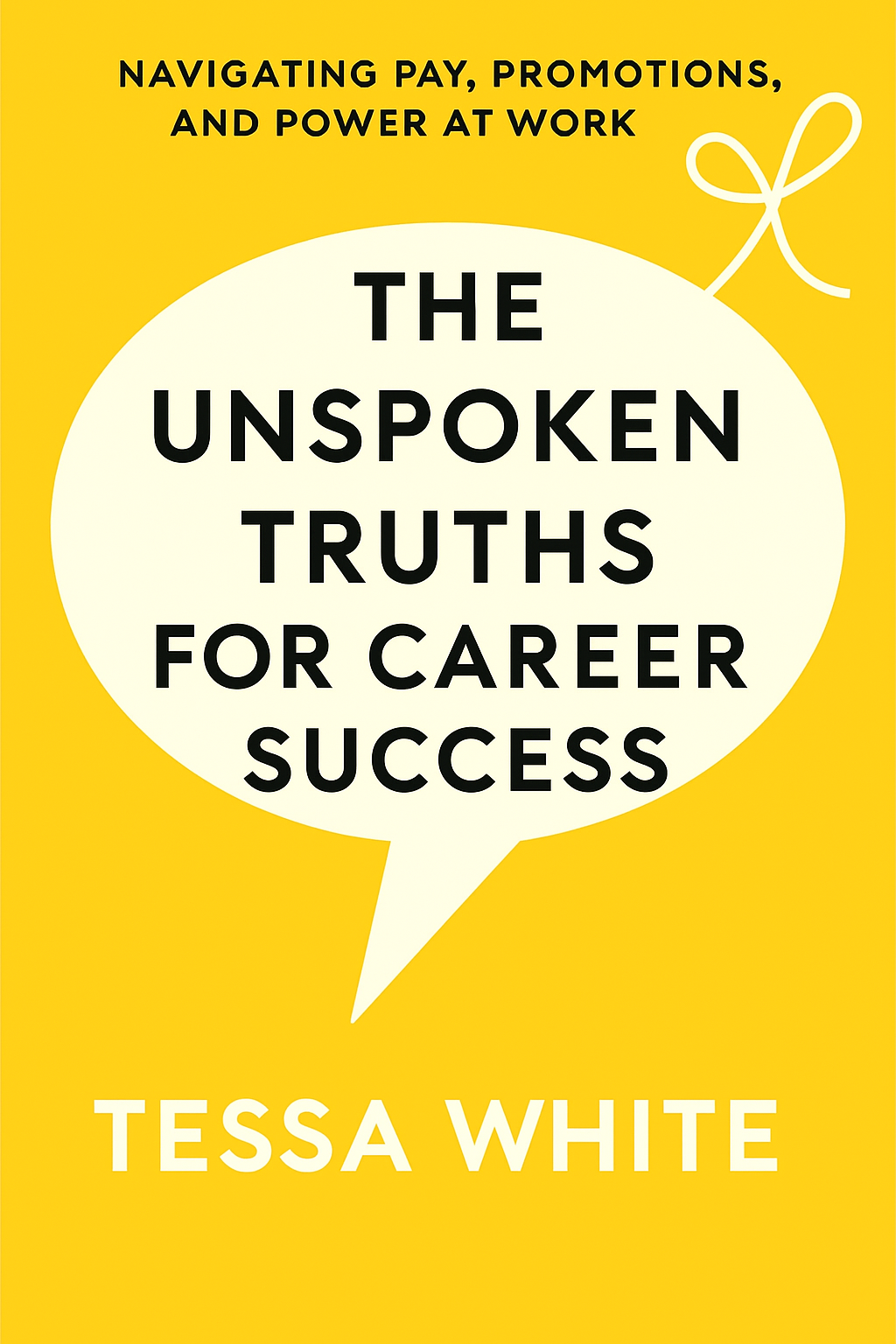
The Unspoken Truths for Career Success
What You Never Learned about Navigating Pay, Promotions and Politics in the Workplace
Book Edition Details
Summary
In a landscape where career dreams often get buried under the rubble of remote work chaos and elusive work-life harmony, this daring guide emerges as a beacon of truth. "The Unspoken Truths for Career Success" shatters the illusions that trap the modern professional. It's not just about climbing ladders; it's about mastering the game. Unmask the deception of hard work equating to higher pay, and learn to turn your current role into a launchpad for salary leaps. Challenge the myth of loyalty and discover how to channel your dedication towards your own future. Navigate the murky waters of office politics with newfound prowess, and redefine balance on your own terms. This book isn't just advice; it's an invitation to break free from the shackles of outdated career myths and forge a path where influence and opportunity are yours to command.
Introduction
Every day, millions of people wake up feeling drained by their work, convinced that their dissatisfaction stems from external forces beyond their control. They blame toxic managers, dysfunctional companies, or impossible workloads for their career frustrations. But what if the real culprit isn't your boss or your company? What if the biggest obstacle to your workplace satisfaction is a collection of deeply ingrained myths that you've been carrying around without even realizing it? The modern workplace is filled with well-meaning advice and conventional wisdom that sounds perfectly reasonable on the surface. Work hard and you'll be rewarded. Keep your head down and avoid conflict. Wait for your annual review to discuss compensation. Be loyal to your company and it will be loyal to you. These beliefs feel safe and familiar, but they're actually sabotaging your career growth and keeping you stuck in cycles of frustration and burnout. The truth is that workplace satisfaction isn't something that happens to you, it's something you create for yourself. When you understand how companies really operate, how decisions are actually made, and what truly drives career advancement, you gain the power to navigate your professional life with confidence and intention. You stop being a victim of circumstance and start becoming the architect of your own career success.
Stop Waiting for Recognition Start Creating Value
The most dangerous career myth is the belief that hard work automatically leads to recognition and rewards. This lie keeps countless talented people spinning their wheels, working longer hours and taking on more responsibilities while wondering why their efforts go unnoticed. The harsh reality is that companies don't reward effort, they reward results that align with their priorities. Consider the story of a mid-level operations leader named Sarshar who discovered this truth the hard way. When a company reorganization placed a struggling CAD design department under his leadership, he initially focused on pushing his team to work harder and faster. The department was plagued by high turnover, inconsistent output quality, and mounting frustration from both employees and leadership. Despite everyone's best efforts, the problems persisted because Sarshar was addressing symptoms rather than the root cause. The breakthrough came when Sarshar stopped trying to squeeze more hours out of his team and started analyzing what was really holding the business back. He realized that the department's core issue wasn't laziness or incompetence, it was a fundamental misalignment between compensation and performance. Employees had no financial incentive to excel, so talented workers would leave for marginal pay increases elsewhere just as they reached peak productivity. Instead of requesting a bigger budget or more staff, Sarshar proposed an innovative solution that would cost the company nothing while dramatically improving results. He designed a monthly performance-based pay structure where compensation fluctuated based on each individual's quality and quantity metrics. Top performers could earn up to fifty percent more than their base rate, while those who couldn't meet standards would see their pay decrease accordingly. The transformation was remarkable. Productivity soared as employees could directly see the connection between their effort and their paycheck. Turnover plummeted because high achievers were now earning competitive wages. Most importantly, the company retained institutional knowledge and began developing internal career paths that kept talented people engaged long-term. Sarshar had created a win-win solution by focusing on value creation rather than just working harder.
Master Feedback and Navigate Office Politics
One of the most limiting beliefs in professional development is the assumption that if there's a problem with your performance, someone will tell you about it directly. This myth leaves people blindsided by negative reviews, passed over for promotions they thought they deserved, or even terminated from positions where they believed they were succeeding. The uncomfortable truth is that every piece of feedback you receive is a watered-down version of how you're actually perceived. The author learned this lesson dramatically when witnessing a CEO being fired in what appeared to be a sudden decision. While the termination seemed to surprise the CEO, it didn't surprise those who worked closely with him on a daily basis. They had observed his shortcomings and growing disconnect with the board's expectations, but none of this critical feedback had reached him in a way that allowed him to course-correct. This experience revealed a fundamental workplace dynamic: managers and colleagues often avoid difficult conversations, preferring to hope problems will resolve themselves rather than risk uncomfortable confrontations. They drop subtle hints, use careful language, or simply work around performance issues instead of addressing them directly. Meanwhile, the person at the center of these concerns remains oblivious to the gathering storm clouds. The solution lies in becoming proactive about seeking feedback rather than waiting for it to be delivered. This means learning to read between the lines when managers make comments like "I want to clarify your role" or "Let me send an email to make sure we're on the same page." These seemingly innocent phrases often signal underlying concerns about your performance or approach. Create regular opportunities for honest dialogue by asking specific questions that make it easier for others to share their perspectives. Instead of asking "How am I doing?" try "What's the one thing you think would make the biggest positive difference for my success here?" or "How do you think others perceive my contributions to the team?" This approach gives people permission to be more candid while positioning you as someone who genuinely wants to grow and improve.
Negotiate Your Worth and Set Boundaries
Perhaps no workplace lie is more expensive than the belief that you'll be rewarded at year-end for your hard work. This passive approach to compensation can cost you hundreds of thousands of dollars over the course of your career due to the compounding effect of salary increases. The reality is that money goes to those who ask for it, not to those who wait patiently for recognition. The financial impact of negotiation becomes clear when you consider the mathematics of compound growth. A difference of just five thousand dollars in starting salary can result in nearly four hundred thousand dollars in additional lifetime earnings when compounded over a forty-year career. Even small increases in your pay rate create a higher foundation for every future raise, bonus, and job offer you'll receive. Companies not only expect negotiation, they budget for it. When an organization offers you a position, they typically have a range in mind and start somewhere in the middle, knowing that most candidates will negotiate upward. If you accept their first offer without discussion, you're leaving money on the table that they were already prepared to pay. The key to successful negotiation lies in understanding leverage, which is simply having something the other party wants. This might be specialized skills that are difficult to replace, a track record of measurable results that directly benefit the company, or even just the market validation that comes from having competing offers. The strongest foundation for any compensation discussion is demonstrable value you've created for the organization. Before entering any negotiation, prepare multiple proposals that would be acceptable to you, backed by research on market rates and clear examples of your contributions. Focus on the value you bring to the company rather than your personal needs or desires. Approach the conversation as a business discussion between partners who both want to reach a mutually beneficial agreement. Remember that everything is potentially negotiable, from base salary and bonuses to flexible work arrangements, professional development funds, and equity participation. Most importantly, don't change your ask mid-negotiation or make ultimatums that back the other party into a corner. Present your case professionally, give them time to consider it, and be prepared to have a follow-up conversation once they've had a chance to review your proposal with their leadership team.
Take Control of Your Career Path
The most empowering truth about workplace politics is that they're not a game to be played, but a roadmap to be followed. Every company has its own unique culture and set of unwritten rules that determine how work gets done, how decisions are made, and what behaviors are rewarded. Instead of fighting against these dynamics or hoping to find a company without politics, successful professionals learn to read and adapt to their organization's specific operating style. The author discovered this principle while working with a sales executive who initially seemed like a stereotypical corporate politician. This leader appeared to bypass proper procedures, make decisions quickly without extensive analysis, and somehow always get his requests approved while others struggled for resources. It would have been easy to dismiss his success as mere favoritism or manipulation. However, closer observation revealed that this executive had simply mastered his company's cultural preferences better than anyone else. The organization valued speed over perfection, preferred experimental approaches to methodical planning, and rewarded those who could adapt quickly when initial strategies needed adjustment. What looked like rule-breaking was actually perfect rule-following within this specific cultural context. This realization led to a transformation in how the author approached projects and proposals. Instead of spending weeks developing comprehensive implementation plans with detailed risk analysis, the focus shifted to rapid experimentation with clear success metrics and quick iteration cycles. The infamous "napkin conversation" that saved a career wasn't about lowering standards, it was about matching the company's preferred pace and decision-making style. Understanding your organization's political landscape requires paying attention to five key dimensions: speed of decision-making, tolerance for risk, preference for innovation versus stability, degree of collaborative input required, and planning horizon for major initiatives. Companies that thrive on disruption will reward different behaviors than those focused on operational excellence. Fast-growing startups operate differently than established corporations, and recognizing these differences allows you to adapt your approach accordingly. The goal isn't to change who you are, but to express your capabilities in ways that align with your organization's values and priorities. When you understand the rules of the road, you can navigate more effectively toward your desired destination while avoiding the frustration that comes from working against the current instead of with it.
Summary
The workplace will never be perfect, but your experience within it doesn't have to be defined by circumstances beyond your control. The lies you've been told about work have kept you waiting for external validation, avoiding difficult conversations, and hoping that loyalty and hard work alone would be enough to create the career satisfaction you deserve. The truth is far more empowering: "You are not destined to be stuck in this place of 'unknowing' forever unless you decide that's what you want for yourself." By recognizing that companies are simply aligned to get results, that feedback rarely comes without being sought, that compensation goes to those who negotiate for it, and that every workplace has learnable rules for success, you reclaim agency over your professional life. You stop being a victim of corporate dysfunction and start becoming a strategic player who understands how the game is really played. Your next step is beautifully simple: choose one area where you've been operating according to workplace mythology and commit to trying a more truthful approach. Whether that's seeking honest feedback about your performance, having a overdue conversation about compensation, or simply observing your company's political dynamics with fresh eyes, small changes in approach can yield dramatic improvements in results. The satisfaction and success you've been seeking aren't waiting for you in some perfect company, they're available right where you are once you start operating according to workplace realities instead of workplace fantasies.
Related Books
Download PDF & EPUB
To save this Black List summary for later, download the free PDF and EPUB. You can print it out, or read offline at your convenience.
By Tessa White
