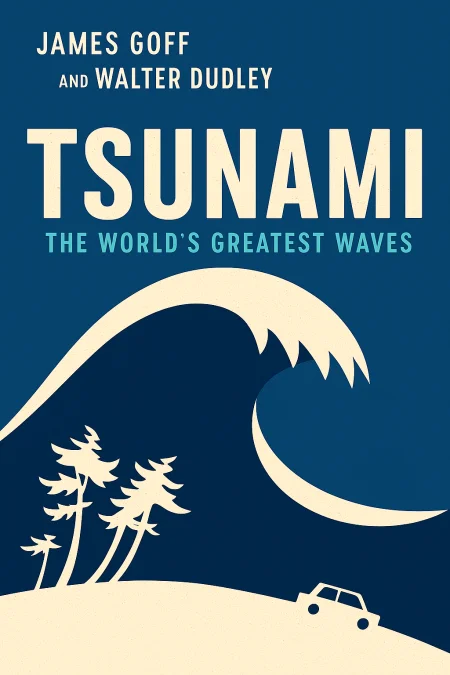
Tsunami
The World's Greatest Waves
Book Edition Details
Summary
Tsunamis strike with ferocity, obliterating landscapes and shattering lives with their unstoppable force. Yet, what if understanding their mysteries could arm us against nature’s wrath? In "Tsunami," James Goff and Walter Dudley unravel the cataclysmic tapestry of history's most notorious waves, revealing the forces that birth them—from the earth’s quakes to cosmic impacts. This isn’t mere science; it’s a pulse-pounding chronicle where survival tales intertwine with ancient legends and cutting-edge research. Readers will traverse pivotal events like the 2004 Indian Ocean disaster, while uncovering lesser-known calamities such as the enigmatic 563 CE Lake Geneva wave. With gripping narratives and profound insights, "Tsunami" offers a compelling blend of human endurance and scientific exploration, inviting readers to ponder the lessons etched by these watery titans.
Introduction
When the earth trembles beneath the ocean floor and the sea suddenly retreats to reveal vast expanses of normally hidden seabed, nature is preparing to unleash one of its most devastating forces. Throughout human history, tsunamis have served as pivotal moments that reshape not only coastlines but entire civilizations, leaving behind profound lessons about survival, adaptation, and the delicate relationship between human communities and natural forces. This historical journey reveals three crucial insights that extend far beyond coastal science. First, it demonstrates how indigenous knowledge systems often contain sophisticated survival strategies that modern science has only recently begun to validate and integrate. These traditional warning systems, encoded in oral histories and cultural practices, frequently proved more effective than technological approaches when disaster struck. Second, the record shows a recurring pattern of human forgetfulness, where communities repeatedly rebuild in dangerous areas as memories of past catastrophes fade with each passing generation. Finally, these events illuminate the profound interconnectedness of our planet, where geological upheavals in remote ocean trenches can reshape societies thousands of miles away within hours. Understanding this history proves essential for anyone seeking to comprehend how natural forces have influenced human development, how traditional wisdom complements scientific knowledge, and how lessons from the past can guide our response to future challenges. Whether you are a student of human adaptation, a coastal resident, or simply someone fascinated by the intersection of natural power and human resilience, these stories reveal the ongoing dialogue between humanity and the restless forces that shape our world.
Ancient Warnings: Indigenous Knowledge and Early Survival Systems
Long before seismographs and satellite communications existed, coastal communities around the Pacific Ring of Fire developed remarkably sophisticated methods for recognizing and surviving tsunamis. These early warning systems relied not on technology but on generations of careful observation, cultural memory, and community-wide preparedness protocols that proved extraordinarily effective when disaster struck. In ancient Japan, communities developed the practice of "kaishou," the immediate evacuation to higher ground following any strong earthquake. This cultural response emerged from centuries of devastating experiences, documented in records like the Nihon Shoki, which describes massive waves striking the Japanese coast as early as 684 AD. Japanese coastal villages also established "tsunami stones," markers placed at the highest points reached by historical waves, bearing inscriptions that warned future generations never to build below these lines. Pacific Island cultures demonstrated even more sophisticated approaches to tsunami survival. On Simeulue Island off the coast of Sumatra, the concept of "smong" became deeply embedded in local culture, describing when the ocean comes onto land. Their oral traditions preserved specific survival instructions passed down through songs and stories: when the earth shakes strongly, or when the sea retreats unusually far, everyone must immediately head for high ground. The Polynesian navigation traditions included detailed knowledge of wave patterns and ocean behavior that helped seafaring communities recognize dangerous conditions long before waves reached shore. These indigenous warning systems reveal a profound truth about human adaptation to natural hazards. Traditional communities understood that survival depended not on predicting exactly when disasters would strike, but on maintaining constant readiness and embedding survival knowledge so deeply into cultural practices that appropriate responses became instinctive. Their methods created resilient societies that could withstand repeated encounters with devastating natural forces, establishing principles that remain relevant for modern disaster preparedness efforts.
Scientific Awakening: 1755 Lisbon to Pacific Warning Networks
The great Lisbon earthquake and tsunami of November 1, 1755, marked a fundamental shift in human understanding of natural disasters, transforming them from supernatural phenomena into subjects requiring scientific investigation and systematic response. This catastrophe struck at the height of the Age of Enlightenment, forcing European intellectuals to grapple with fundamental questions about natural law while simultaneously demonstrating the global reach of oceanic disasters. On All Saints' Day, as thousands gathered in churches across Portugal's capital, a massive earthquake struck, followed by devastating tsunami waves that swept away entire neighborhoods and killed tens of thousands. The disaster's impact extended far beyond Portugal's borders, with tsunami waves crossing the Atlantic Ocean to strike Caribbean islands and possibly reaching Brazil. In Britain, waves were recorded along the coasts of Cornwall and Ireland, while reports came from as far away as North Africa, demonstrating that natural disasters could transcend political boundaries and affect international networks in previously unimaginable ways. The intellectual response to Lisbon proved equally transformative. The Marquis of Pombal, who led the city's reconstruction, conducted what may have been the world's first systematic seismological survey, asking residents detailed questions about animal behavior, well water levels, and building damage patterns. This empirical approach represented a crucial shift from supernatural explanations toward scientific methodology, establishing foundations for modern natural hazards research. The scientific awakening continued into the twentieth century with the establishment of the Pacific Tsunami Warning System following the devastating 1946 Alaska earthquake and tsunami. This event, which killed 159 people across Hawaii and demonstrated the ocean-spanning reach of tsunami waves, finally convinced authorities that systematic international cooperation was essential for effective disaster response. The warning system, initially called the Seismic Sea Wave Warning System, represented humanity's first comprehensive attempt to turn scientific understanding into life-saving early warning, setting the stage for the sophisticated global monitoring networks that protect millions today.
Modern Catastrophes: 2004 Indian Ocean and Global Response
The December 26, 2004 Indian Ocean tsunami stands as the deadliest natural disaster of the modern era, killing approximately 230,000 people across fourteen countries and fundamentally transforming global approaches to tsunami preparedness. This catastrophe exposed critical gaps in international warning systems while simultaneously demonstrating the life-saving power of traditional knowledge and modern education working in harmony. The absence of a tsunami warning system in the Indian Ocean proved catastrophic. While the Pacific had maintained an effective warning network since the 1960s, the Indian Ocean was considered relatively safe from tsunami threats. When the massive magnitude 9.1 Sumatra earthquake occurred, scientists in Hawaii detected the event within minutes and attempted to issue warnings, but no systematic communication network existed to reach threatened populations. Millions of people remained unaware of approaching waves until they arrived at their shores, often standing on beaches watching the unusual ocean behavior with curiosity rather than alarm. Yet the disaster also revealed remarkable examples of successful preparation and response that highlighted the enduring value of traditional knowledge. On Simeulue Island, where cultural memory of "smong" remained strong, only seven people died from the tsunami despite waves reaching 30-50 feet in height. The indigenous population immediately recognized the earthquake's significance and evacuated to higher ground according to ancestral wisdom. Meanwhile, ten-year-old British tourist Tilly Smith saved hundreds of lives at a Thai beach resort by recognizing the warning signs she had learned in a school geography lesson, demonstrating how education could bridge traditional wisdom and modern scientific understanding. The international response to the 2004 disaster led to the establishment of comprehensive tsunami warning systems in all major ocean basins and renewed emphasis on community-based preparedness programs. However, subsequent events, including the 2011 Tōhoku tsunami in Japan, have shown that technological solutions alone remain insufficient. The challenge for the future lies in maintaining the delicate balance between scientific monitoring, traditional knowledge, community education, and international cooperation that effective tsunami preparedness requires, ensuring that the lessons learned from these modern catastrophes translate into lasting protection for vulnerable coastal populations.
Future Preparedness: Integrating Traditional Wisdom with Modern Technology
The convergence of ancient wisdom and cutting-edge technology represents the most promising path forward for tsunami preparedness, as demonstrated by communities that have successfully integrated traditional knowledge systems with modern scientific monitoring. This synthesis acknowledges that effective disaster response requires not just technological capability but also deep cultural understanding of natural warning signs and community-wide commitment to preparedness practices. Modern tsunami detection systems now include deep-ocean monitoring networks like DART buoys, which measure pressure changes on the seafloor and transmit warnings within minutes of seismic events. Satellite communications enable instant global coordination, while computer models can predict wave arrival times and heights with unprecedented accuracy. However, the most successful preparedness programs combine these technological advances with traditional knowledge systems, creating layered defense networks that function even when individual components fail. Japan's approach following the 2011 Tōhoku disaster exemplifies this integration. While maintaining sophisticated seismic monitoring and warning systems, Japanese communities have also revitalized traditional practices like tsunami stone markers and cultural education programs that teach children to recognize natural warning signs. The concept of "tendenko," meaning "each person for themselves" in the context of immediate tsunami evacuation, has been reinforced through modern education while drawing on centuries-old survival wisdom. The historical record demonstrates that the most resilient communities are those that maintain both technological capabilities and cultural memory across generations. This requires sustained investment not just in monitoring equipment and communication systems, but in education programs that preserve traditional knowledge while incorporating scientific understanding. Future preparedness must address the fundamental challenge revealed throughout tsunami history: maintaining vigilance and preparedness during the quiet decades between major events, when complacency naturally returns and new populations settle in vulnerable areas without understanding their historical context. Success will depend on creating cultural institutions that can preserve and transmit survival knowledge across generations while adapting to changing technological and environmental conditions.
Summary
The long history of tsunamis reveals a fundamental tension between human attraction to productive coastal environments and the periodic devastation that ocean-generated waves bring to these same locations. This tension has driven a continuous cycle of disaster, learning, adaptation, and gradual forgetting that spans millennia, from ancient Polynesian navigators developing sophisticated wave-reading skills to modern scientists deploying satellite-linked monitoring systems across entire ocean basins. Three crucial insights emerge from this historical journey that directly apply to contemporary challenges. First, effective tsunami preparedness requires integrating multiple ways of knowing, combining cutting-edge seismic monitoring with traditional ecological knowledge, scientific modeling with cultural memory, and technological solutions with community-based practices. The most successful survival strategies have always emerged from this synthesis rather than from purely technological or purely traditional approaches. Second, the most dangerous periods occur not immediately after disasters when awareness runs high, but during the quiet decades that follow, when complacency returns and new populations settle in vulnerable areas without understanding their historical context. For individuals and communities, this history offers clear guidance: learn local tsunami history, understand evacuation routes and natural warning signs, and maintain emergency supplies and preparedness plans as ongoing aspects of coastal living rather than temporary responses to recent events. For policymakers and planners, it demands long-term thinking that prioritizes sustainable coastal development, invests in both technological systems and educational programs, and preserves the physical evidence and cultural memory of past events. Most importantly, it calls for humility in the face of natural forces that have shaped our planet for millions of years and will continue to do so, requiring human societies to adapt and prepare rather than simply hoping to control or predict these powerful oceanic phenomena.
Related Books
Download PDF & EPUB
To save this Black List summary for later, download the free PDF and EPUB. You can print it out, or read offline at your convenience.
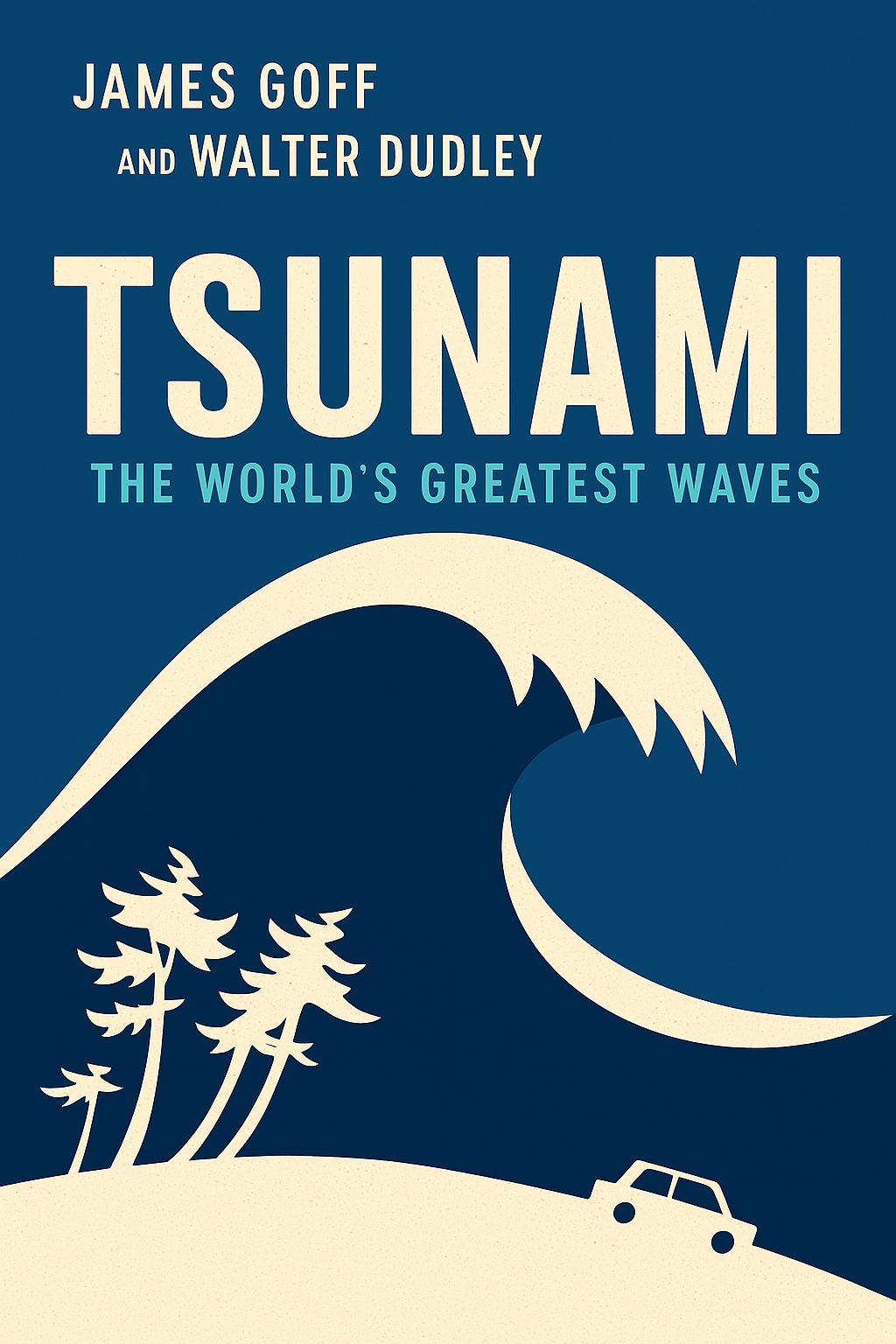
By James Goff
