
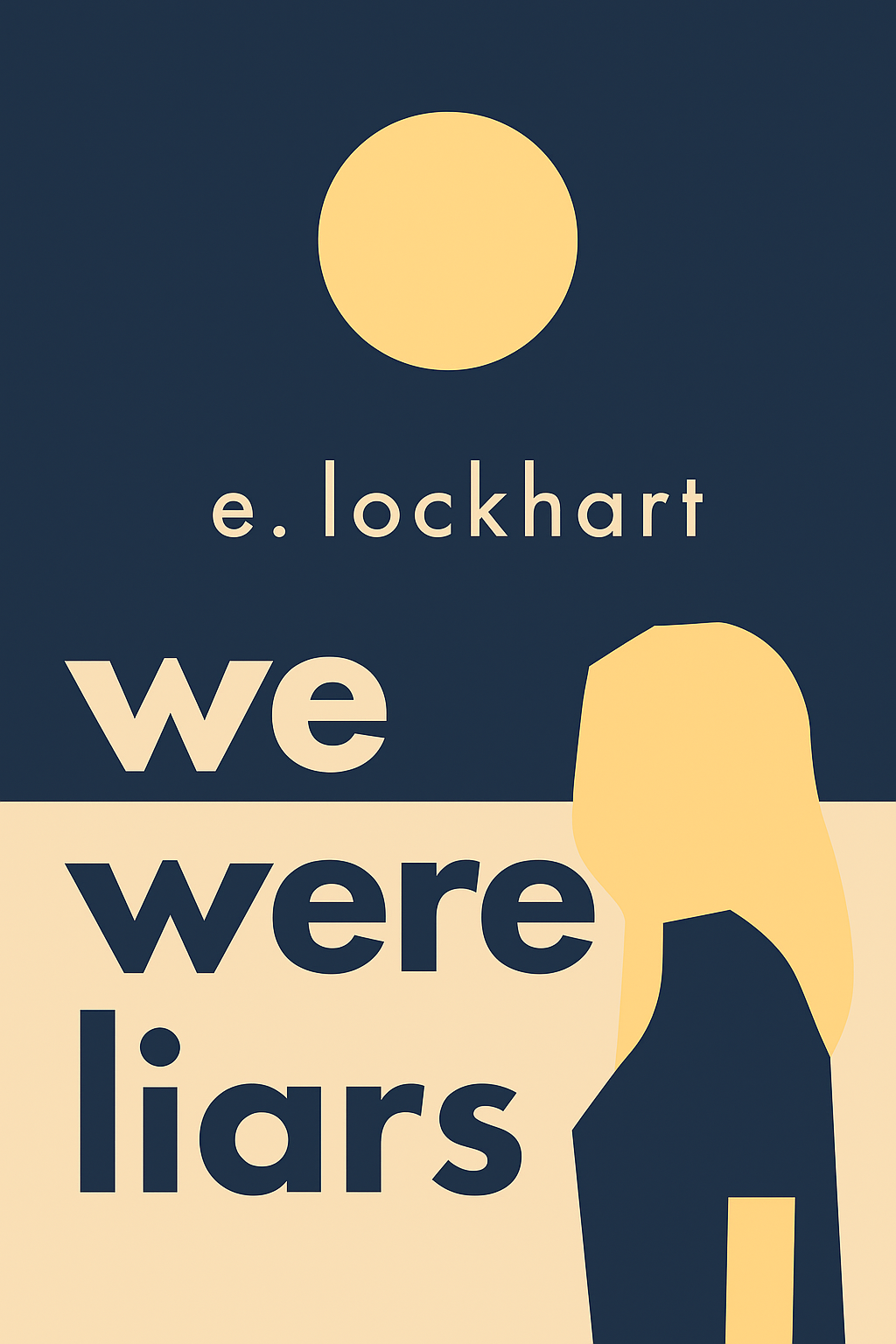
We Were Liars
A Suspense Novel About Family, Lies, and the Mistakes That Haunt Us
Book Edition Details
Summary
Meet the Sinclairs, the epitome of wealth and privilege, residing on their own secluded island, where appearances mask the turbulent undercurrents of their perfect lives. At the heart of it all is Cadence Sinclair, the enigmatic narrator whose memory is as fractured as the truth she seeks. Alongside her are the Liars, a quartet of friends whose bond teeters on the brink of destruction. As passions flare and secrets multiply, a shattering incident threatens to unravel the Sinclair facade. E. Lockhart's "We Were Liars" unspools a sophisticated tapestry of love, betrayal, and the elusiveness of truth, daring you to piece together a narrative as elusive as its unreliable storyteller. Read it, and when pressed for details, remember—sometimes the biggest lie is the truth untold.
Introduction
Picture a seventeen-year-old girl waking up in her bedroom, staring at walls covered with scattered notes and questions she's written to herself. She can't remember what happened two summers ago, only that something terrible occurred on her family's private island. Her head throbs with migraines that no doctor can fully explain, and everyone she loves seems to be keeping secrets from her. This is Cadence Sinclair Eastman, heir to a beautiful, privileged family that appears perfect from the outside but harbors deep fractures within. This haunting tale explores the devastating consequences when family loyalty collides with moral courage, when teenage idealism meets harsh reality, and when the weight of guilt becomes too heavy to bear. Through Cadence's journey of recovering lost memories, we witness how privilege can corrupt, how silence can wound, and how love sometimes demands the ultimate sacrifice. The story reminds us that even in our darkest moments, truth has the power to heal, and that facing our past, no matter how painful, is the only path to genuine redemption and peace.
The Beautiful Sinclair Family: Privilege and Its Discontents
The Sinclair family embodies American aristocracy at its most pristine. Harris Sinclair, the patriarch, built his fortune through shrewd investments and inherited wealth, creating a dynasty that spans generations. Every summer, the family gathers on their private island off the Massachusetts coast, where three magnificent houses stand as monuments to their success. The Sinclair daughters married well, raised beautiful children, and maintained the family's reputation for athletic prowess, academic excellence, and impeccable social standing. Cadence describes them as "old-money Democrats" with "wide smiles, square chins, and aggressive tennis serves." No one discusses divorce, financial troubles, or prescription drug dependencies. The family presents a united front of prosperity and happiness, carefully curated for the outside world. Their summer gatherings feature elaborate meals, tennis tournaments, and perfectly orchestrated activities that reinforce their image of familial bliss. Yet beneath this polished exterior lies a web of resentment and manipulation. The three Sinclair sisters, Penny, Carrie, and Bess, compete ruthlessly for their father's approval and inheritance. Each woman has faced personal struggles, failed marriages, and financial insecurities, but acknowledging these realities would shatter the family myth. Their children, known as "the Liars," observe these adult tensions with growing unease, recognizing the hypocrisy in their elders' behavior. The family's wealth has created a dangerous insulation from consequence and self-reflection. Their privilege allows them to avoid difficult conversations and uncomfortable truths, perpetuating cycles of dysfunction across generations. What appears as family tradition is actually a carefully maintained performance, one that will eventually demand a terrible price.
Summer Fifteen: When Love Meets Family Politics
During the summer Cadence turns fifteen, family dynamics reach a breaking point following the death of Granny Tipper. Without the family matriarch's stabilizing influence, the three sisters unleash years of suppressed grievances. They fight viciously over inheritance, real estate, and family heirlooms while their father, Harris, manipulates these conflicts to maintain his control. Each sister tries to position her children as the rightful heirs, creating additional pressure on the younger generation. In this toxic atmosphere, Cadence falls deeply in love with Gat, the nephew of Carrie's boyfriend Ed. Gat is everything the Sinclair family claims to value, intelligent, thoughtful, and principled, but his Indian heritage makes him an outsider in their predominantly white world. Harris's subtle racism manifests in his refusal to use Gat's name, calling him only "young man," and his disapproval of the relationship becomes increasingly obvious. The four cousins, Cadence, Johnny, Mirren, and Gat, spend their days together as they have for years, but now they're old enough to understand the ugliness surrounding them. They watch their parents drink heavily, argue bitterly, and use their children as pawns in larger power games. Gat, with his outsider's perspective, challenges the family's materialism and prejudices, making the others question everything they've been taught to value. As the summer progresses, the adults' behavior becomes more destructive. Threats are made, college funds are leveraged as weapons, and the children realize their beloved island paradise is built on a foundation of conditional love and financial manipulation. The pressure builds until something must break, setting the stage for a desperate act that will change everything forever.
The Fire: A Tragedy Born from Desperation
On a night when the adults have abandoned the island in anger, the four Liars make a decision that will haunt them forever. Drunk on leftover wine and consumed by righteous fury, they decide to burn down Clairmont, the main house that symbolizes everything wrong with their family. Their plan is both naive and methodical, they'll destroy the physical manifestation of the patriarchy's power, forcing their relatives to start fresh without the material possessions that fuel their conflicts. Cadence remembers the careful preparation, the gasoline from the boat shed, the newspapers for kindling. Each of them takes a different floor of the house, planning to light their fires simultaneously before escaping to safety. But Cadence, dizzy from alcohol and overwhelmed by the magnitude of their action, makes critical errors in execution. She lights the study too early, soaking her shoes in gasoline, and the fire spreads faster than anticipated. What begins as a symbolic gesture quickly becomes a nightmare. Johnny screams from upstairs, trapped by flames. Gat is caught in the basement. Mirren cannot escape from the upper floor. Cadence tries desperately to reach them, burning her hands and feet in the attempt, but the fire has become too powerful. She can only watch as the house becomes a furnace, consuming everything and everyone inside. The tragedy extends beyond human loss. Prince Philip and Fatima, the family's golden retrievers, die in the fire because no one remembered they were locked in a guest bedroom. This detail haunts Cadence most of all, the innocent animals who trusted their family to keep them safe, forgotten in the chaos of teenage rebellion. The fire that was meant to liberate the family instead destroys its future, claiming three young lives and leaving scars that will never fully heal.
Memory, Guilt, and the Weight of Truth
For two years, Cadence's mind protected her from the full horror of that night through selective amnesia. She remembered fragments, fleeting images and sensations, but her brain refused to piece together the complete picture. The family, following medical advice, decided not to force her memory's return, hoping time would heal what trauma had broken. This conspiracy of silence, however well-intentioned, only deepened Cadence's isolation and confusion. When Cadence finally returns to the island, she encounters the ghosts of her cousins, manifestations of her guilt and grief that appear as real as life. Johnny, Mirren, and Gat spend one final summer with her, helping her recover the truth while simultaneously saying goodbye. They are patient with her self-pity, gentle with her confusion, and loving despite the role she played in their deaths. The recovered memories bring not relief but crushing responsibility. Cadence must live with the knowledge that her idealism and poor judgment cost three lives. The family's silence, meant to protect her, instead prolonged her suffering and prevented the healing that only truth can bring. She realizes that her obsessive giving away of possessions was unconscious penance, her body's attempt to atone for unremembered sins. Yet in facing the truth, Cadence also discovers the possibility of redemption. Her cousins' forgiveness, even from beyond death, offers hope that she might eventually forgive herself. The tragedy cannot be undone, but its meaning can be transformed through honest acknowledgment and genuine change. Sometimes the most loving act is to bear witness to painful truth, allowing both the living and the dead to finally find peace.
Summary
This devastating tale reveals how privilege can become a prison and how love, when coupled with desperation, can lead to unthinkable tragedy. Through Cadence's journey from amnesia to awful clarity, we see that truth, however painful, remains our only path to genuine healing. The Sinclair family's beautiful facade masked generations of conditional love, subtle racism, and emotional manipulation, creating an environment where young people felt compelled to take desperate action rather than trust in honest communication. The story teaches us that memory, even painful memory, is essential to our humanity and growth. Cadence's recovered truth brings not the peace she expected but the heavy responsibility of full awareness. Yet this weight is preferable to the confusion and guilt of partial knowledge. Her cousins' forgiveness, offered even in death, reminds us that love transcends our worst mistakes and that redemption remains possible even after unforgivable acts. Most powerfully, this narrative demonstrates that facing our deepest shames and most devastating losses is the only way to honor those we've hurt and find meaning in our continued existence. Cadence must learn to live not just with her survival, but with purpose, carrying forward the love and idealism that originally motivated her tragic choice, now tempered by hard-won wisdom about the true cost of our actions on others.
Related Books
Download PDF & EPUB
To save this Black List summary for later, download the free PDF and EPUB. You can print it out, or read offline at your convenience.
By E. Lockhart
