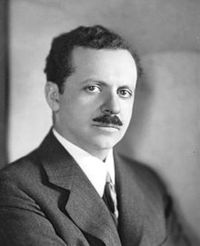
Edward L. Bernays
Edward L. Bernays, often heralded as the "father of public relations," was born on November 22, 1891, in Vienna, Austria, and later became a pivotal figure in the development of modern public relations strategies in the United States. His illustrious career was profoundly influenced by his uncle, Sigmund Freud, whose groundbreaking work in psychoanalysis provided Bernays with a unique perspective on human behavior and persuasion. This intersection of psychology and communication became the foundation upon which Bernays built his career, transforming the way businesses and public figures approached the public discourse. His innovative ideas and strategies have left an indelible mark on the field of public relations, making him a seminal figure in the art of shaping public opinion. In his influential book, "Crystallizing Public Opinion," published in 1923, Bernays elucidated the principles of public relations and articulated the importance of understanding public perception as a malleable entity. The work is considered a pioneering text in the field, laying the groundwork for modern practices and methodologies in public relations. Bernays deftly combined insights from psychology with practical applications, advocating for a scientific approach to crafting public messages and managing the public's responses. This seminal publication not only garnered critical acclaim but also solidified Bernays's reputation as a leading thinker in the realm of media and communications. Bernays's writing is characterized by its clarity and precision, employing an analytical style that reflects his deep understanding of both psychological theory and practical implementation. His works often explore themes of influence, perception, and the social dynamics of communication, underscoring his belief in the power of persuasion as a tool for societal change. Through his contributions, Bernays elevated public relations to a respected profession, fundamentally altering the landscape of media and communication in the 20th century. His legacy endures as a testament to the profound impact that strategic communication and a nuanced understanding of human psychology can have on society.


by Paul J. Zak
by Rory Vaden
by Robert C. Solomon, Fernando Flores
by Brett Gardner
by Dennis S. Reina
by Julian Baggini
by Larry Downes, Omar Abbosh, Paul Nunes
by Jacqueline Woodson
by Kevin Oakes
by Lindsey Pollak, Kimberly B. Cummings, Kimberly Brown
