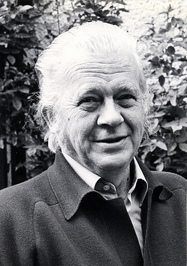
Ernst F. Schumacher
Ernst Friedrich Schumacher, a German-born economist whose profound insights have left an indelible mark on economic and environmental thought, was born on August 16, 1911, in Bonn, Germany. Schumacher's early life was shaped by the turbulent political landscape of 20th-century Europe, which undoubtedly influenced his later work. After studying at the University of Bonn, Schumacher pursued further education at Oxford University and later at Columbia University in New York. His career was notably marked by his tenure as the Chief Economic Adviser to the National Coal Board in the United Kingdom, a position that allowed him to delve deeply into the intersection of natural resources and economic policies. Schumacher's scholarly pursuits and professional experiences coalesced into a unique perspective that championed human-centric and sustainable development, positioning him as a visionary in the fields of ecological economics and sustainable development. Schumacher's magnum opus, "Small Is Beautiful: A Study of Economics as if People Mattered," published in 1973, catapulted him to international prominence. This seminal work challenged the prevailing economic paradigms of the time, advocating for an approach that prioritizes human well-being and ecological balance over mere financial growth. The book garnered widespread critical acclaim for its innovative ideas and remains a cornerstone in the discourse on sustainability and environmental economics. Schumacher's treatise was particularly prescient in its critique of unfettered industrialism and its call for a more localized, human-scaled approach to economic planning. His ideas resonated with a global audience, earning the book a place among the most influential works of the 20th century. Characterized by a lucid and accessible prose style, Schumacher's writings are imbued with a profound ethical dimension that challenges the dogmas of conventional economics. His work is distinguished by its integration of philosophical reflection with practical economic strategies, making him a pivotal figure in advocating for a holistic approach to development. Schumacher's legacy is evident in the growing recognition of the need for sustainable practices in both economic and environmental spheres, and his contributions continue to inspire policymakers, environmentalists, and economists worldwide. Through his incisive critique of modernity's excesses and his visionary proposals for a more equitable and sustainable world, Schumacher remains a beacon for those seeking an alternative path towards a more harmonious coexistence with nature.


by Paul J. Zak
by Rory Vaden
by Robert C. Solomon, Fernando Flores
by Brett Gardner
by Dennis S. Reina
by Julian Baggini
by Larry Downes, Omar Abbosh, Paul Nunes
by Jacqueline Woodson
by Kevin Oakes
by Lindsey Pollak, Kimberly B. Cummings, Kimberly Brown
