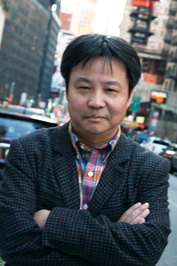
Yu Hua
Yu Hua, an illustrious figure in contemporary Chinese literature, was born on April 3, 1960, in Hangzhou, Zhejiang province. Prior to embarking on his literary journey, Yu spent five years as a dentist, a profession he ultimately relinquished in favor of the boundless creativity afforded by fiction writing. His formative years during the tumultuous Cultural Revolution greatly influenced his narrative voice, permeating his works with an authenticity that resonates with readers globally. Among Yu Hua's distinguished contributions are his novels "Chronicle of a Blood Merchant" and "To Live," the latter of which was transformed into a film by acclaimed director Zhang Yimou. Despite its subsequent ban in China, the film adaptation propelled the novel to international bestseller status, cementing Yu's reputation as a literary luminary. His oeuvre extends beyond these seminal novels to include an array of short stories and essays, all of which have been translated into a multitude of languages, thereby reaching a diverse readership. Renowned for his stark, vivid portrayals of violence and human suffering, Yu Hua's work delves into the complexities of the human condition, often reflecting on themes of resilience and existential struggle. His incisive social commentary and unflinching exploration of historical events have established him as a pivotal voice in literature, one whose narratives continue to challenge, provoke, and enlighten audiences worldwide.


by Paul J. Zak
by Rory Vaden
by Robert C. Solomon, Fernando Flores
by Brett Gardner
by Dennis S. Reina
by Julian Baggini
by Larry Downes, Omar Abbosh, Paul Nunes
by Jacqueline Woodson
by Kevin Oakes
by Lindsey Pollak, Kimberly B. Cummings, Kimberly Brown
