
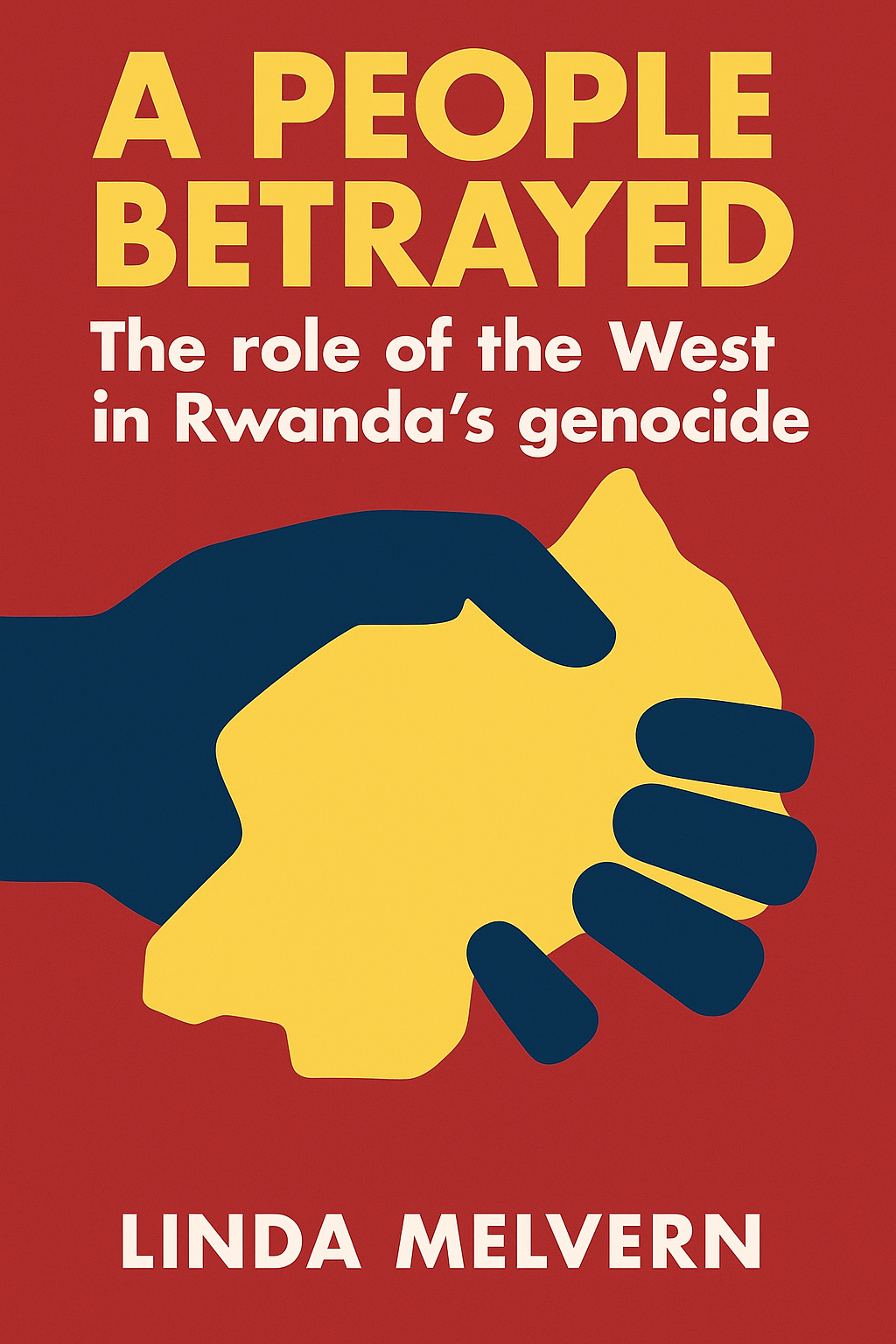
A People Betrayed
The Role of the West in Rwanda's Genocide
Book Edition Details
Summary
In the devastating shadows of 1994 Rwanda, a haunting question lingers: how did the world turn its back on genocide? "A People Betrayed" unveils this chilling narrative with the piercing precision of Linda Melvern's investigative brilliance. Here lies a damning exposé not only of the UN's paralyzing inaction but also of the intricate web of global politics that fueled such unfathomable human suffering. Through interviews and hidden documents, the book thrusts readers into the heart of horror, illuminating the silent bravery of unsung heroes amidst chaos. This is more than history; it's an urgent call to reckon with international complicity and to ignite reform. Prepare to be gripped by a tale of betrayal and courage, compelling us to confront the dark alleys of human indifference and the dire need for change.
Introduction
In the spring of 1994, while the world celebrated the end of apartheid in South Africa and commemorated the fiftieth anniversary of D-Day, a horror of unimaginable proportions was unfolding in the hills of Rwanda. Within one hundred days, nearly one million people were systematically murdered while the international community stood by, paralyzed by bureaucracy, self-interest, and willful blindness. This was not a spontaneous eruption of ancient tribal hatred, as many would later claim, but a carefully orchestrated genocide that revealed three profound truths about our modern world. The story exposes how colonial powers can engineer ethnic divisions that later explode into violence, transforming fluid social categories into deadly boundaries through administrative manipulation and racial theories. It demonstrates how international institutions designed to prevent such horrors can become instruments of abandonment when political will is absent, prioritizing narrow interests over human lives. Most critically, it reveals the devastating human cost of willful blindness, showing how warning signs were ignored, peacekeepers were abandoned, and the very promise of "never again" became hollow rhetoric in the face of bureaucratic paralysis. This account serves as essential reading for policymakers grappling with contemporary conflicts, historians seeking to understand the mechanics of genocide, students of international relations confronting the failures of global institutions, and citizens who refuse to accept that such tragedies are inevitable. It offers sobering lessons about the convergence of colonial legacies, political extremism, and international complicity that created the perfect storm for mass atrocity.
Colonial Manipulation: Engineering Ethnic Division (1894-1990)
The roots of Rwanda's tragedy stretch back to 1894, when European colonizers first encountered a sophisticated kingdom that had flourished in the heart of Africa for centuries. Before colonial intervention, Rwandan society was remarkably fluid, with Hutu, Tutsi, and Twa identities representing social and economic roles rather than rigid ethnic categories. The monarchy maintained stability through intricate systems of patronage, shared cultural practices, and a common language that bound the population together across these permeable boundaries. The German and later Belgian colonial administrations fundamentally altered this social fabric through a deliberate policy of divide and rule. Belgian administrators, influenced by racial theories of the time, conducted censuses that measured noses and heights to classify people into fixed ethnic categories, issuing identity cards that would later become death warrants. They initially favored the Tutsi minority, whom they viewed as a "superior race" naturally suited for leadership, while relegating the Hutu majority to subordinate roles in education, administration, and the church hierarchy. This artificial hierarchy created deep resentments that exploded in 1959 with the so-called "Hutu Revolution." Belgian administrators, sensing the winds of decolonization and fearing the loss of influence, abruptly switched their support to Hutu leaders, abandoning their former Tutsi allies with cynical calculation. The resulting violence forced hundreds of thousands of Tutsi into exile, establishing a pattern of cyclical ethnic conflict that would plague Rwanda for decades. Independence in 1962 brought Hutu dominance under President Grégoire Kayibanda, whose regime institutionalized discrimination through quotas and periodically unleashed pogroms against the remaining Tutsi population. The colonial legacy had transformed what were once fluid social relationships into seemingly immutable ethnic divisions, creating the foundation upon which future extremists would build their machinery of genocide. By the time economic crisis and political pressure mounted in the 1990s, the artificial boundaries drawn by colonial administrators had become so deeply embedded in Rwandan society that they could be weaponized with devastating efficiency.
Ignored Warnings: International Indifference to Genocide Preparation (1990-1994)
The final countdown to genocide began on October 1, 1990, when the Rwandan Patriotic Front launched its invasion from Uganda, seeking to return home after decades of exile. This military challenge provided extremists within President Habyarimana's government with the perfect pretext to implement their "final solution" to what they called the Tutsi problem. What followed was four years of systematic preparation that unfolded before the eyes of international observers who possessed both the knowledge and means to intervene. France immediately intervened to save its ally, sending paratroopers and military advisers who would remain throughout the preparation period. This support emboldened the regime to begin systematic preparations for genocide, with arms purchases skyrocketing until Rwanda became Africa's third-largest weapons importer despite its crushing poverty. Machetes were distributed throughout the country under the guise of agricultural tools, while hate radio stations like RTLM began broadcasting venomous propaganda that dehumanized Tutsi as cockroaches deserving extermination. International observers documented these preparations in chilling detail. Human rights reports described death squads, weapons distributions, and systematic massacres that served as dress rehearsals for genocide. UN peacekeepers received intelligence about plans to exterminate Tutsi, including detailed information from an informant who revealed the locations of weapons caches and the training of militia. Yet when peacekeeping commander Roméo Dallaire requested permission to seize these weapons, UN headquarters refused, citing concerns about exceeding their mandate and maintaining neutrality. The warning signs were unmistakable to anyone willing to see them. Diplomats reported the systematic targeting of opposition politicians, the creation of civilian militias, and the compilation of lists identifying Tutsi for elimination. Yet the international community, traumatized by failures in Somalia and focused on crises in Bosnia, chose to ignore these warnings. This willful blindness would soon enable one of the most efficient genocides in human history, revealing how institutional inertia and political calculations can override moral imperatives even when human lives hang in the balance.
One Hundred Days: Global Abandonment During Mass Murder (April-July 1994)
The assassination of President Habyarimana on April 6, 1994, when his plane was shot down approaching Kigali airport, provided the spark that ignited a genocide already prepared down to its smallest details. Within hours of the crash, roadblocks appeared throughout the capital, death lists were activated, and the systematic slaughter began with horrifying efficiency. The killing was not spontaneous ethnic violence but a carefully orchestrated campaign that revealed the extent of prior planning and international complicity. The first targets were moderate politicians who might have opposed the genocide. Prime Minister Agathe Uwilingiyimana was murdered along with ten Belgian peacekeepers assigned to protect her, in a calculated move designed to force international withdrawal. Opposition leaders, human rights activists, and journalists were hunted down and eliminated in the opening hours, decapitating any potential resistance to the killing campaign. Radio stations broadcast instructions for murder, directing killers to specific locations where Tutsi had sought refuge in churches and schools. International response was not just inadequate but actively harmful. Rather than reinforcing the UN peacekeeping mission, the Security Council voted to reduce it to a skeleton force of 270 soldiers just as the genocide reached its peak. Western nations evacuated their own citizens while abandoning Rwandans to their fate, sending a clear signal to the génocidaires that they could proceed with impunity. The withdrawal of international personnel, as one survivor later observed, meant "when the white faces left, we knew we were going to die." As the genocide spread from Kigali to the countryside, its industrial efficiency became apparent. The killing rate exceeded that of the Nazi Holocaust, with an estimated 10,000 people murdered each day at the genocide's peak. Churches and schools, traditional sanctuaries, became slaughterhouses as militia and ordinary citizens wielding machetes systematically butchered men, women, and children. France's eventual intervention, Operation Turquoise, came too late to save lives and served primarily to provide safe passage for genocidal leaders to escape justice, completing the international community's betrayal of the Rwandan people.
Aftermath and Accountability: Justice Denied and Lessons Unlearned
The genocide ended in July 1994 when the Rwandan Patriotic Front's military victory drove the killers from power, but the international community's failures continued in its aftermath. Rather than accepting responsibility for their inaction, Western governments and UN officials engaged in elaborate exercises of blame-shifting and denial. The true scale of international complicity was buried beneath bureaucratic language and classified documents that would take years to surface, while many of those responsible for organizing the genocide escaped to comfortable exile in Europe and North America. The pursuit of justice proved as complex as the genocide itself. The International Criminal Tribunal for Rwanda, established in Arusha, Tanzania, succeeded in prosecuting some key architects of the genocide, including Prime Minister Jean Kambanda and media executives who had orchestrated the propaganda campaign. Yet the tribunal struggled with limited resources, political interference, and the challenge of establishing legal precedents for mass atrocity crimes. Many perpetrators escaped justice entirely, protected by the same international system that had failed to stop their crimes. Perhaps most troubling was the international community's failure to learn meaningful lessons from Rwanda. Despite overwhelming evidence of systematic planning and execution, debates continued about whether the killings truly constituted genocide, as if semantic arguments could diminish the horror of what had occurred. The institutional reforms implemented after Rwanda were largely cosmetic, failing to address the fundamental problem of political will that had enabled the genocide to proceed unimpeded. Subsequent genocides in Bosnia, Darfur, and elsewhere demonstrated that the promise of "never again" remained empty rhetoric when tested by political reality. The Rwanda genocide had exposed fundamental flaws in the international system for preventing and responding to mass atrocities, revealing how quickly institutions designed to protect the innocent could become complicit in their destruction through inaction and willful blindness. The failure was not simply a matter of insufficient resources or poor timing, but of moral courage and the willingness to prioritize human dignity over narrow political interests.
Summary
The Rwanda genocide represents the convergence of colonial manipulation, political extremism, and international abandonment into a perfect storm of human destruction. The central tragedy lies not just in the scale of the killing, but in how preventable it was through decisive action at multiple critical junctures. From the colonial period's artificial ethnic divisions through the final days of international withdrawal, decisions by both Rwandan and international actors consistently prioritized narrow interests over human lives, creating the conditions for mass atrocity. Three essential lessons emerge from this dark chapter that speak directly to contemporary global challenges. First, we must recognize how artificial divisions created by external powers can be weaponized by extremist movements seeking to gain or maintain power, requiring vigilant attention to early warning signs and rapid response mechanisms. Second, the international community must develop more effective institutions for intervention that do not depend on the political calculations of major powers, creating legal and operational frameworks that can bypass bureaucratic paralysis when human lives are at stake. Finally, we must acknowledge that preventing genocide requires not just institutional reforms but a fundamental commitment to placing human dignity above geopolitical interests, recognizing that in our interconnected world, moral failure anywhere ultimately diminishes our collective humanity. The ghosts of Rwanda remind us that the promise of "never again" demands more than rhetoric; it requires the political will to act when action is most difficult, the courage to confront uncomfortable truths about complicity and indifference, and the wisdom to understand that protecting the vulnerable is not just a moral imperative but the foundation upon which any just international order must rest.
Related Books
Download PDF & EPUB
To save this Black List summary for later, download the free PDF and EPUB. You can print it out, or read offline at your convenience.
By Linda Melvern
