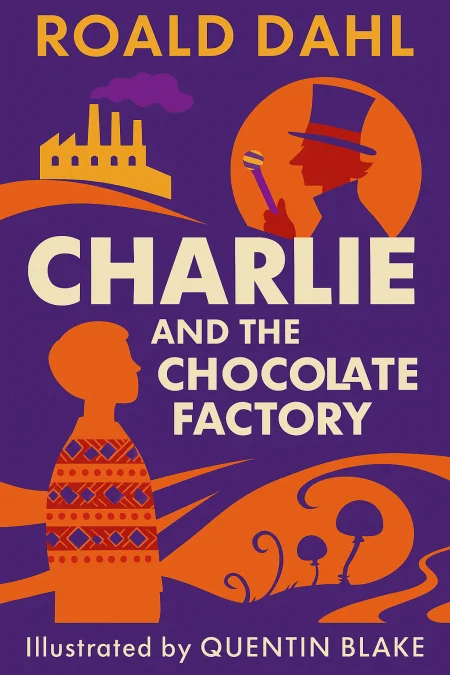
Charlie and the Chocolate Factory
Whimsical Adventure in a Candy World
Book Edition Details
Summary
In a world where dreams and chocolate collide, young Charlie Bucket stumbles upon a Golden Ticket—a rare pass to the secretive and wondrous factory of the eccentric Willy Wonka. Amidst rivers of chocolate and edible gardens, Charlie's journey becomes more than just a sugary escapade; it’s a heartwarming tale of integrity and wonder in a society obsessed with greed. As each step into Wonka's fantastical realm unveils surreal surprises and whimsical challenges, Charlie's unyielding spirit and humble heart set him apart. A beguiling adventure awaits, where the true riches aren't wrapped in gold but found within the simplest joys and values.
Introduction
Have you ever watched a child's face light up at the sight of something wonderful, only to see that same wonder fade as they grow older, replaced by cynicism and entitlement? In a world where instant gratification often trumps patience, and where material abundance can breed spiritual poverty, we find ourselves yearning for the simple virtues that seem increasingly rare. Through the magical lens of a chocolate factory and the unforgettable journey of five children, we discover profound truths about human nature, character, and what truly matters in life. This timeless tale offers us three essential insights: how humility and gratitude can open doors that entitlement cannot, why our deepest character flaws often become our downfall when left unchecked, and how genuine innovation springs not from cynicism but from maintaining a sense of wonder about the world around us. These lessons, wrapped in whimsy and delivered through unforgettable characters, remind us that the most valuable treasures are often the ones we cannot buy.
Charlie's Journey: The Power of Humility and Gratitude
In the cramped, freezing cottage where seven people shared two rooms and one bed, young Charlie Bucket experienced poverty in its rawest form. His father worked tirelessly screwing caps on toothpaste tubes, earning barely enough to keep the family from starvation. Their meals consisted of cabbage soup, boiled potatoes, and bread with margarine. Yet when Charlie received his single chocolate bar each birthday, something remarkable happened. He would place it carefully in a small wooden box, treasuring it like solid gold, taking tiny nibbles that would make the bar last for over a month. Even when offered the chance to share this precious gift with his hungry family, he insisted they all partake, saying simply, "I want everybody to taste it." When Charlie finally found his Golden Ticket, not through wealth or manipulation, but through a stroke of fortune involving found money, his reaction was telling. While other children demanded, screamed, and expected, Charlie whispered his name nervously and stood quietly, holding his grandfather's hand. Throughout the factory tour, as others grabbed and consumed without permission, Charlie asked before touching anything and showed genuine concern for the welfare of the misbehaving children who faced consequences for their actions. This profound humility and gratitude didn't go unnoticed. In a world where the loudest voices often seem to win, Charlie's quiet dignity and authentic appreciation set him apart. His poverty had taught him to value what he had rather than focus on what he lacked. When we approach life with genuine gratitude for small blessings, we develop the character that can handle larger ones. Charlie's story reminds us that abundance flows not to those who demand it, but to those who appreciate it most deeply.
The Spoiled Children: When Excess Leads to Downfall
Augustus Gloop's mother proudly declared that eating was his hobby, consuming chocolate bars by the dozens daily because "he wouldn't go on eating like he does unless he needed nourishment." When Augustus encountered the chocolate river, his gluttony overcame all restraint. Despite Mr. Wonka's warnings about contaminating the chocolate, Augustus knelt at the river's edge, scooping the molten chocolate into his mouth like a dog drinking water. His parents watched helplessly as their son's unchecked appetite literally sucked him up into a pipe, where he became stuck due to his enormous size, blocking the flow until pressure shot him through the factory's chocolate-making system. Veruca Salt's story proved equally revealing. When she decided she wanted a trained squirrel, her father immediately offered to buy one, despite Mr. Wonka's refusal to sell. "I want an Oompa-Loompa right away!" she had screamed earlier, and typically, her father promised to get her one before the day ended. But the squirrels possessed wisdom her parents lacked. They tested Veruca by tapping her head with their knuckles, and finding her to be a "bad nut," they carried her to the rubbish chute where all bad nuts belong. These children's downfalls weren't random accidents but inevitable consequences of uncorrected character flaws. When we consistently give in to our worst impulses without developing self-control, we eventually find ourselves trapped by those very behaviors. The parents who enabled these children thought they were showing love, but their permissiveness actually set their children up for failure. True love sometimes requires saying no, setting boundaries, and allowing children to experience the natural consequences of their choices. The spoiled children remind us that character cannot be bought or indulged into existence—it must be carefully cultivated through discipline and wisdom.
Wonka's Vision: Innovation Through Wonder and Imagination
Willy Wonka's factory stood as a testament to what happens when wonder meets innovation. His chocolate room featured a river of molten chocolate mixed by waterfall, grass made of mint-flavored sugar, and trees bearing edible fruits of every description. But Wonka's true genius lay not just in his inventions, but in his childlike enthusiasm for possibility. When explaining his Everlasting Gobstoppers, his eyes lit up as he described how they would help children with little pocket money enjoy sweets that would never get smaller. His Hair Toffee, though still imperfect, grew from his desire to help bald children. Every creation emerged from genuine care for bringing joy to others. The factory itself told the story of protecting innovation from cynicism. When rival chocolate makers sent spies to steal his recipes, Wonka faced a choice: become suspicious and guarded, or find a new way to preserve wonder while maintaining security. He chose the Oompa-Loompas, beings who shared his values and appreciated the magic of creation. His chocolate waterfall wasn't just functional but beautiful, because as he said, "I can't abide ugliness in factories!" Wonka understood that true innovation requires maintaining a sense of wonder about what's possible. In our adult world of practical concerns and calculated risks, we often lose the very quality that sparks breakthrough thinking. When we approach problems with the curiosity of a child and the wisdom of experience, we discover solutions that purely analytical thinking might miss. Wonka's factory reminds us that the most revolutionary ideas often come not from cynical calculation, but from asking, "What if we could make this magical?"
The True Prize: Family, Values, and Second Chances
The story's greatest revelation came not in any chocolate room, but in Wonka's final confession to Charlie. This seemingly magical man, creator of the world's most wonderful factory, was deeply lonely. "I've got no children of my own, no family at all," he admitted. Despite his wealth and creativity, he recognized that his greatest need was for genuine human connection and someone to carry on his life's work with the same spirit of wonder and care. Charlie's reaction to winning the factory was characteristic: his first concern was whether his bedridden grandparents could come too. Even when Wonka assured him they could bring the bed along, Charlie worried about his mother leaving the old people behind. This boy who had won the ultimate prize was already thinking about how to share it with those he loved. The ending scene, with the entire Bucket family lifted out of their broken home and into a new life together, illustrated that the greatest victories are those we can celebrate with the people who matter most. The other children received second chances too. Augustus emerged thin from his chocolate adventure, Violet was successfully de-juiced though permanently purple, and Mike Teavee was stretched back toward normal size. Even the "bad" children weren't abandoned—they were given opportunities to learn from their mistakes and hopefully develop better character. This reveals perhaps the story's most hopeful truth: that our worst moments don't have to define us if we're willing to learn and grow. When we remember that our deepest fulfillment comes not from what we achieve alone but from what we can share with those we love, we begin to understand what truly matters. Charlie didn't just win a factory—he won the chance to bring his family into abundance while preserving the values that made him worthy of it in the first place.
Summary
The greatest treasures in life go not to those who grab the most, but to those who remain grateful for what they have while treating others with kindness and respect. Cultivate humility and gratitude in your daily life by regularly acknowledging the good things others bring to your world, no matter how small. When facing challenges or opportunities, ask yourself what wonder and possibility might exist that you haven't yet considered, approaching problems with curiosity rather than cynicism. Remember that your character is built through the small choices you make when no one is watching, and that the ultimate measure of success is not what you can acquire alone, but what you can share with those who matter most to you.
Related Books
Download PDF & EPUB
To save this Black List summary for later, download the free PDF and EPUB. You can print it out, or read offline at your convenience.
By Roald Dahl
