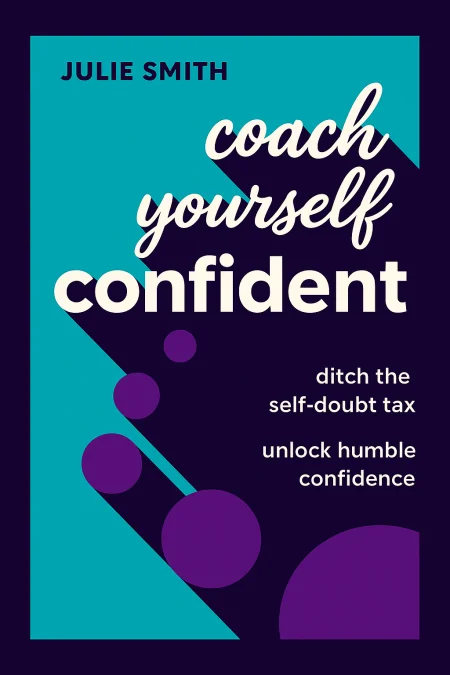
Coach Yourself Confident
Ditch the self-doubt tax, unlock humble confidence
Book Edition Details
Summary
Struggling to quiet that nagging inner critic at work? Julie Smith's "Coach Yourself Confident" is your personal blueprint to transforming doubt into unshakeable self-belief. For the high-achievers who feel drained and the frustrated souls yearning for more, this book unveils the secret to tapping into the wellspring of confidence already within you. Drawing from a decade of rich research, Smith offers a treasure trove of insights, actionable tools, and empowering exercises. Her guidance isn't about reinventing yourself; it's about embracing the powerful potential you already possess. Say goodbye to the exhausting cycle of overcompensation and hello to a new era of confident authenticity. Whether you're navigating the corporate jungle or simply seeking more fulfillment in life, this guide is your key to unleashing a humble yet potent self-assurance that elevates every aspect of your journey.
Introduction
You've likely been told countless times to "be more confident," but that advice feels empty when your inner critic is louder than your inner cheerleader. The truth is, confidence isn't a switch you flip on command. It's a skill you develop, a relationship you nurture with yourself, and a quiet trust that grows from within. The journey toward genuine confidence doesn't require you to become someone else or fake it until you make it. Instead, it's about recognizing that you already possess more capability than you give yourself credit for. Your confidence may lag behind your actual abilities, creating a gap that costs you opportunities, energy, and peace of mind. This gap is what we call the "self-doubt tax," and you've been paying it far too long. Real confidence isn't about arrogance or perfection. It's humble confidence, grounded in the truth that you are good enough as you are, and you can always grow better. This isn't about eliminating self-doubt entirely but right-sizing it so it serves rather than sabotages you. The tools and insights ahead will help you coach yourself toward this balanced, unshakeable sense of self-trust that can weather any storm.
Break Free from the Self-Doubt Tax
Self-doubt isn't inherently destructive, but when it grows oversized, it becomes a tax on your potential. This tax manifests in two costly ways: missed opportunities when you hold back, and exhaustion when you overcompensate through excessive work and perfectionism. Rebecca Snow, a Global HR Vice President, discovered this truth during her career journey. Despite her impressive track record and leadership role overseeing 30,000 people, Rebecca noticed something troubling. "There's still a bit of me that feels like a graduate trainee who's trying to prove herself," she reflected after 25 years with her organization. She was paying the self-doubt tax by working harder than necessary, seeking external validation, and second-guessing decisions that her experience had already equipped her to make confidently. The breakthrough came when Rebecca realized she hadn't kept up with herself. Her internal self-image remained stuck in the past while her capabilities had grown exponentially. She began practicing what we call "owning your strengths," actively acknowledging her expertise rather than deflecting compliments with phrases like "it was nothing" or "anyone could have done it." This shift from minimizing to recognizing allowed her to recalibrate her confidence to match her actual competence. To break free from your own self-doubt tax, start by auditing where you're overpaying. Notice when you hold back from speaking in meetings due to perfectionist standards or when you work excessive hours to compensate for imagined inadequacies. Keep a brief daily log of moments when self-doubt influenced your actions. Then practice the simple but powerful act of treating yourself as you would treat a trusted friend, offering encouragement instead of criticism. Remember that confidence and competence are often misaligned in capable people. Your self-doubt tax receipt might be longer than you realize, but every small step toward self-recognition reduces what you owe to fear and increases what you invest in growth.
Build Humble Confidence That Lasts
Humble confidence represents the sweet spot between crushing self-doubt and inflated ego. It's grounded in reality, acknowledging both your strengths and areas for growth without shame or grandiosity. This balanced approach creates lasting confidence because it doesn't depend on perfect performance or constant external validation. Kate Richardson-Walsh, captain of Britain's Olympic gold medal-winning hockey team, exemplified this balance throughout her career. Even after achieving the pinnacle of success, she maintained what she called a "constant thought": "I can always do this better." This wasn't self-criticism but curious self-improvement. Kate understood that excellence comes from embracing both parts of the humble confidence mantra: "I am good enough and I can be better." Kate's team applied this principle collectively by identifying and sharing each member's "super strengths." Rather than focusing on weaknesses or comparing themselves to others, they created what Kate described as "a steely knowledge that we're bringing all these different strengths to the table." This collective humble confidence meant they trusted their abilities while remaining open to learning and adapting when challenges arose during the Olympics. The transformation from fragile to robust confidence begins with accepting your inherent worth while maintaining curiosity about growth. Start by completing this exercise: write down five ways to finish the sentence "When I am at my best, I..." Then write five ways to complete "To make my contribution even better, I would like to..." Notice how both lists feel equally true and valuable. Practice carrying yourself with what Amy Cuddy calls "power and pride and poise, as you deserve to do." This isn't about faking confidence but about honoring the confidence that already exists within you. Humble confidence grows stronger with use, creating a positive cycle where self-trust enables action, action provides evidence, and evidence reinforces trust.
Navigate Confidence Saboteurs and Setbacks
Your confidence has enemies that operate from within your own mind. These saboteurs, including perfectionism, comparisonitis, and fear of others' opinions, can drain your self-belief at the moments you need it most. Learning to recognize and neutralize these internal threats transforms them from confidence destroyers into growth opportunities. Consider the story of Stefano, a commercial director who lost touch with his confidence when new team members joined his organization. His mind created a composite of the "perfect executive leader" using the best qualities of all his colleagues, then measured himself against this impossible standard. "I'm just not as intelligent as the others," he told himself. "They are so sharp, so quick." This comparisonitis led him to stay quiet in meetings, which reinforced his belief that others were superior. Stefano's breakthrough came through reframing his perspective. Instead of seeing colleagues as threats to his competence, he learned to view them as complementary strengths within the team. He didn't need to match the analytical speed of the insights director or the methodical approach of the operations director any more than they needed to match his ability to connect with customers and put their needs at the heart of strategy. When setbacks inevitably occur, the key is avoiding what psychologist Martin Seligman calls the "three Ps": making setbacks seem permanent, pervasive, and personal. Instead, reframe difficulties as temporary, specific, and external. Rather than thinking "I always mess up presentations," try "This particular presentation didn't go as planned, and I can prepare differently next time." Build your confidence recovery toolkit by practicing truth-telling when your inner critic speaks up. Create two columns: what your critic says versus what's objectively true. Most criticism crumbles under factual examination. Additionally, cultivate your "that so this" inventory, collecting evidence of past challenges you've navigated successfully. When new difficulties arise, remind yourself: "If I handled that situation, I can handle this one too."
Summary
True confidence isn't about believing you're perfect or never feeling doubt. It's about developing an unshakeable trust in your ability to navigate whatever life presents, knowing that you have the resources within you to find a way forward. As Maya Angelou beautifully expressed, "Nothing can dim the light which shines from within." This inner light is your humble confidence, grounded in reality yet open to infinite growth. The most powerful shift you can make is recognizing that you are already good enough while maintaining the curiosity and commitment to become even better. This isn't about fixing what's broken in you because nothing is broken. It's about right-sizing your self-doubt so it serves rather than sabotages you, allowing your true capabilities to shine through. Start immediately with this single action: the next time you catch yourself saying "I can't do this," add one small word: "yet." This simple addition transforms a statement of limitation into a declaration of possibility. Your confidence journey begins with this tiny shift in language, opening the door to the trust in yourself that has been waiting patiently for you to recognize it was there all along.
Related Books
Download PDF & EPUB
To save this Black List summary for later, download the free PDF and EPUB. You can print it out, or read offline at your convenience.
By Julie Smith
