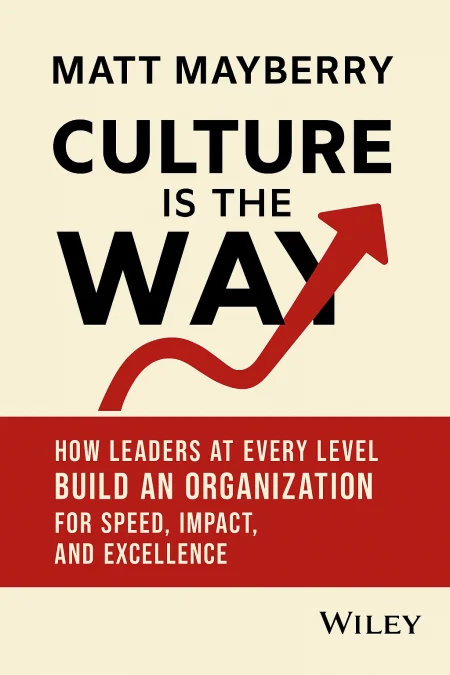
Culture Is the Way
How Leaders at Every Level Build an Organization for Speed, Impact, and Excellence
Book Edition Details
Summary
The gridiron's grit meets boardroom brilliance in "Culture Is the Way," where Matt Mayberry, a former NFL pro turned management virtuoso, shares his insider playbook for creating transformative workplace cultures. With the precision of a seasoned athlete and the insight of a top-tier consultant, Mayberry coaches leaders at every level to cultivate an environment that sparks unparalleled employee engagement and drives organizational success. This isn't just a guide—it's an energizing call to action for managers and executives ready to unleash their teams' full potential. Embark on a journey where cultural excellence is not just an ideal but an achievable reality, positioning your organization for speed, impact, and enduring excellence.
Introduction
Picture this: A seasoned executive sits in her corner office, staring at another disappointing quarterly report. Despite having top talent, cutting-edge technology, and a solid strategy, her organization continues to underperform. The numbers don't lie, but they don't tell the whole story either. What's missing isn't visible on any spreadsheet or dashboard—it's the invisible force that either propels organizations to greatness or quietly sabotages their best efforts. This invisible force is culture, and it's the most underestimated yet powerful driver of organizational success. Too many leaders treat culture as a nice-to-have, something to address when business slows down or delegate to the HR department. But the organizations that truly thrive—the ones that adapt quickly, execute flawlessly, and consistently outperform their competitors—understand a fundamental truth: culture isn't just part of the game; it is the game. Through compelling stories from the football field to the boardroom, from struggling companies to category leaders, this exploration reveals how leaders at every level can harness the transformative power of culture. You'll discover why some teams achieve the impossible while others with superior resources fall short, and more importantly, you'll learn exactly how to build an organization designed for speed, impact, and excellence. The journey ahead isn't just about improving workplace dynamics—it's about unleashing the full potential of every person in your organization and creating something truly extraordinary together.
The Power of Culture: From Football Fields to Boardrooms
When Matt Mayberry stepped onto the field as a linebacker for Indiana University, he encountered something that would forever change his understanding of what makes organizations truly great. Under the guidance of Coach Terry Hoeppner—affectionately known as Coach Hep—the Indiana Hoosiers were transformed from the laughingstock of the Big Ten Conference into a team that broke a fourteen-year Bowl game drought. This wasn't due to superior talent or easier competition. The roster remained largely the same, and they still faced powerhouses like Ohio State and Michigan. What changed everything was Coach Hep's relentless focus on transforming the culture of Indiana Football. He didn't just talk about winning; he methodically shifted beliefs, expectations, and daily behaviors. Every team meeting began with his favorite poems and quotes. He painted vivid pictures of the program's potential future. Most importantly, he treated every interaction as an opportunity to reinforce new cultural norms. When Coach Hep tragically passed away during Mayberry's sophomore year, something remarkable happened. The team didn't crumble—they carried his vision forward and achieved that historic Bowl game appearance, dedicating the season to his memory. This transformation reveals culture's true power: it's not about motivation or inspiration alone, but about creating systematic change in how people think, behave, and perform together. The best sports coaches understand this intuitively, which is why they obsess over culture with the same intensity they bring to game strategy. They develop a burning desire to improve their team's cultural foundation daily, generate positive energy that permeates every practice and interaction, and focus on coaching people rather than merely managing them. This approach translates directly to business, where the same principles separate thriving organizations from those that struggle despite having all the right resources on paper.
Building Your Cultural Foundation: Purpose, People, and Process
During a pivotal meeting in 2018, Terry Brick and his leadership team at Southern Glazer's Wine and Spirits of Illinois faced an uncomfortable reality. When asked to describe their company's culture, twenty senior leaders provided thirty-five different answers. Some referenced their FAMILY Values, others recited mission statements, and still others used generic terms like "excellence" and "commitment." Despite being a highly successful organization, they lacked the cultural clarity that could elevate them to the next level. This moment of truth led to one of the most transformative cultural initiatives in the company's history. Rather than accepting this fragmentation, the leadership team embarked on a collaborative journey to define their cultural identity. Through hours of passionate discussion, they eventually settled on a simple yet powerful cultural purpose statement: "Get Better Today...Together." What made this process remarkable wasn't just the outcome, but the methodology—engaging every manager in the company, turning values into specific daily behaviors, and creating a sense of shared ownership in the cultural transformation. The impact extended far beyond the workplace. Joshua, a twenty-year employee caring for a dying parent during the pandemic, found that "Get Better Today...Together" pulled him out of emotional despair and reminded him he wasn't alone in his struggles. Edward, approaching retirement and fearful of life without work, used the statement to explore new hobbies and build community connections for his post-career life. When a cultural purpose statement transcends corporate walls and genuinely improves people's personal lives, it demonstrates the profound difference between empty slogans and authentic cultural transformation. Great cultural foundations require three essential elements: a clear purpose that resonates deeply with people's values, collaborative processes that give everyone a voice in shaping the culture, and behavioral specificity that turns abstract values into concrete daily actions. Organizations that master this foundation create the conditions for sustained excellence, while those that skip these steps often find their cultural initiatives fading into irrelevance within months.
Implementation and Leadership: Making Culture the Ultimate Differentiator
The morning Dan Cathy received customer survey results showing that 25% of Chick-fil-A customers in Dallas wouldn't return was a wake-up call that changed everything. His initial reaction was typical of many leaders—blame the operators, push harder for better execution, and hope the problems would resolve themselves. But this approach yielded minimal results, leaving him frustrated and confused about how to drive real change. Everything shifted when a book landed on his desk: "Quality Is Free" by Philip Crosby. One phrase jumped out with startling clarity: "What is in the business is a reflection of leadership." Suddenly, Cathy realized that pointing fingers at operators and demanding better performance missed the fundamental issue. The problems in his business were ultimately a reflection of his own leadership effectiveness. Instead of focusing on changing others, he needed to focus on changing himself. This revelation transformed him into an obsessive learner, and as his leadership improved, so did every aspect of the organization. This story illustrates a crucial truth about cultural transformation: it must begin with leadership transformation. The ultimate differentiator in any organization isn't strategy, technology, or even talent—it's the collective effectiveness of its leaders. When leaders truly understand their role as culture drivers, they don't just set vision and manage processes; they become transformational forces who inspire others to become the best versions of themselves. They coach for excellence rather than simply directing activities, and they model the behaviors they want to see throughout the organization. The most successful culture implementations follow a systematic approach that includes driving alignment among all leaders, creating behavioral manifestos that translate values into specific actions, developing comprehensive communication strategies, and establishing clear rollout roadmaps. But none of these tactical elements work without leaders who are willing to transform themselves first, lead by example consistently, and maintain fanatical focus on sustaining cultural excellence over time.
Sustaining Excellence: Commercial Execution and Chief Culture Drivers
The real test of cultural transformation comes not during the exciting launch phase, but in the months and years that follow when initial enthusiasm naturally wanes and daily operational pressures threaten to push culture to the sidelines. This is where most cultural initiatives fail—not because they lacked good intentions or solid planning, but because organizations treat culture as a separate initiative rather than as the foundation for everything they do. At Southern Glazer's Wine and Spirits, the "Get Better Today...Together" culture faced its ultimate test during the COVID-19 pandemic. While many organizations struggled to maintain cohesion and performance during the crisis, SGWS-IL not only survived but thrived, achieving one of their best years ever. This wasn't due to luck or market conditions—it was the result of having embedded cultural practices so deeply into their operations that the culture became their strength during adversity rather than another burden to manage. The key to sustaining cultural excellence lies in becoming fanatical about five critical areas: continuous attention and development of cultural practices, unwavering consistency between stated values and daily actions, laser focus on the vital few initiatives that drive the most impact, relentless follow-through on commitments, and clear connection between cultural behaviors and business results. Organizations that master these elements create what can only be described as cultural sustainability—where positive behaviors become so ingrained that they persist and strengthen even during challenging times. True Chief Culture Drivers understand that their role extends far beyond their job description or organizational title. They recognize that every interaction, decision, and moment of leadership either strengthens or weakens the cultural foundation they're trying to build. They measure people-related outcomes as rigorously as financial metrics, redefine traditional roles to support cultural objectives, and maintain the long-term perspective necessary to create lasting change. Most importantly, they never forget that culture is ultimately about people—helping every individual in the organization become more successful, fulfilled, and capable of contributing to something greater than themselves.
Summary
The journey from the football fields of Indiana University to the boardrooms of America's most successful organizations reveals a profound truth: culture is not a soft concept or nice-to-have luxury, but the fundamental operating system that determines whether organizations merely survive or truly thrive. Through stories of coaches who transformed losing programs into champions and leaders who turned struggling companies into industry leaders, we see that cultural transformation follows predictable patterns and can be systematically developed by anyone willing to commit to the process. The most successful culture builders understand that authentic transformation begins with defining a clear cultural purpose that resonates deeply with people's personal values, engages every level of the organization in collaborative creation, and translates abstract concepts into specific daily behaviors that drive business results. They recognize that leadership transformation must precede organizational transformation, and they approach culture building with the same rigor and strategic thinking they apply to financial planning and operational excellence. Most importantly, they maintain fanatical focus on sustaining their cultural foundation over time, knowing that the organizations that outlast their competitors are those that never stop investing in the development of their people. The opportunity before every leader today is unprecedented: to create workplaces that don't just generate profit, but genuinely improve the lives of everyone they touch while achieving extraordinary results in the marketplace. This isn't just about building better companies—it's about contributing to a better world, one culture at a time.
Related Books
Download PDF & EPUB
To save this Black List summary for later, download the free PDF and EPUB. You can print it out, or read offline at your convenience.
By Matt Mayberry
