
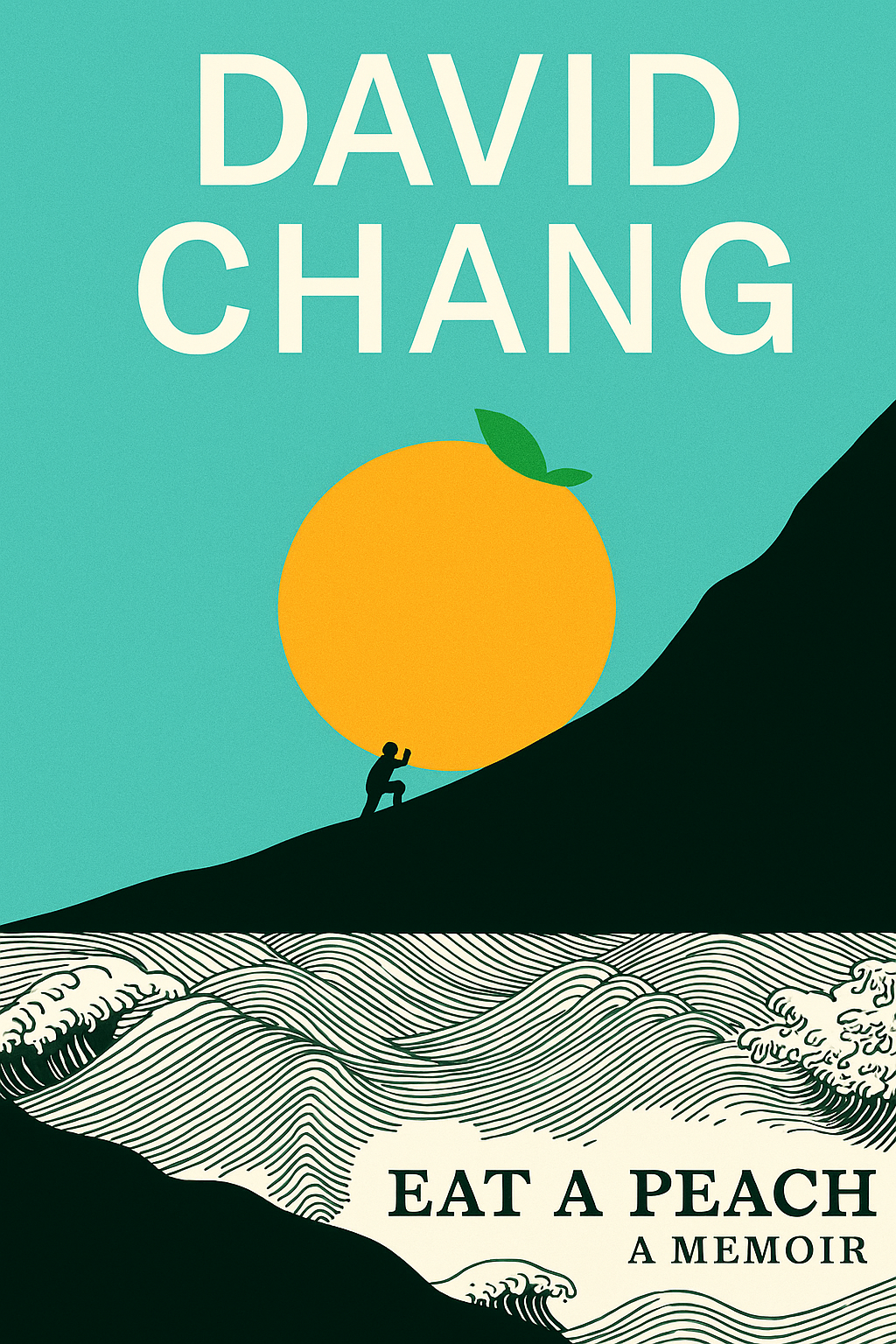
Eat a Peach
A Memoir
Book Edition Details
Summary
In the bustling heart of Manhattan's East Village, David Chang's unassuming noodle shop, Momofuku, was born in 2004—a venture fueled by a risky loan and a dream. Fast forward to 2018, and Chang stands at the helm of a culinary empire that spans continents, starring in his own Netflix series and influencing millions. Yet behind this meteoric rise lies a tale of solitude and resilience. In "Eat a Peach," Chang offers a raw, unflinching look at his journey from the son of Korean immigrants in Virginia, through battles with depression and anxiety, to redefining the American dining landscape with ramen and pork buns. This memoir isn't just a chronicle of culinary triumph; it's an introspective exploration of identity, passion, and the relentless pursuit of excellence amid personal turmoil. Chang's story is not only a testament to the power of perseverance but also a profound narrative of finding one's place in the world against all odds.
Introduction
David Chang's story begins with a simple yet profound truth: sometimes the most extraordinary journeys emerge from the darkest moments. A Korean American chef who transformed personal struggle into culinary revolution, Chang didn't follow the traditional path to success. Instead, he carved out an entirely new way of thinking about food, restaurants, and what it means to nourish people. His journey from a depressed young man contemplating suicide to becoming one of America's most influential chefs reveals the complex relationship between mental health and creativity, between personal demons and professional triumph. Chang's impact extends far beyond the kitchen. Through his Momofuku restaurant empire, he challenged conventional wisdom about fine dining, broke down cultural barriers in American cuisine, and proved that authenticity doesn't require adherence to tradition. His willingness to experiment with Korean, Japanese, and American flavors created a new language of food that spoke to a generation of diners hungry for something different. From this remarkable life, readers will discover how raw vulnerability can become a source of strength, how embracing failure often leads to breakthrough success, and how the courage to be authentically yourself can transform not just your own life, but an entire industry.
From Broken Dreams to Breaking Barriers
Chang's early years were marked by the weight of expectations and the sting of repeated failures. Growing up in Northern Virginia as the son of Korean immigrants, he initially showed promise as a golf prodigy, winning state championships and dreaming of professional success. However, as he entered his teenage years, the pressure became overwhelming, and his natural talent began to desert him. The collapse of his golf career represented more than just a lost opportunity; it shattered his sense of identity and left him grappling with questions about his worth and place in the world. The transition from golf to an uncertain future proved devastating for Chang's mental health. Academic struggles followed athletic disappointments, and despite attending prestigious institutions like Georgetown Prep and Trinity College, he consistently felt like an outsider. His Korean heritage made him different from his predominantly white classmates, while his American upbringing left him feeling disconnected from his own cultural roots. This sense of not belonging anywhere would later become a defining characteristic of his approach to cooking, where he would blend cultures and traditions in ways that defied conventional categorization. Religious questioning added another layer of complexity to Chang's formative years. Raised in a deeply Presbyterian Korean American family, he initially embraced faith before ultimately rejecting it during his college years. This spiritual crisis reflected his broader struggle with authority, tradition, and the search for authentic meaning. The combination of athletic failure, academic mediocrity, and religious doubt created a perfect storm of self-doubt and depression that would shadow him for years to come. Yet these early failures contained the seeds of his later success. Chang's experience as an outsider gave him a unique perspective on American culture and cuisine. His willingness to question established norms, born from his rejection of traditional expectations, would later fuel his revolutionary approach to restaurant culture. The pain of not fitting into predetermined categories eventually became his greatest strength, allowing him to create something entirely new.
Building an Empire While Battling Inner Demons
Chang's entry into the culinary world was not driven by passion but by desperation. After failing at a corporate job and contemplating suicide, he enrolled in culinary school as a last resort. His early kitchen experiences at prestigious New York restaurants like Craft and Café Boulud were marked by the same struggles that had plagued his earlier endeavors. He was slower than other cooks, less naturally talented, and constantly battling feelings of inadequacy. Yet something about the kitchen environment resonated with him in a way that nothing else had. The opening of Momofuku Noodle Bar in 2004 represented both a business venture and a form of therapy. With limited funds and even less experience, Chang created a restaurant that reflected his own cultural confusion and creative restlessness. The menu blended Korean, Japanese, and American influences in ways that seemed chaotic to traditionalists but spoke to a generation of diners who, like Chang, existed between cultures. The restaurant's success was far from guaranteed; in fact, it nearly failed multiple times in its first year. Chang's management style during these early years was intense and often destructive. His own mental health struggles manifested as explosive anger in the kitchen, creating a work environment that was both creatively fertile and emotionally toxic. He pushed his staff relentlessly while pushing himself even harder, operating under the philosophy that if everything was meaningless, then nothing was too much to risk. This approach, while unsustainable, generated an energy and authenticity that resonated with both critics and customers. The rapid expansion of the Momofuku empire brought new challenges and opportunities. Each new restaurant, from Ssäm Bar to Ko, represented another attempt to redefine what dining could be. Chang's willingness to experiment with everything from service style to menu format kept the culinary world guessing while establishing Momofuku as a genuine innovator. However, success also brought increased scrutiny, media attention, and the pressure to live up to ever-growing expectations.
The Price of Success and Search for Balance
As Chang's restaurants gained acclaim and his personal profile rose, the gap between his public success and private struggles became increasingly difficult to manage. Awards, accolades, and media attention created external validation for someone who had always battled internal demons. The irony was not lost on him that his depression, which had nearly killed him, had also become the source of his creative energy and professional drive. This realization created a complex relationship with his own mental health, as he feared that getting better might compromise his ability to create. The expansion into television, publishing, and other media ventures brought Chang's influence beyond the restaurant world but also multiplied the pressures he faced. The launch of Lucky Peach magazine allowed him to explore food culture in deeper, more intellectual ways, but it also added another layer of responsibility and expectation. Each new project succeeded in its own right while contributing to an increasingly unsustainable pace of life that left little room for personal reflection or healing. Chang's personal relationships suffered under the weight of his professional commitments and mental health struggles. The intense, all-consuming nature of restaurant work made it difficult to maintain connections outside the industry, while his explosive temperament and depressive episodes strained relationships with colleagues and friends. The pattern of pushing people away just when they got closest became a recurring theme in his life, reflecting deeper fears about abandonment and unworthiness. The eventual collapse of Lucky Peach and the mixed reception of some later restaurant ventures forced Chang to confront the sustainability of his approach. Critical reviews that questioned whether his moment had passed triggered existential questions about identity, legacy, and what came next. The realization that external success couldn't cure internal pain led to a deeper reckoning with his mental health and the need for more comprehensive treatment and lifestyle changes.
Growth, Responsibility, and Finding Peace
Chang's journey toward better mental health required confronting not just his own demons but the impact his behavior had on others. Working with executive coach Marshall Goldsmith helped him recognize that his self-destructive tendencies weren't just harming himself but creating toxic environments for his employees and loved ones. This revelation marked a turning point in his approach to leadership and life, as he began to understand the difference between demanding excellence and creating fear. The birth of his son Hugo represented perhaps the most significant milestone in Chang's personal evolution. Becoming a father forced him to consider his legacy in entirely new terms, thinking not just about professional achievements but about the kind of person and role model he wanted to be. The responsibility of raising a child provided both motivation and perspective, helping him see beyond his own struggles to consider the broader impact of his choices and actions. Chang's marriage to Grace brought stability and partnership to a life that had been characterized by isolation and self-reliance. Her influence encouraged him to seek help for his mental health issues and to develop healthier coping mechanisms than the work addiction that had sustained him for so long. The relationship represented a new model of success, one based on mutual support and emotional growth rather than individual achievement at any cost. The maturation of the Momofuku organization under new leadership, particularly CEO Marguerite Mariscal, allowed Chang to step back from day-to-day operations while remaining creatively engaged. This transition required learning to trust others with his life's work, a process that challenged his control issues while opening space for personal growth. The company's evolution reflected his own journey toward a more sustainable and inclusive approach to business and leadership.
Summary
David Chang's life illustrates the profound truth that our greatest weaknesses can become our most powerful strengths when channeled with courage and creativity. His journey from suicidal depression to culinary innovation demonstrates that authentic success often requires embracing rather than hiding our struggles, using them as fuel for transformation rather than reasons for surrender. Chang's willingness to be vulnerable about his mental health challenges, cultural identity conflicts, and professional failures created a new model for leadership that prioritized authenticity over perfection. For anyone grappling with mental health issues, imposter syndrome, or the feeling of not fitting conventional molds, Chang's story offers both inspiration and practical wisdom. His experience suggests that seeking professional help, building supportive relationships, and finding meaningful work that aligns with your values are essential steps toward healing and growth. Perhaps most importantly, his journey reminds us that the very qualities that make us feel different or broken may be exactly what the world needs us to contribute.
Related Books
Download PDF & EPUB
To save this Black List summary for later, download the free PDF and EPUB. You can print it out, or read offline at your convenience.
By David Chang
