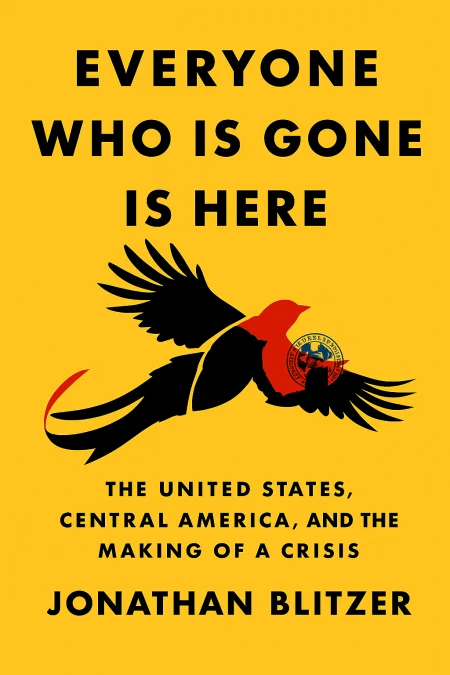
Everyone Who Is Gone Is Here
The United States, Central America, and the Making of a Crisis
Book Edition Details
Summary
In a landscape marked by peril and hope, Jonathan Blitzer's "Everyone Who Is Gone Is Here" unravels the human tapestry woven across the U.S.-Mexico border. This haunting narrative plunges into the soul of a humanitarian crisis that has simmered for decades, ignited by a whirlwind of political failings and insidious corruption. Blitzer, with the precision of a master storyteller, illuminates the harrowing journeys of those fleeing violence and despair from El Salvador, Guatemala, and Honduras—each step a testament to resilience against impossible odds. Their stories, intertwined with the machinations of policymakers and activists, paint a vivid portrait of an enduring struggle. As the border pulses with life and loss, Blitzer exposes the intricate dance of desperation and determination, offering a profound reflection on the crisis's indelible mark on both nations. This is more than a chronicle; it's an urgent call to understand the forces shaping our world's future.
Introduction
In the summer of 2014, thousands of unaccompanied children from Central America began arriving at the US border, their faces haunting television screens across America. What many saw as a sudden crisis was actually the culmination of decades of interconnected policies that had created an endless cycle of violence, displacement, and failed enforcement. These children were fleeing gang violence in countries where American deportation policies had helped establish the very criminal organizations that now terrorized their communities. This sweeping historical narrative reveals how American foreign policy decisions made during the Cold War era created the foundation for today's immigration challenges. Through intimate portraits of refugees, policymakers, and communities on both sides of the border, we witness how military aid to brutal regimes in the 1980s, mass deportation programs in the 1990s and 2000s, and increasingly harsh enforcement measures have created self-perpetuating cycles of violence and migration that span generations. The book addresses three critical questions that define contemporary immigration debates: How did American interventions in Central America during the 1980s create the conditions for mass displacement that continues today? Why have enforcement-only approaches to immigration consistently failed while making underlying problems worse? And what can this history teach us about breaking cycles of violence and displacement that have persisted for over four decades? This essential reading illuminates the deep historical roots of current immigration crises and offers crucial insights for anyone seeking to understand one of America's most persistent policy challenges.
Cold War Seeds: Military Aid and Refugee Creation (1980-1992)
The roots of today's Central American migration crisis stretch back to March 24, 1980, when Archbishop Oscar Romero was assassinated while celebrating mass in San Salvador. Romero had become the voice of El Salvador's oppressed, documenting military atrocities and pleading with the United States to stop funding the brutal regime that was terrorizing his people. His murder marked the beginning of a twelve-year civil war that would claim 75,000 lives and displace over one million people, setting in motion migration patterns that continue today. The Reagan administration's response revealed a fundamental contradiction that would define American immigration policy for decades. While publicly championing human rights and democracy, the United States poured over one billion dollars in military aid into El Salvador, training the very forces responsible for systematic torture, massacres, and disappearances. American military advisers worked directly with Salvadoran units like the Atlacatl Battalion, which would later commit some of the war's worst atrocities, including the massacre of nearly 1,000 civilians at El Mozote. This military support created an immediate refugee crisis as hundreds of thousands of Salvadorans, Guatemalans, and Nicaraguans fled north to escape the violence. Yet the same government fueling these conflicts systematically denied asylum to those seeking protection, rejecting over 97 percent of Central American asylum claims. Immigration officials were explicitly instructed to view these refugees through Cold War lenses rather than humanitarian ones, treating them as potential security threats rather than victims of American-backed violence. The sanctuary movement that emerged in response represented one of the largest acts of civil disobedience since the Underground Railroad. Churches, synagogues, and communities across America openly defied federal law to shelter refugees, creating networks that transported asylum seekers from the border to safety. This grassroots rebellion forced Americans to confront the contradiction between their nation's values and its policies, establishing legal and moral precedents that would influence immigration advocacy for generations. The movement's ultimate success in securing temporary protection for Central Americans demonstrated the power of organized moral resistance, but it could not address the root causes of displacement that American foreign policy continued to fuel.
Building the Deportation Machine: Gang Export and Violence Cycles (1993-2008)
The end of the Cold War brought formal peace to Central America but ushered in a new era of violence as the United States began constructing an unprecedented deportation apparatus. The Immigration Reform and Control Act of 1986 had promised to solve immigration challenges through amnesty and employer sanctions, but by the 1990s, politicians from both parties were competing to appear tough on immigration through increasingly punitive enforcement measures that would fundamentally reshape the entire system. The pivotal moment came with the 1996 Illegal Immigration Reform and Immigrant Responsibility Act, which expanded deportable offenses to include minor crimes, eliminated most forms of relief for immigrants facing removal, and created mandatory detention systems that removed judicial discretion. This law transformed what had been a relatively flexible immigration system into a rigid deportation machine capable of removing hundreds of thousands of people annually. As one immigration attorney observed, the legislation turned every traffic stop into a potential deportation case, criminalizing entire communities that had been integrating into American society for decades. The human consequences were immediate and devastating, particularly for Central America's fragile post-war societies. Between 1998 and 2005, the United States deported over 160,000 Central Americans, including thousands of gang members who had been shaped by American streets and prisons before being expelled to countries they barely remembered. MS-13 and 18th Street, gangs that originated in Los Angeles during the 1980s refugee crisis, were suddenly transplanted wholesale to El Salvador, Honduras, and Guatemala through mass deportation policies that provided no coordination with receiving countries. These deportations created a feedback loop of violence that continues today. Gang members trained in American urban warfare and prison hierarchies established territorial control across Central America, recruiting local youth and creating new sources of displacement. Murder rates soared to among the highest in the world as American-exported criminal organizations battled for control of drug trafficking routes and extortion rackets. The September 11 attacks provided additional justification for militarizing immigration enforcement through the creation of the Department of Homeland Security, which consolidated immigration agencies under a security mandate and provided massive funding for deportation operations. By 2008, the United States had created a self-perpetuating cycle where the solution to immigration, mass deportation, had become a primary cause of new migration as families fled the violence that American enforcement policies had helped unleash.
Crisis and Escalation: From Obama to Trump's Zero Tolerance (2009-2021)
The Obama administration inherited an immigration system in crisis but found itself trapped by the enforcement infrastructure built over previous decades and the political dynamics that made comprehensive reform impossible. Despite campaign promises to fix America's broken immigration system, Obama presided over record deportation numbers, removing over 400,000 people annually while struggling to balance humanitarian concerns with political pressures to appear tough on border security. The 2014 surge of unaccompanied children from Central America marked a turning point that exposed the bankruptcy of enforcement-only approaches to immigration. These children were not economic migrants but refugees fleeing gang violence in communities where American deportation policies had helped establish criminal organizations. The crisis revealed how decades of American policy decisions had created self-perpetuating cycles of violence and displacement, as the children arriving at the border were often fleeing the very gangs that previous deportations had strengthened. Obama's inability to achieve comprehensive reform despite initially favorable political conditions demonstrated how immigration had become a third rail of American politics, with each side benefiting from the crisis more than from solutions. The administration's strategy of increasing enforcement to build credibility for reform ultimately backfired, as expanded deportations only emboldened opponents while alienating immigrant communities. Programs like Deferred Action for Childhood Arrivals provided temporary relief for some immigrants but left the underlying enforcement system intact and vulnerable to future manipulation. The Trump administration pushed this enforcement logic to its ultimate conclusion through policies explicitly designed to inflict suffering as a deterrent. The zero tolerance policy that separated thousands of migrant families represented not an aberration but the logical endpoint of treating immigration as primarily a law enforcement rather than humanitarian issue. Family separation, the Remain in Mexico program, and systematic asylum restrictions all reflected a worldview that saw immigration itself as a threat to American identity and security. The COVID-19 pandemic provided additional justification for border closures and deportations that continued even as public health experts warned these policies were counterproductive. By 2021, the immigration system had been deliberately broken in ways that would take years to repair, while the root causes of migration, violence and economic desperation in Central America, remained unaddressed and in many cases had been exacerbated by four decades of failed enforcement policies.
Summary
The unending crisis of Central American migration reveals a fundamental contradiction at the heart of American policy: the same government that created conditions driving displacement has spent decades trying to stop that migration through increasingly punitive measures that consistently make underlying problems worse. From Cold War military aid that fueled civil wars to mass deportation policies that exported gang violence back to the region, American interventions have prioritized short-term political gains over long-term stability and human welfare, creating self-perpetuating cycles of violence and displacement that span generations. This history demonstrates that immigration cannot be understood or addressed in isolation from foreign policy, military interventions, and economic relationships that shape conditions in migrants' home countries. Enforcement-only approaches that ignore root causes inevitably fail, often creating new problems that dwarf the original issues they were meant to address. The deportation of gang members to Central America in the 1990s and 2000s exemplifies this dynamic, as policies designed to solve American crime problems helped destabilize entire regions and create new sources of displacement. Breaking these destructive cycles requires acknowledging American responsibility for conditions that force people to migrate and committing to approaches that address root causes rather than merely symptoms. This means supporting violence prevention programs, economic development, and democratic institutions in Central America while creating legal pathways for migration that reflect economic and humanitarian realities. Americans must also reckon with how immigration has been weaponized for political advantage, recognizing that sustainable solutions require moving beyond enforcement-only approaches toward policies that serve both American interests and human dignity. Only by learning from this long history of crisis can the United States finally develop immigration policies worthy of its founding ideals and capable of addressing the challenges of an interconnected world.
Related Books
Download PDF & EPUB
To save this Black List summary for later, download the free PDF and EPUB. You can print it out, or read offline at your convenience.
By Jonathan Blitzer
