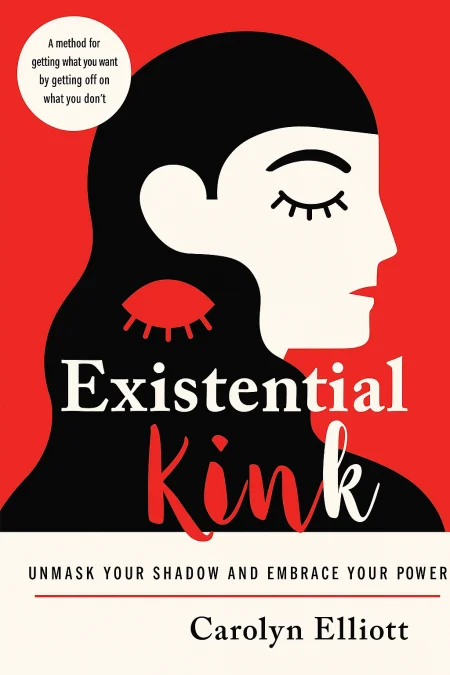
Existential Kink
Unmask Your Shadow and Embrace Your Power
Book Edition Details
Summary
What happens when you dare to flirt with the darkness within? Carolyn Elliott, PhD, dares you to find out in "Existential Kink," a provocative dance with your hidden self. Beneath our polished facades lies a shadowy playground of unspoken desires and taboo impulses that silently guide our choices. This tantalizing book invites you to not only acknowledge these forbidden pleasures but to revel in them. Elliott's candid exploration offers insightful meditations and actionable wisdom, urging you to embrace those tantalizingly flawed aspects that secretly shape your life. By shining a light on your concealed cravings, you unlock the alchemy of true empowerment and joy. Prepare to unveil your shadow and unleash the raw, transformative power that resides there.
Introduction
Human beings possess an extraordinary capacity for self-deception, particularly when it comes to understanding their own desires. While we consciously seek happiness, success, and fulfillment, we simultaneously find ourselves trapped in repetitive patterns of suffering, limitation, and dissatisfaction. This paradox reveals a fundamental truth about human psychology: we harbor unconscious desires for experiences that our conscious minds would reject as undesirable or harmful. The shadow self, a concept rooted in Jungian psychology, contains all the repressed aspects of our personality that we refuse to acknowledge. These hidden desires don't simply disappear through denial; instead, they manifest in our external reality as recurring problems, relationship difficulties, financial struggles, and creative blocks. The more we resist these shadow aspects, the more power they gain over our lives, operating outside our conscious awareness to create the very circumstances we claim to despise. This exploration challenges conventional self-help approaches that focus exclusively on positive thinking and conscious intention. Instead, it proposes a radical integration process that requires us to consciously acknowledge and even celebrate our unconscious attraction to painful experiences. Through this counterintuitive approach, we can finally resolve the internal conflicts that keep us stuck in cycles of self-sabotage, ultimately gaining genuine agency over our lives and the ability to create lasting positive change.
The Core Thesis: Unconscious Desires Create Our Reality
The fundamental proposition underlying this psychological framework rests on a provocative principle: we always receive what we unconsciously desire, regardless of what we consciously claim to want. This assertion directly contradicts our ordinary understanding of victimhood and external causation, suggesting instead that our persistent life patterns emerge from hidden aspects of our own psyche. Evidence for this claim emerges through careful observation of recurring life themes. Individuals who repeatedly attract unavailable romantic partners, despite consciously seeking committed relationships, demonstrate an unconscious preference for emotional unavailability. Similarly, those who consistently struggle with financial limitations, despite considerable effort and skill, reveal an underlying attachment to scarcity. These patterns persist precisely because the unconscious desires driving them remain unacknowledged and therefore unresolved. The mechanism operates through what Jung identified as projection and synchronicity. Our unconscious beliefs and desires create a perceptual filter that shapes how we interpret reality and what opportunities we notice or ignore. This filter simultaneously influences our behavior in subtle ways that attract circumstances matching our deepest expectations. When someone unconsciously believes they deserve rejection, they unconsciously signal this belief through body language, communication patterns, and relationship choices, thus magnetizing rejection experiences that confirm their hidden belief system. This understanding reframes personal responsibility in a radical way. Rather than being victims of external forces or past trauma, we become the unconscious artists of our own experience. This recognition, while initially unsettling, ultimately offers profound empowerment. If we created our circumstances unconsciously, we possess the capacity to create different circumstances once we bring conscious awareness to our hidden creative process.
Shadow Integration: Making the Unconscious Conscious Through Pleasure
Traditional approaches to shadow work often involve arduous processes of analysis, confession, and gradual acceptance of rejected aspects of personality. However, a more direct path involves learning to derive conscious pleasure from experiences that previously generated only suffering and resistance. This approach bypasses the ego's defensive mechanisms by removing the element of shame that typically keeps shadow material repressed. The process requires a fundamental shift in perspective regarding pain and pleasure. Rather than viewing emotional discomfort as evidence of external problems requiring solutions, we learn to recognize these feelings as sensations that can be experienced differently depending on our attitude and interpretation. Just as individuals in consensual power exchange relationships derive pleasure from experiences that would otherwise be considered painful, we can learn to find enjoyment in life circumstances that previously felt purely negative. This recontextualization works through the principle of conscious consent. When we acknowledge that some part of us has chosen or created challenging circumstances for unconscious reasons, we can begin to understand these situations as expressions of hidden curiosities rather than unwanted impositions. The shift from "this is happening to me against my will" to "this is something I'm exploring for reasons I don't fully understand" immediately changes our relationship to the experience, reducing resistance and opening space for genuine choice. The practice involves specific meditative techniques that combine relaxation, honest self-inquiry, and deliberate cultivation of pleasure in response to typically unwanted sensations. Through repeated practice, individuals learn to associate previously distressing emotions with states of empowerment and choice rather than victimhood and helplessness. This creates a lasting transformation in emotional responsiveness that naturally leads to different external circumstances as the unconscious no longer needs to create dramatic situations to fulfill its hidden desires.
Practical Applications: Transforming Negative Patterns into Empowerment
The theoretical framework translates into specific practices designed to address common areas of persistent difficulty: financial limitation, relationship dysfunction, creative blocks, and health challenges. Each application follows the same basic principle of finding conscious pleasure in unconscious patterns while simultaneously expanding one's capacity to receive positive experiences. Financial transformation begins with recognizing the unconscious enjoyment derived from scarcity, anxiety, and financial drama. Many individuals discover they secretly relish the intensity and importance that comes with financial pressure, the righteous anger toward economic systems, or the identity of being someone who "doesn't care about money." By consciously savoring these previously unconscious rewards, the underlying attraction to financial limitation becomes satisfied, creating space for genuine abundance to emerge naturally. Relationship work involves acknowledging unconscious desires for control, drama, rejection, or unavailability that typically operate through victim-perpetrator dynamics. Rather than focusing on changing partners or finding better relationships, individuals learn to consciously enjoy their attraction to relationship dysfunction. This often reveals that the drama and intensity they seek through problematic relationships can be fulfilled through more constructive means, such as creative expression, adventure, or conscious kink practices. Creative blocks typically mask unconscious fears of visibility, success, judgment, or responsibility that accompany genuine creative expression. By learning to derive pleasure from feelings of creative inadequacy, perfectionism, or artistic rejection, individuals often discover that these seemingly negative emotions were actually providing excitement and meaning that they feared losing through success. Once consciously enjoyed, these feelings no longer need to sabotage creative progress, allowing natural inspiration and productivity to flow more freely. The practice requires consistent application over weeks or months, during which practitioners develop increasing sensitivity to their unconscious motivations and greater capacity for conscious choice in their responses to life circumstances.
Addressing Objections: Ethics, Trauma, and Methodological Concerns
Several legitimate concerns arise regarding this approach to psychological transformation, particularly around issues of personal responsibility, trauma response, and social justice implications. These objections require careful consideration to distinguish between authentic limitations of the method and resistance based on conventional assumptions about victimhood and healing. The most significant concern involves applying this framework to experiences of genuine trauma, abuse, or systemic oppression. The approach explicitly distinguishes between individual unconscious patterns and collective shadow dynamics that create systems of exploitation and harm. Personal responsibility for unconscious attraction to difficult experiences doesn't negate the reality of external factors like racism, sexism, economic inequality, or family dysfunction. Instead, it focuses on the individual's power to change their relationship to these circumstances, which often creates more space for effective external action. Trauma responses require special consideration, as the nervous system reactions involved in traumatic experience operate below the level of choice and desire. The methodology specifically excludes recent trauma that hasn't been fully grieved, as attempts to find pleasure in unprocessed trauma can lead to dissociation and re-traumatization rather than integration. Proper trauma work often requires professional support, somatic therapy, and sometimes pharmaceutical intervention before shadow integration practices become appropriate. Ethical concerns about "blaming the victim" miss the fundamental distinction between blame and responsibility. Blame involves judgment, shame, and punishment, while responsibility involves acknowledging one's power to influence outcomes. The approach actually removes blame by recognizing that unconscious desires aren't moral failings but natural expressions of the human psyche's complexity. When individuals discover their unconscious attraction to certain experiences, they typically feel relief rather than self-condemnation, as this recognition finally explains previously confusing patterns and offers a path forward. Methodological skepticism about the effectiveness of finding pleasure in pain deserves serious consideration. However, extensive evidence from therapeutic applications of tantric principles, BDSM psychology, and somatic experiencing supports the basic premise that conscious relationship to difficult sensations can transform their impact and meaning.
Summary
The integration of unconscious shadow desires through conscious pleasure represents a radical departure from conventional approaches to personal transformation and psychological healing. Rather than attempting to eliminate unwanted experiences through resistance, analysis, or positive thinking, this methodology embraces the totality of human experience as potentially valuable and meaningful. The core insight suggests that our persistent problems exist not because we're broken or unlucky, but because they fulfill unconscious needs that haven't been consciously acknowledged or satisfied. By learning to derive genuine pleasure from experiences we previously resisted, we complete cycles of unconscious seeking and create space for new forms of experience to emerge naturally. This approach offers particular value for individuals who have exhausted conventional self-help methods and are ready to engage with the more complex and paradoxical aspects of human psychology, ultimately leading to greater self-acceptance, authentic empowerment, and the capacity to create lives that satisfy both conscious intentions and unconscious desires.
Related Books
Download PDF & EPUB
To save this Black List summary for later, download the free PDF and EPUB. You can print it out, or read offline at your convenience.
By Carolyn Elliott
