
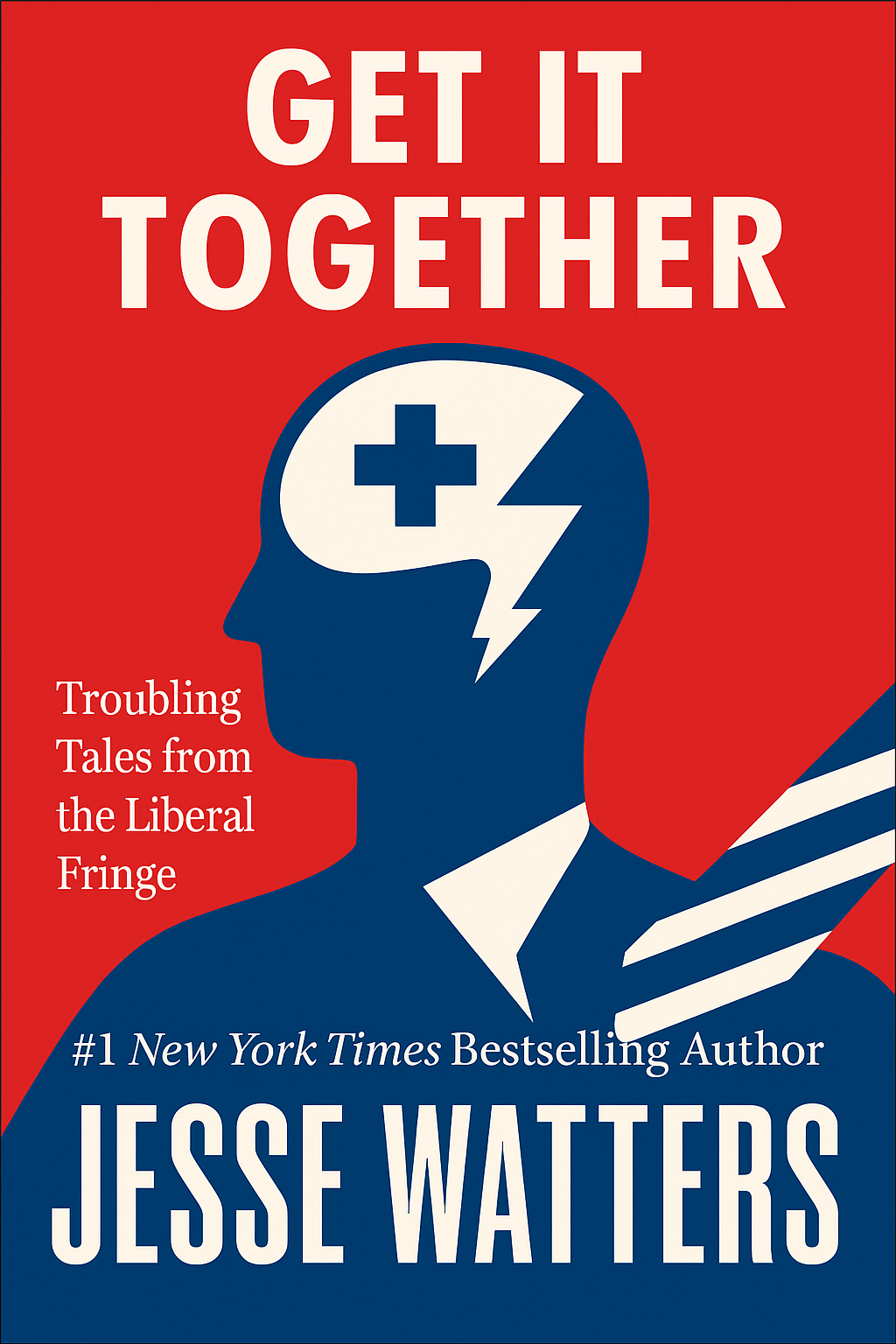
Get It Together
Troubling Tales from the Liberal Fringe
Book Edition Details
Summary
Radical dreams or personal nightmares? Jesse Watters, the renowned Fox News host and New York Times bestselling author, unravels a startling tapestry of activism and introspection in "Get It Together." In this provocative exploration, Watters converses with a diverse array of radical activists—from climate crusaders to identity pioneers—only to unearth a shared, poignant truth: personal turmoil often masquerades as political fervor. Through candid, often humorous interviews, he reveals how personal histories of trauma and unhealed wounds might be the true catalysts behind these intense ideological battles. Could it be that the true revolution lies not in legislative halls, but in the heart? "Get It Together" challenges us to peer beyond political facades and recognize the human stories that fuel the fire of activism, inviting readers to a dialogue that transcends mere political divides.
Introduction
Have you ever encountered someone whose beliefs seemed so extreme, so far removed from common sense, that you wondered what could possibly drive them to such positions? Perhaps it was a colleague advocating for completely open borders, a neighbor who refuses to work because they believe employment is inherently exploitative, or someone online claiming that having children is morally wrong. In our increasingly polarized world, we often dismiss these individuals as simply misguided or mentally unstable, but what if their radical ideologies mask deeper, more human stories of pain and searching? This exploration takes us into the intimate conversations with America's most controversial figures, revealing the personal traumas and childhood experiences that often lie beneath their extreme worldviews. Through patient listening and genuine curiosity, we discover that behind the most bewildering political positions and lifestyle choices are real people grappling with abandonment, abuse, and the universal need for safety and belonging. Understanding these psychological roots doesn't require us to agree with their conclusions, but it offers us something far more valuable: insight into how personal pain transforms into public ideology, and perhaps most importantly, a pathway toward genuine compassion for those whose stories challenge everything we thought we knew about human nature.
The Academic Idealist: When Trauma Masquerades as Theory
Professor Joe Carens had spent decades crafting elegant philosophical arguments for completely open borders, becoming one of the world's most respected academic voices on immigration policy. Yet when pressed about practical implementation during our conversation, his carefully constructed theories began to unravel in real time. This distinguished University of Toronto political scientist couldn't answer basic questions about enforcement mechanisms or societal consequences. When asked what should happen if someone entered illegally and committed a crime like drunk driving, he claimed not to understand the question. When pushed on age of consent laws or practical policy details, he retreated into academic abstractions, insisting he focused on moral philosophy rather than "immediate debates about public policy," despite advocating for radical changes to how nations function. The breakthrough came when the conversation shifted to his childhood experiences. Joe revealed he believed he had been sexually abused, possibly by a Catholic priest, though he couldn't recall specific details. Suddenly, his lifelong crusade for absolute "fairness" and his deep distrust of institutional authority made perfect sense. His rejection of religious faith after the alleged abuse, his decision to move to Canada to avoid Vietnam, his divorce and remarriage to a feminist theorist, all pointed to a man desperately seeking the safety and justice that had been denied to him as a vulnerable child. This pattern reveals itself throughout radical academic circles: personal trauma masquerades as political philosophy. When someone has been failed by the very institutions meant to protect them, they often develop idealized visions of how the world should work. Joe's open borders advocacy wasn't really about immigration policy, it was about creating a world where the vulnerable are never turned away, where fairness isn't just a dream but an absolute guarantee. His theoretical framework served as an elaborate defense mechanism against ever feeling powerless again. Understanding this psychological foundation doesn't make his policies more practical or wise, but it makes his passion profoundly human. The next time you encounter someone advocating for seemingly impossible idealistic changes, ask yourself what childhood wounds might be driving their need to remake the world. Often, the most radical theories are simply attempts to heal old pain through new systems.
The Anti-Work Crusader: Rebellion Born from Family Pain
When Doreen Ford appeared on national television to represent the anti-work movement, the interview became legendary for all the wrong reasons. This thirty-year-old part-time dog walker, speaking from what appeared to be a cramped kitchen-bedroom hybrid, embodied every negative stereotype critics had about the movement. Asked about aspirations beyond dog walking, Doreen mentioned wanting to teach philosophy, seemingly oblivious to the irony. The interview was so catastrophic that the anti-work community immediately disavowed their former spokesperson, and the movement's primary online forum temporarily shut down in embarrassment. Yet beneath Doreen's poor articulation lay a story that touched something genuinely painful about modern American work culture. The follow-up conversation with Brittany, a suburban mother turned anti-work advocate, revealed the deeper currents driving this movement. Brittany's father had worked himself into multiple heart attacks and strokes, missing every important moment of her childhood while chasing financial success that never materialized. Her brother died of a drug overdose, another brother struggled with addiction, and her sister survived on military disability payments. Work hadn't brought her family prosperity or happiness, it had brought destruction and death. Brittany's anti-work philosophy wasn't rooted in laziness or entitlement, but in watching the people she loved sacrifice their health, relationships, and sanity for a system that ultimately failed them anyway. Her demands for unlimited vacation time, flexible schedules, and work-life balance weren't radical progressive ideology, they were the desperate plea of someone who had seen work literally kill the people she cared about most. Her rebellion against traditional employment was actually a rebellion against watching her family destroy themselves for nothing. The gentle parenting movement that often overlaps with anti-work ideology follows similar psychological patterns. When parents refuse to set boundaries or discipline their children, claiming it's more compassionate, they're often overcorrecting from their own childhood experiences of harsh treatment. The exhausted mother who lets her toddler hit her while calling her "poopy face" isn't following some progressive parenting theory, she's desperately trying to give her child the unconditional acceptance she never received, even if it means losing herself completely in the process.
The Toad Shaman: Finding Fathers in Sacred Rituals
Hector's journey to becoming a psychedelic toad shaman began with the kind of childhood trauma that destroys most people before they reach adulthood. Molested in a trailer park, abandoned by his biological father, raised by a PTSD-afflicted stepfather who brought the violence of war into their home, Hector had spent years numbing unbearable pain with cocaine and heroin. When traditional recovery programs failed repeatedly, he found salvation in the most unlikely place: the venom of desert toads, which indigenous Mexican tribes consider a sacred gateway to spiritual transformation and healing. The toad venom experience was so powerful that Hector quit hard drugs immediately and devoted his life to sharing this "medicine" with others. During his shamanic initiation in Mexico, he was left alone on an island for four days without food or water, a vision quest that pushed him to the edge of death. He emerged believing he could guide others through similar transformations, helping everyone from cartel hitmen to suburban cocaine addicts find redemption through carefully orchestrated near-death experiences. His calm demeanor and genuine compassion were striking, even as he described throwing up lizards during demonic exorcisms and serving psychedelics to teenagers seeking healing. What drove Hector to seek such extreme spiritual experiences becomes clear when you understand his absent father's story. His biological father's indigenous Mexican heritage connected directly to the very region where these sacred toads lived and where the ancient healing ceremonies originated. Hector's spiritual journey was simultaneously a search for the parent who had abandoned him and an attempt to connect with ancestral wisdom that might finally explain and transform his suffering. The toad ceremonies weren't just about healing trauma, they were about finding belonging in a tradition that valued his pain as sacred rather than shameful. Hannah, the eco-sexual influencer who finds erotic pleasure in natural elements like sunlight and soil, represents a gentler but equally profound rebellion against conventional sexuality. Growing up Southern Baptist in rural South Carolina, she had been repeatedly told to "calm down and be pretty," to suppress her natural wildness in favor of acceptable femininity. Her discovery of eco-sexuality was both a return to her childhood love of nature and a radical rejection of the sexual shame imposed by her religious upbringing, allowing her to reclaim both her sensual nature and her spiritual connection to the earth.
Summary
The most radical beliefs often stem from the most human needs: the desperate search for safety, meaning, and belonging after experiencing profound betrayal or abandonment by the very people and institutions that should have provided protection. These individuals haven't chosen extremism out of malice or stupidity, they've constructed elaborate worldviews to protect themselves from repeating past trauma or to fill voids left by absent parents, failed institutions, or broken promises that shaped their earliest understanding of how the world works. Stop dismissing radical thinkers as simply "crazy" and start listening for the pain beneath their politics. Ask yourself what childhood experiences might drive someone to such extreme positions, and you'll often discover the key to understanding their entire worldview. Approach these conversations with curiosity rather than condemnation, recognizing that behind every ideology is a person seeking the love, security, or justice they were denied. The goal isn't to agree with their conclusions or enable destructive behavior, but to understand the human experiences that led them there, because only through genuine understanding can we hope to address the root causes of radicalization rather than just its most visible symptoms.
Related Books
Download PDF & EPUB
To save this Black List summary for later, download the free PDF and EPUB. You can print it out, or read offline at your convenience.
By Jesse Watters
