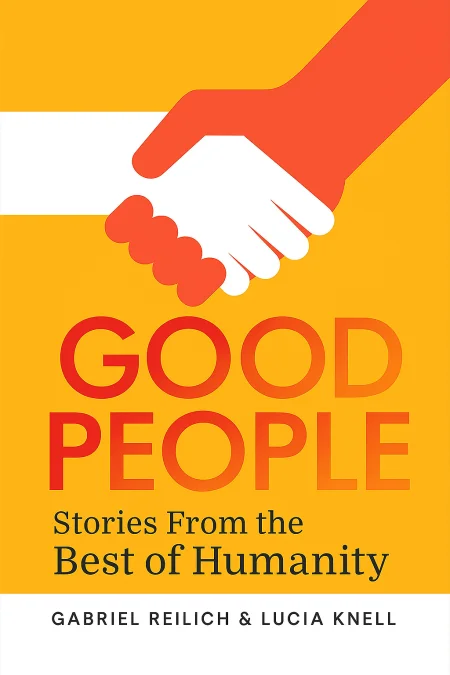
Good People
Stories From the Best of Humanity
byGabriel Reilich, Lucia Knell
Book Edition Details
Summary
In a landscape often overshadowed by negativity, "Good People" emerges as a beacon of light, illuminating the profound impact of simple acts of kindness. This collection, curated from the heartfelt tales of Upworthy's vibrant community, stitches together an inspiring tapestry of human compassion. Each story—rich in emotion, humor, and authenticity—transports readers to moments where strangers become heroes, teachers ignite futures, and small gestures ripple into life's vast ocean. Accompanied by whimsical illustrations, these narratives offer more than just a respite from the daily tumult; they affirm the innate goodness within us all. Perfect for anyone seeking a reminder of humanity’s enduring spirit, this book is an uplifting testament to the power of empathy and the beauty found in everyday decency.
Introduction
Have you ever found yourself standing in a crowded place, feeling utterly alone, wondering if anyone truly cares about strangers anymore? In our hyperconnected yet emotionally distant world, it's easy to believe that genuine human compassion has become a relic of the past. Yet scattered throughout our daily lives are countless moments when ordinary people perform extraordinary acts of kindness, often for people they've never met and will never see again. This collection of true stories from the Upworthy community reveals the profound impact that small gestures can have on both those who give and those who receive. Through firsthand accounts of unexpected rescue, simple compassion, and human connection across all walks of life, these narratives demonstrate that kindness isn't just a nice sentiment—it's a transformative force that ripples outward in ways we can barely comprehend. Reading these stories will restore your faith in humanity while providing practical insights into how you can become an agent of positive change in your own community. More importantly, it will remind you that in a world that often feels cold and disconnected, the warmest moments of human connection are often just one kind gesture away.
When Strangers Become Angels: Stories of Unexpected Rescue
Amy's world shattered in a single phone call while she sat in a law school elevator in Manhattan. Her father had died suddenly of a heart attack, and she needed to get home immediately. At LaGuardia Airport, overwhelmed by grief and panic, she sat on the floor crying when a nondescript middle-aged businessman approached. Without hesitation, he got her on an earlier flight, sat with her during the journey, held her hand, and walked her all the way to where her friend waited. She never learned his name, yet his kindness during her darkest moment changed how she moves through the world. "His kindness keeps me company," she reflects, noting how she now stops to help crying strangers on the street. This story illuminates a profound truth about human nature: in our most vulnerable moments, angels often appear wearing the most ordinary disguises. The businessman could have looked away, avoided the messy reality of someone else's grief, or simply minded his own business. Instead, he chose to see Amy's pain and respond with immediate, unconditional compassion. His actions demonstrate that heroism rarely looks like what we expect—it's usually quiet, unassuming, and performed by people who would never consider themselves heroes. What makes these interventions so powerful is their spontaneous nature. The businessman didn't have time to calculate costs or benefits; he simply saw someone in need and acted. This reminds us that our capacity for goodness often emerges most clearly in moments when we don't have time to overthink our response. When we trust our initial impulse to help, we tap into something fundamentally human and beautiful.
Small Acts, Profound Impact: The Ripple Effect of Simple Gestures
When Ruffin was in sixth grade, his crooked teeth earned him the nickname "Shark Bite," and his family's poverty meant he often went to bed hungry. Despite their struggles, his mother somehow managed to rent him a trumpet for middle school band—only to have it repossessed repeatedly when she couldn't make payments. Years later, while cleaning out closets, Ruffin discovered a letter that changed everything. The music store owner had written to his mother: "I have decided to forgive the rent on Jacques's trumpet. You do not have to pay me anymore for the trumpet. It is yours to play. However, if Jacques drops out of band and stops playing the trumpet, will you return it to me so I can give it to some other deserving student? I have been through bad times like you. But remember, tough times never last. Tough people do." This anonymous act of generosity reveals how small kindnesses can literally change the trajectory of someone's life. The store owner, James W. Jones, didn't just forgive a debt—he invested in a young person's dreams and provided a philosophy that would carry Ruffin through future challenges. The phrase "tough times never last, tough people do" became more than words; it became a lived truth that shaped how Ruffin approached adversity throughout his life. The beauty of this gesture lies in its understated nature. Jones didn't seek recognition or publicity for his kindness. He simply saw a family struggling to provide their child with something meaningful and chose to quietly remove that burden. His approach—conditioning the gift on Ruffin's continued participation—showed wisdom about human nature while creating space for the kindness to extend to future students. This reminds us that the most powerful gifts often come with no strings attached except the hope that they'll be used well and perhaps paid forward.
Finding Light in Darkness: How Compassion Transforms Crisis
When Sharon was fighting breast cancer, losing her hair felt like losing herself. At 53, she'd grown up with long, beautiful blonde hair that had been her "crowning glory" since childhood. As chemotherapy stripped away each strand, she saw her reflection as a walking advertisement for illness and loss. On the day before her son's wedding, she planned to hide behind a wig despite its discomfort. But during a casual lunch at a taco joint in St. Louis, something unexpected happened. Two women at a nearby table called out to compliment her close-cropped hair, insisting it looked "cute" and that she was "brave." When Sharon explained it wasn't a choice but the result of cancer treatment, the women not only refused to back down from their praise but insisted even more firmly that she looked beautiful. These strangers accomplished something that months of family support hadn't quite achieved: they helped Sharon see herself through eyes unclouded by her own fear and loss. Their genuine enthusiasm for her appearance wasn't pity or false encouragement—it was authentic appreciation that cut through Sharon's negative self-perception. That encounter gave her the confidence to attend her son's wedding without hiding behind a wig, embracing her authentic self during one of life's most important celebrations. What makes this story particularly powerful is how it demonstrates that sometimes people need external validation to break free from internal narratives of loss or inadequacy. Sharon's family loved her unconditionally, but these women saw her with fresh eyes, unencumbered by the "before" version that Sharon mourned. Their perspective became a gift that allowed her to rewrite her own story from victim to survivor, from damaged to beautiful. It reminds us that compliments and encouragement from strangers can carry unique weight precisely because they come without agenda or obligation—they reflect pure, unfiltered human recognition of worth and beauty.
Summary
The most extraordinary truth about kindness is that it costs nothing to give yet creates immeasurable value for both giver and receiver, rippling outward in ways that can transform entire communities and shape the trajectory of individual lives. Look for opportunities to practice everyday heroism by paying attention to people who seem lost, overwhelmed, or in distress, and trust your initial impulse to help rather than overthinking potential complications. Offer genuine compliments and encouragement to strangers, remembering that your outside perspective might be exactly what someone needs to break free from their own limiting self-perception. Finally, when you're struggling or in need, remain open to receiving kindness from unexpected sources—the angels in our lives rarely announce themselves with wings and halos, but often appear as ordinary people choosing to do extraordinary things in ordinary moments.
Related Books
Download PDF & EPUB
To save this Black List summary for later, download the free PDF and EPUB. You can print it out, or read offline at your convenience.
By Gabriel Reilich
