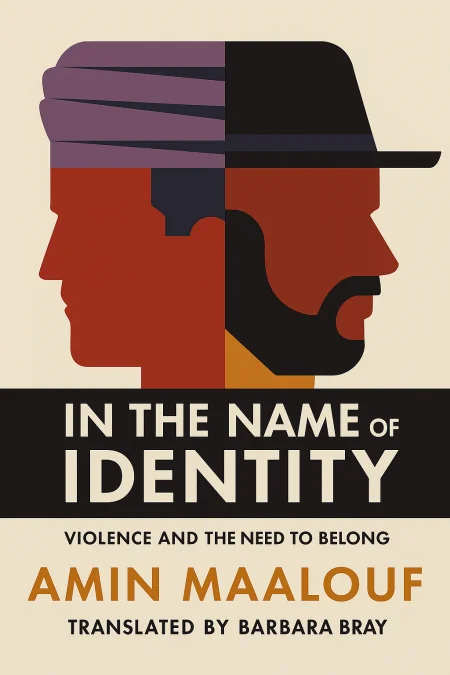
In the Name of Identity
Violence and the Need to Belong
Book Edition Details
Summary
Identity: a kaleidoscope of our past, our beliefs, our communities. Yet, within its vibrant tapestry lies a darker thread—one that has sparked untold conflicts and crimes. In "In the Name of Identity," Amin Maalouf embarks on a profound exploration of this dual-edged concept. He delves into history's annals, unraveling how simplistic views of identity have fueled fiery passions and divisive battles. Maalouf's incisive narrative challenges us to rethink inherited identities, urging a closer inspection of the labels we habitually embrace. He posits a vision where individualism and a global kinship coexist, advocating for an inclusive world where understanding trumps division. This book isn't just a discourse; it's a call to recognize the complex beauty of our multifaceted selves.
Introduction
Identity has become one of the most volatile forces shaping our contemporary world, capable of inspiring both profound belonging and devastating violence. This exploration challenges the prevailing tendency to reduce human identity to a single, dominant affiliation—whether religious, ethnic, or national—arguing instead that such reductionism transforms identity into a weapon of exclusion and conflict. The central proposition emerges clearly: every individual possesses a composite identity formed by multiple allegiances, and recognizing this complexity offers the key to defusing identity's lethal potential. The analysis employs a multifaceted approach, weaving together personal reflection, historical examination, and cultural critique to demonstrate how simplified notions of belonging fuel contemporary massacres and ethnic cleansing. Through careful examination of how societies shape religions rather than merely being shaped by them, and how globalization simultaneously threatens and preserves cultural diversity, a framework emerges for understanding why identity conflicts have intensified in our interconnected age. The argument proceeds systematically, first establishing the composite nature of identity, then examining how encounters with modernity have distorted this understanding, before proposing pathways toward a more nuanced and peaceful relationship with our multiple belongings.
The Composite Nature of Identity: Against Singular Belonging
Human identity fundamentally consists of multiple, interwoven allegiances rather than a single, essential characteristic that defines a person's true nature. Every individual carries within themselves numerous affiliations—linguistic, religious, professional, regional, cultural—that combine in unique configurations. These elements function like "genes of the soul," creating an identity that is simultaneously connected to vast communities and utterly distinctive to each person. The notion that people possess one overriding allegiance that eclipses all others represents a profound misunderstanding of how identity actually operates. A person may simultaneously be Lebanese and French, Christian and Arabic-speaking, connected to both local traditions and global cultures. Each affiliation links them to thousands or millions of others, yet the particular combination of allegiances renders their identity irreplaceable and unique. This complexity becomes obscured when societies force individuals to choose between their various belongings, treating multiple allegiances as betrayals rather than enrichments. Those who live at the intersection of different communities—whether through migration, intermarriage, or cultural mixing—often face pressure to suppress parts of themselves. Yet these frontier-dwellers possess special potential to serve as bridges between communities, facilitating understanding across difference. The hierarchy of allegiances within any individual shifts according to circumstances and threats. When one aspect of identity comes under attack, it may suddenly dominate a person's self-perception, overshadowing other equally legitimate affiliations. Understanding this dynamic fluidity challenges static notions of essential identity while revealing how external pressures can distort self-understanding, sometimes with tragic consequences.
Modernity and Cultural Encounter: The West and Others
The relationship between modernity and identity becomes particularly complex when modernization bears the cultural imprint of "the other." For societies outside the West, embracing modernity has often meant adopting elements that appear fundamentally foreign, creating profound tensions between progress and authentic selfhood. This dynamic explains much contemporary resistance to change that might otherwise seem beneficial. Historical examination reveals that no religion or cultural tradition is inherently disposed toward either tolerance or fanaticism. Christianity's evolution from centuries of intolerance to its current accommodation with democracy demonstrates that doctrines transform as the societies that practice them evolve. Similarly, Islam's historical record shows remarkable capacity for coexistence and cultural synthesis, suggesting that contemporary extremism reflects specific historical circumstances rather than inherent theological limitations. The crucial factor lies not in the essential nature of belief systems, but in how societies shape their religious and cultural expressions. Confident, secure societies produce open, innovative interpretations of their traditions, while threatened, marginalized communities tend toward rigid, defensive versions of faith. The current wave of religious fundamentalism across various traditions reflects societies' responses to perceived threats rather than theological inevitabilities. When modernity arrives bearing the cultural markers of those who have historically dominated or colonized, even beneficial changes can trigger defensive reactions. The challenge involves creating pathways to progress that allow societies to maintain dignity and cultural continuity while embracing necessary transformations. This requires recognizing that resistance to change often stems from legitimate concerns about identity preservation rather than simple backwardness.
Globalization's Double Edge: Uniformity versus Universality
Contemporary globalization creates simultaneous pressures toward both beneficial universality and destructive uniformity, requiring careful navigation to preserve what deserves preservation while embracing necessary change. Universality involves extending fundamental human rights and dignity to all people regardless of their particular affiliations. Uniformity, by contrast, threatens to eliminate meaningful cultural differences in favor of homogenized global sameness. The challenge lies in distinguishing between these two trajectories, which often appear intertwined. Universal values—such as human dignity, freedom from discrimination, and equal rights regardless of gender or belief—deserve global acceptance. These principles should override local traditions that violate basic human rights. However, the enforcement of such values need not require the elimination of cultural distinctiveness in language, art, cuisine, or social customs that enrich human experience. Globalization provides unprecedented tools for both cultural preservation and cultural expression on a worldwide scale. Communities can now document their traditions, share their innovations, and maintain connections across vast distances. The same technologies that threaten to standardize human experience also offer means for preserving and celebrating diversity. The key lies in conscious choices about how to employ these capabilities. The emergence of what might be called "global tribes"—religious and cultural communities that transcend national boundaries—represents one response to globalization's pressures. These affiliations offer both identity and universality, allowing people to maintain particular belonging while participating in worldwide communities. However, such tribal identities risk reproducing the same exclusionary dynamics that have historically fueled conflict, unless tempered by recognition of multiple allegiances and universal human solidarity.
Taming Identity's Violence: Paths to Peaceful Coexistence
Moving beyond identity-based violence requires fundamental shifts in how individuals and societies approach belonging and difference. Rather than seeking to eliminate identity consciousness or suppress its expressions, the solution involves channeling these powerful forces toward constructive rather than destructive ends. This transformation depends on several interconnected changes in attitude and practice. Individuals must learn to embrace their multiple allegiances fully, refusing pressures to choose one identity over others. This means developing comfort with complexity and rejecting the false simplicity of singular belonging. Those who can acknowledge their diverse inheritances—cultural, linguistic, religious, national—become natural mediators rather than warriors in conflicts between communities. Societies must create inclusive narratives that allow all members to recognize themselves in the collective story. This requires moving beyond majority-minority dynamics toward genuine plurality, where difference enriches rather than threatens social cohesion. Constitutional arrangements, educational curricula, and cultural representations should reflect the actual diversity of contemporary societies rather than privileging some traditions over others. The global community must ensure that emerging world civilization reflects contributions from all cultures rather than appearing as the projection of one dominant tradition. When people everywhere can recognize elements of their heritage in global culture, and when their own communities contribute meaningfully to worldwide developments, the incentive for reactive fundamentalism diminishes. This demands conscious effort to promote genuine cultural exchange rather than one-way cultural transmission. The ultimate goal involves fostering allegiance to humanity itself while maintaining the particular attachments that give life meaning and depth. Such dual loyalty—to one's specific communities and to the human species as a whole—offers the best hope for taming identity's capacity for violence while preserving its essential role in providing belonging and purpose.
Summary
The transformation of identity from a source of meaning into an instrument of violence stems from the dangerous oversimplification that reduces the rich complexity of human belonging to single, exclusive allegiances. Recognition that every person embodies multiple inheritances—cultural, linguistic, religious, national—provides the foundation for defusing identity's lethal potential while preserving its essential function in human flourishing. This understanding becomes increasingly urgent as globalization creates both new opportunities for inclusive world civilization and new temptations toward defensive tribalism, making the conscious cultivation of multiple loyalties not merely desirable but necessary for human survival and progress.
Related Books
Download PDF & EPUB
To save this Black List summary for later, download the free PDF and EPUB. You can print it out, or read offline at your convenience.
By Amin Maalouf
