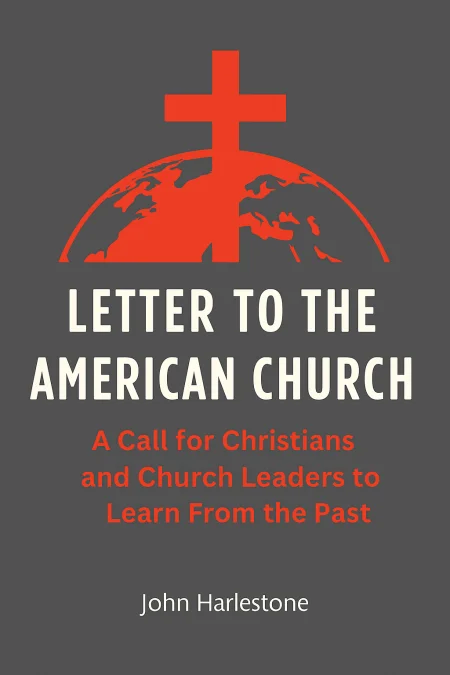
Letter to the American Church
A Call for Christians and Church Leaders to Learn From the Past
Book Edition Details
Summary
In an era where silence can be deafening, John Harlestone's summary of "Letter to the American Church" emerges as a clarion call to action. This isn't just a reflection; it's a rallying cry for Christians to transcend passivity and engage deeply with the moral and political tapestry of their nation. With piercing clarity and accessible language, Harlestone distills the essence of this cautionary tale, ensuring that its crucial messages resonate with readers of all backgrounds. By unraveling pivotal themes and perspectives, this summary becomes a beacon of insight, urging the faithful to rise, voice their convictions, and perhaps, redefine the very soul of their communities.
Introduction
The parallels between Nazi Germany's church and contemporary American Christianity reveal a disturbing pattern of institutional silence in the face of mounting cultural and political pressures. Through careful examination of Dietrich Bonhoeffer's prophetic warnings to the German church in the 1930s, a compelling case emerges that religious institutions today face remarkably similar challenges that demand urgent moral clarity and decisive action. The methodology of historical comparison illuminates how theological errors, misplaced priorities, and fear-driven compromise create conditions for institutional failure during critical moments. By analyzing four specific theological misconceptions that paralyzed German churches—distorted concepts of faith, misguided evangelistic priorities, false separation of religion from civic engagement, and pietistic withdrawal from worldly concerns—the examination reveals how seemingly pious motivations can enable profound moral failures. The urgency of this analysis stems from recognizing that American churches currently exhibit these same theological blind spots while confronting ideological forces that mirror the totalitarian impulses Bonhoeffer opposed. Understanding how religious communities either resist or capitulate to cultural pressure provides essential insight for navigating contemporary challenges where silence itself becomes a form of moral compromise.
The German Church's Fatal Silence: Historical Parallels to America Today
The German church's capitulation to Nazi ideology provides a sobering case study in institutional moral failure that resonates powerfully with contemporary American religious challenges. When Hitler rose to power, approximately eighteen thousand Protestant pastors had the opportunity to resist through the Confessing Church's Barmen Declaration. However, only six thousand initially signed, and by 1935, merely three thousand maintained strong opposition while three thousand actively collaborated with the regime. The most tragic element of this collapse was the twelve thousand pastors who chose neutrality, believing they could remain safely uninvolved while maintaining their religious duties. These clergy thought they were taking the prudent path by avoiding controversy and focusing solely on traditional pastoral responsibilities. Their silence, however, provided the cover necessary for Nazi consolidation of power over religious institutions. The parallels to contemporary American Christianity are unmistakable. Similar patterns of theological rationalization emerge when churches prioritize institutional preservation over prophetic witness. The same arguments about avoiding politics, maintaining focus on spiritual matters, and preserving unity echo across decades and continents. Modern American pastors who remain silent on cultural issues affecting human dignity, religious liberty, and moral foundations employ remarkably similar justifications to their German predecessors. The consequences of this historical failure extend far beyond Germany's borders, ultimately contributing to global catastrophe. The church's abdication of moral authority created a vacuum that enabled unprecedented evil to flourish. This sobering reality challenges contemporary religious leaders to recognize that their choices carry weight far beyond their immediate congregations, potentially affecting the trajectory of entire civilizations.
Four Theological Errors That Paralyze Christian Action and Enable Evil
Four distinct theological misconceptions systematically undermined the German church's capacity for effective resistance and continue to weaken American Christianity's moral witness today. These errors function synergistically, creating a comprehensive framework for institutional paralysis when decisive action becomes necessary. The first error involves reducing faith to mere intellectual assent rather than wholehearted commitment requiring concrete action. This cheapening of faith allows individuals to claim religious identity while avoiding the costly demands of discipleship. True faith necessarily produces works that demonstrate genuine belief, as James emphasized when contrasting living faith with the demons' mere acknowledgment of God's existence. The second error elevates evangelism to an idolatrous position that excludes other biblical mandates, particularly the call to pursue justice and defend the oppressed. This narrow focus creates false dichotomies between spiritual and social concerns, enabling believers to ignore systemic evil while maintaining a sense of religious purity. Such thinking would have prevented Wilberforce from fighting slavery or Bonhoeffer from opposing Nazi persecution of Jews. The third error involves misinterpreting biblical teachings about church-state relationships to justify complete political withdrawal. Luther's emphasis on Romans 13 during the Peasant's Revolt created a theological tradition that privileged submission to authority over prophetic resistance to injustice. This interpretation proved catastrophically inadequate when confronting genuinely evil regimes that demanded church complicity in their crimes. The fourth error promotes a pietistic understanding of holiness that prioritizes personal moral purity over engagement with societal corruption. This approach treats withdrawal from controversial issues as spiritual maturity while actually representing a form of moral cowardice that abandons vulnerable populations to oppressive forces. Such thinking fundamentally misunderstands the biblical call to be salt and light in a corrupt world.
Beyond Religious Neutrality: The Biblical Mandate for Prophetic Engagement
The concept of religious neutrality represents a fundamental misunderstanding of biblical Christianity that enables evil by default rather than creating space for authentic spiritual witness. When churches attempt to remain above political and cultural conflicts, they inevitably serve the interests of whatever forces currently hold power by failing to provide moral resistance. Scripture consistently presents God's people as actively engaged with the societies around them, particularly in defending justice and protecting the vulnerable. The prophetic tradition demands that religious communities speak truth to power regardless of personal cost or institutional convenience. Jeremiah, Daniel, and John the Baptist exemplified this pattern by confronting political leaders when their actions violated divine standards. The early church's witness similarly involved direct engagement with social and political realities rather than retreat into purely private spirituality. The apostles' refusal to obey authorities who commanded them to stop preaching established the principle that religious obligations sometimes require civil disobedience. Their willingness to suffer persecution rather than compromise their message demonstrates the active nature of authentic faith. Contemporary attempts to separate religious belief from public engagement reflect secular assumptions about the nature of truth rather than biblical principles. If Christianity makes true claims about human nature, morality, and social order, these claims necessarily have public implications that cannot be confined to private spaces without denying their universal validity. The gospel's comprehensive vision of human flourishing demands engagement with all aspects of life including politics, culture, and social structures.
The Choice Before Us: Cheap Grace or Costly Discipleship
The fundamental choice facing contemporary American Christianity mirrors the decision that confronted the German church in the 1930s: whether to embrace costly discipleship that risks everything for truth and justice, or to retreat into cheap grace that offers comfort without commitment. This choice cannot be postponed indefinitely, as cultural and political pressures continue mounting toward a decisive moment of institutional testing. Cheap grace represents the reduction of Christianity to a private consumer good that provides personal benefits without demanding sacrificial service. This counterfeit version of the gospel promises salvation through minimal intellectual assent while avoiding the radical life transformation that genuine conversion requires. Churches that offer this diluted message may maintain numerical growth and social respectability while abandoning their prophetic calling. Costly discipleship, by contrast, recognizes that following Christ requires everything believers have to offer, including their reputations, careers, and even their lives when necessary. This understanding of faith produces Christians who cannot remain silent when confronting injustice, who prioritize obedience to God over social approval, and who willingly bear the cost of public witness. Such believers understand that neutrality in the face of evil constitutes practical collaboration with oppressive forces. The stakes of this choice extend far beyond individual congregations or even American Christianity itself. As America's influence shapes global culture and politics, the church's response to contemporary challenges will affect millions of people worldwide. History will judge whether American Christians chose the path of courageous engagement that their German predecessors largely abandoned, or repeated the tragic pattern of institutional failure that enabled unprecedented evil to flourish unchecked.
Summary
The fundamental insight emerging from this historical analysis is that institutional religious silence in the face of moral crisis constitutes not neutrality but active collaboration with evil, and that only costly discipleship that risks everything for truth can preserve both authentic faith and civilizational foundations. The German church's failure demonstrates how theological sophistication without moral courage becomes a pathway to catastrophic complicity, while the pathway of prophetic engagement, though dangerous, remains the only option consistent with genuine Christian commitment. This analysis serves readers who recognize that contemporary cultural challenges require the same kind of decisive moral clarity that Bonhoeffer exemplified, and who understand that the stakes of institutional religious response extend far beyond immediate congregational concerns to affect the trajectory of entire civilizations.
Related Books
Download PDF & EPUB
To save this Black List summary for later, download the free PDF and EPUB. You can print it out, or read offline at your convenience.
By John Harlestone
