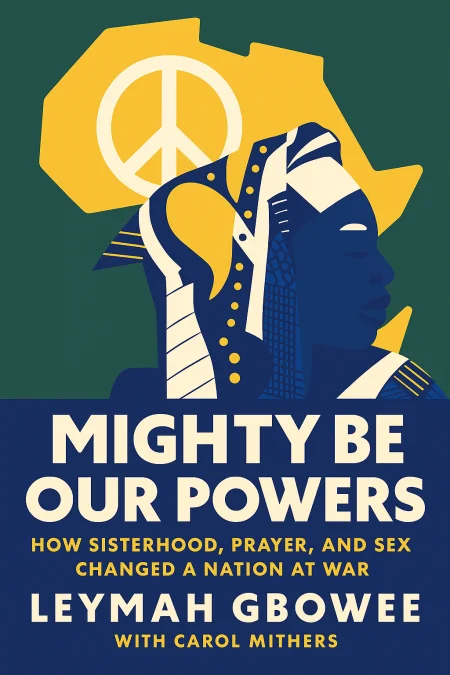
Mighty Be Our Powers
How Sisterhood, Prayer, and Sex Changed a Nation at War
byLeymah Gbowee, Carol Mithers
Book Edition Details
Summary
When chaos reigned in Liberia, one woman's resilience ignited a revolution. Leymah Gbowee, shattered by the ravages of civil war and the chains of domestic abuse, discovered an unyielding truth: the collective might of women is a formidable force for change. In a daring coalition of courage and conviction, Gbowee united Christian and Muslim women, waging peace through unwavering protest and an audacious sex strike. With a charisma that electrified a nation, she faced down tyrants and warlords alike, transforming despair into hope and mobilizing a sisterhood that would end a nation's torment. "Mighty Be Our Powers" is not just a testament to Gbowee's indomitable spirit; it's a clarion call for those who believe in the power of unity against all odds, resonating with anyone who has ever dared to dream of peace.
Introduction
In the scorching heat of a fish market field in Monrovia, Liberia, thousands of women dressed in white sat motionless day after day, their placards declaring a simple yet powerful message: "We want peace, no more war." Among them stood a young mother named Leymah Gbowee, who had transformed from a war-weary refugee into an unlikely leader of one of history's most remarkable nonviolent movements. Her journey from the depths of despair during Liberia's brutal civil war to becoming a Nobel Peace Prize laureate represents far more than personal triumph—it embodies the extraordinary power of ordinary people to change the course of history. Gbowee's story unfolds against the backdrop of West Africa's darkest period, when civil wars ravaged entire nations and left millions displaced, traumatized, and forgotten by the world. Yet from this chaos emerged a movement that would not only help end Liberia's fourteen-year conflict but also revolutionize how we understand women's roles in peacebuilding. Through her experiences, readers will discover the profound strength that can emerge from society's most marginalized voices, the strategic brilliance required to organize grassroots movements across ethnic and religious divides, and the personal sacrifices that authentic leadership demands. Her narrative reveals how individual healing and collective action intertwine to create lasting social change.
From Privilege to Survival: War's Devastating Impact
Leymah Gbowee's childhood in 1980s Liberia painted a picture of middle-class stability and bright prospects. Growing up in the Old Road neighborhood near Monrovia's Spriggs Payne airfield, she lived in a close-knit community where neighbors shared meals and children moved freely between houses. Her parents, both hardworking members of Liberia's indigenous Kpelle tribe, had climbed from poverty to provide their five daughters with education and opportunities. As a teenager, Gbowee was confident, ambitious, and academically successful, dreaming of becoming a pediatrician while serving as a student government senator. The first cracks in this secure world appeared on New Year's Eve 1989, when Gbowee joined her church congregation for the traditional Watch Night Service, writing her hopes for the coming year on paper to be burned as prayers ascending to God. Within weeks, Charles Taylor's rebel forces crossed into Liberia from Côte d'Ivoire, beginning what would become one of Africa's most devastating civil wars. Initially dismissive of the distant conflict, Gbowee's family, like many middle-class Liberians, believed the government would quickly restore order. The war's arrival shattered not just physical security but entire worldviews. When fighting reached Monrovia in 1990, seventeen-year-old Gbowee witnessed the massacre at St. Peter's Lutheran Church, where she had served as an acolyte since childhood. Nearly a thousand refugees seeking sanctuary in the chapel and adjoining school were brutally murdered by government forces. The sacred space where she had found comfort and community became a scene of unimaginable horror. This moment marked the end of her innocence and faith in the institutions that had shaped her identity. The transformation from privileged teenager to refugee happened with stunning swiftness. Within months, Gbowee found herself packed onto a dangerously overcrowded cargo ship with thousands of other displaced Liberians, fleeing to Ghana's Buduburam refugee camp. The young woman who had once planned to attend university and build a professional career was now living in a tent, selling fried doughnuts to survive. The war had not only destroyed her physical world but also stripped away her sense of self and future possibilities, leaving her to navigate a harsh new reality with nothing but her determination to protect her family.
Finding Purpose: The Journey to Peace Activism
The refugee camp years represented Gbowee's lowest point, marked by poverty, isolation, and a series of devastating personal choices that would haunt her for years. A relationship with Daniel, an older man she knew to be trouble, led to four pregnancies and a cycle of domestic violence that left her feeling trapped and worthless. Her attempts to build stability were constantly undermined by Daniel's abuse and infidelity, while the demands of caring for young children in Ghana's harsh economic environment pushed her to the edge of despair. The woman who had once been confident and academically gifted now described herself as "nobody... a children-mother." The path back began with a moment of maternal recognition. When her eldest son, traumatized by their circumstances, confused their temporary housing with their former life of abuse, Gbowee realized that her children needed more than mere survival—they needed a mother who could envision and create a better future. This awakening coincided with her family's return to post-war Liberia, where her mother's unexpected support provided the foundation for change. The promise to "tie her waist"—meaning to sacrifice everything—for her daughter's education became a lifeline that Gbowee grasped with desperate determination. Her entry into social work began almost accidentally, through volunteer work with a trauma healing program that connected her with refugees from Sierra Leone. These women, who had survived unimaginable violence including rape and amputation, possessed something that astonished Gbowee—hope. Their refusal to be defined by their victimization and their determination to rebuild their communities challenged her own self-pity and awakened her to possibilities she had never considered. Working with former child soldiers further deepened her understanding of how war's trauma rippled through generations, creating cycles of violence that could only be broken through deliberate intervention. The discovery of her calling came through a dream so vivid it seemed like divine command: "Gather the women to pray for peace!" Though initially skeptical of her worthiness to receive such a message, Gbowee began organizing prayer meetings that evolved into something far more powerful. These gatherings created safe spaces for women to share their stories of suffering and survival, revealing the collective trauma that bound them together across ethnic and religious lines. Through this work, she learned that healing required more than individual recovery—it demanded social transformation that could only be achieved through organized action.
Leading the Mass Action: Women's Fight for Peace
By 2003, Charles Taylor's presidency had plunged Liberia back into warfare as rebel groups LURD and MODEL closed in on Monrovia. The capital swelled with desperate refugees while government forces recruited children as soldiers and committed atrocities against civilians. It was in this context of renewed horror that Gbowee and her colleagues launched the Mass Action for Peace, mobilizing thousands of women across ethnic and religious divides in an unprecedented demand for an end to the fighting. The movement's genius lay in its radical inclusivity and strategic use of traditional African women's power. Christian and Muslim women, who had never before collaborated politically, united under the simple identity of motherhood. Their daily protests in Monrovia's fish market field, dressed uniformly in white to symbolize peace, created a powerful visual reminder of war's human cost. The women's willingness to endure scorching heat and torrential rains while maintaining their vigil demonstrated a commitment that shamed political leaders and international observers who had grown comfortable with Liberia's seemingly endless conflict. Gbowee's leadership during this period revealed remarkable strategic thinking and personal courage. When President Taylor finally agreed to meet with the women, she delivered a speech that cut through diplomatic niceties to express raw maternal anguish: "We are tired of war. We are tired of running. We are tired of begging for bulgur wheat. We are tired of our children being raped." Her refusal to accept Taylor's monetary gift maintained the movement's moral authority while her coordination of simultaneous protests across nine counties demonstrated organizational capabilities that surprised even international observers. The campaign's culmination came at the 2003 peace talks in Ghana, where Gbowee's desperate action of threatening to strip naked stopped negotiations from collapsing. This moment, which drew on traditional African beliefs about the power and curse of older women's nudity, forced warlords who had seemed indifferent to suffering to finally negotiate seriously. The action's success lay not just in its shock value but in its cultural resonance—it demonstrated that women would use every tool available, including shame and spiritual authority, to end their children's suffering. When Charles Taylor finally resigned and went into exile, the Mass Action could claim a crucial role in Liberia's transition to peace.
Global Recognition: Beyond Liberia's Borders
The success of the Mass Action transformed Gbowee from a local activist into a globally recognized advocate for women's roles in peacebuilding. The 2008 documentary "Pray the Devil Back to Hell" brought international attention to the Liberian women's movement, leading to speaking engagements, awards, and opportunities to share their strategies with women facing conflict worldwide. From Srebrenica to Ramallah, from university campuses to refugee camps, audiences recognized universal truths in the story of ordinary women who refused to accept war as inevitable. This recognition created new possibilities and responsibilities. Gbowee's work expanded beyond Liberia through the Women in Peace and Security Network (WIPSEN), which she helped establish to support women's peace movements across Africa. The organization's success in Sierra Leone, where Liberian women helped ensure violence-free elections, demonstrated the exportability of their methods. However, global visibility also brought personal costs, including extended separations from her children and the challenge of maintaining authenticity while operating in international circles that often tokenized African women's experiences. The Nobel Peace Prize in 2011, shared with Ellen Johnson Sirleaf and Yemeni activist Tawakkol Karman, represented the pinnacle of international recognition for Gbowee's work. Yet she consistently emphasized that the honor belonged to all the women who had risked their lives for peace, viewing herself as a messenger carrying their stories to global audiences. This perspective reflected her understanding that sustainable change required not individual heroism but collective action that could inspire similar movements elsewhere. Her current work continues this mission of building women's political capacity across Africa, from teaching young girls that their bodies are not their only assets to training women as election observers. Through WIPSEN and her speaking engagements, Gbowee demonstrates that the techniques developed during Liberia's crisis—creating safe spaces for women to share their stories, building alliances across traditional divides, and using strategic nonviolence—can address ongoing conflicts throughout the continent. Her vision extends beyond immediate crisis response to long-term transformation of how societies understand women's contributions to governance and peace.
Summary
Leymah Gbowee's journey from war refugee to Nobel laureate illuminates the extraordinary potential for transformation that exists within ordinary people when circumstances demand extraordinary responses. Her story demonstrates that authentic leadership often emerges not from privilege or preparation but from the willingness to act when action seems impossible, to hope when hope appears foolish, and to organize when organization seems futile. The Mass Action's success revealed that the very people society typically silences during conflict—women, mothers, survivors of violence—possess unique insights and moral authority that can break seemingly intractable cycles of war and retaliation. For anyone seeking to understand how grassroots movements create lasting change, Gbowee's experience offers invaluable lessons about the power of inclusive organizing, strategic nonviolence, and the courage required to transform personal healing into collective action. Her ongoing work across Africa continues to prove that the methods developed in Liberia's darkest hour can light the way toward peace in contexts far beyond where they originated.
Related Books
Download PDF & EPUB
To save this Black List summary for later, download the free PDF and EPUB. You can print it out, or read offline at your convenience.
By Leymah Gbowee
