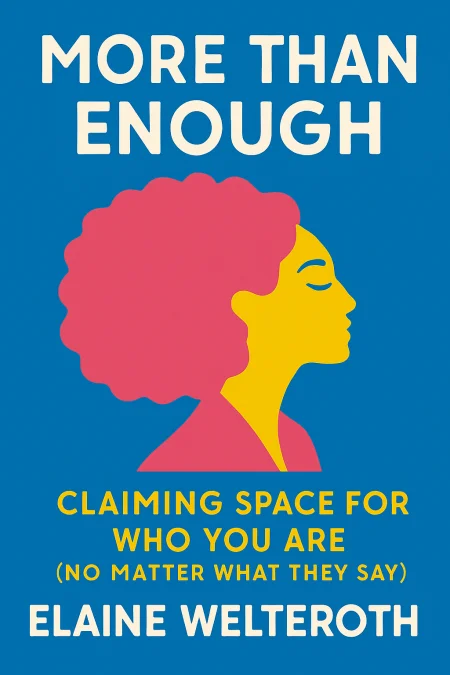
More Than Enough
Claiming Space for Who You Are (No Matter What They Say)
Book Edition Details
Summary
From the vibrant world of fashion to the charged corridors of media power, Elaine Welteroth's story is one of relentless courage and self-discovery. "More Than Enough" is a bold tapestry woven from the threads of her life as a pioneering editor and an unyielding voice for change. Raised in a small California town by a trailblazing interracial couple, Elaine's journey is marked by her steadfast defiance of societal limitations. As she ascends to the helm of Teen Vogue, her narrative unfolds with raw honesty, revealing the intricate dance between identity and ambition. In a world eager to diminish her worth, Elaine reclaims her narrative, offering empowering insights into resilience and self-worth. This memoir-manifesto is an electrifying testament to breaking barriers and defining success on one's own terms, resonating deeply with anyone who has ever felt underestimated or misunderstood.
Introduction
In the gleaming towers of Manhattan's media empire, where fashion magazines dictate global trends and editorial decisions shape cultural conversations, a young Black woman with natural curls and fierce determination was quietly rewriting the rules. At twenty-nine, she would become the youngest editor-in-chief in Condé Nast's storied history, transforming a teen fashion magazine into an unexpected powerhouse of political discourse and social justice advocacy. Her journey from a small California town to the pinnacle of publishing represents more than personal triumph—it embodies the complex navigation of identity, ambition, and authenticity in spaces that weren't designed for voices like hers. Growing up biracial in suburban America, she learned early that identity isn't something you're simply born with—it's something you actively construct and defend. Her path through the predominantly white landscape of magazine publishing would test every lesson about pride, resilience, and the importance of claiming space. From organizing beauty closets as an intern to revolutionizing how media speaks to young people about politics and social change, her story illuminates the intersection of race, gender, and power in modern America. Through her experiences, readers discover the art of turning obstacles into opportunities, the courage required to challenge industry norms, and the profound impact one person can have when they refuse to shrink to fit others' expectations. Her journey reveals how authentic leadership emerges not from conformity, but from the bold decision to bring your whole self to spaces that have never seen anyone quite like you, ultimately creating new possibilities for entire communities who had been waiting to see themselves reflected in positions of influence and power.
Finding Identity: From Small Town to Self-Discovery
Growing up as a biracial child in Newark, California, she learned early that identity isn't something you're simply handed—it's something you must actively construct and fiercely defend. In a predominantly white suburb where she often felt like an anomaly, young Elaine found herself caught between worlds, never quite fitting neatly into the boxes society wanted to place her in. Her Black mother and white father created a household where conversations about race, resilience, and representation were woven into daily life, providing crucial foundation for the challenges ahead. The pivotal moment came during a preschool family collage assignment that would shape her understanding of representation forever. When handed magazines filled with white faces and asked to create a visual representation of her family, four-year-old Elaine instinctively chose images that reflected the world around her rather than the reality of her own household. Her mother's gentle but firm intervention that evening—replacing the white paper family with images of Black excellence from Ebony and Essence magazines—became her first lesson in the power of seeing yourself reflected in media. These early experiences with otherness proved formative, teaching her to navigate multiple cultural spaces while maintaining her authentic self. Her mother's unwavering commitment to celebrating Black culture—from Sunday church services to Saturday hair salon visits—provided crucial counterbalance to the predominantly white environments of school and extracurricular activities. This duality became her superpower, equipping her with the cultural fluency and adaptability that would later serve her in the complex world of fashion media. The foundation of her identity was built not on choosing sides between her racial heritage, but on embracing the fullness of her background while refusing to let others define her worth or belonging. This early mastery of code-switching and cultural navigation would prove invaluable as she entered professional spaces where she was often the only person who looked like her, armed with an unshakeable sense of self and purpose.
Breaking Barriers: Rising Through Magazine Industry Challenges
Her entry into New York's publishing world began with a leap of faith that would define her entire career trajectory. After discovering media maven Harriette Cole through a late-night Google search, she embarked on a relentless campaign to connect with her idol, calling Cole's office repeatedly until she secured a phone conversation that would change everything. This bold approach—treating rejection as merely the beginning of negotiation rather than the end of possibility—became her signature method for breaking through industry barriers that seemed impenetrable to outsiders. Her first role at Ebony magazine placed her at the intersection of legacy Black media and the harsh realities of working for publications that lacked the resources of mainstream titles. While Ebony didn't offer the glamorous perks or abundant budgets of Condé Nast publications, it provided invaluable training ground where she learned to do more with less. She transformed chaos into order, single-handedly managing beauty and style departments while producing up to twenty-five pages per issue, developing the work ethic and resourcefulness that would distinguish her throughout her career. The transition from Ebony to Glamour represented more than a career move—it was a strategic leap across the industry's racial divide during an era when Black editors rarely crossed over to mainstream publications. At Condé Nast, she navigated the cultural shock of moving from an all-Black, scrappy environment to a predominantly white, well-resourced corporate machine. She learned to translate her skills while maintaining her authentic voice, mastering the delicate balance between assimilation and assertion that defines the experience of people of color in elite professional spaces. Her success stemmed from understanding that barriers aren't meant to stop you—they're meant to test how badly you want what's on the other side. By approaching each obstacle as a puzzle to solve rather than a wall to accept, she consistently found ways to turn limitations into launching pads for greater opportunities. This mindset would prove crucial as she prepared to take on even bigger challenges and transform not just her own career, but the entire landscape of youth media.
Transforming Teen Vogue: Leadership, Activism and Cultural Impact
When she accepted the role of beauty and health director at Teen Vogue, she stepped into a position that would redefine both her career and the magazine industry itself. The publication was primarily known for celebrity coverage and fashion trends, but she recognized an opportunity to speak to a generation of young people who were more politically engaged and socially conscious than any before them. Her promotion to editor-in-chief came during one of the most politically charged periods in recent American history, providing the perfect moment to revolutionize how media spoke to teenagers about the world around them. Under her leadership, Teen Vogue transformed from a fashion-focused publication into a powerful platform for social justice and political engagement. She made the bold editorial decision to tackle complex issues like police brutality, immigration reform, and reproductive rights, treating teenage readers as intelligent, engaged citizens rather than superficial consumers. This approach was revolutionary in an industry that had long underestimated young people's capacity for serious discourse, but she understood that her audience's lives were inherently political and that issues of identity, equality, and justice weren't abstract concepts but daily realities. The magazine's political coverage during the 2016 election cycle and beyond garnered national attention, with pieces going viral and establishing Teen Vogue as an unexpected voice of resistance. Articles that might have seemed out of place in a teen publication were praised by established political commentators and shared widely across social media platforms. Her editorial vision extended beyond content to encompass the entire ecosystem of the magazine, prioritizing diverse talent both in front of and behind the camera, understanding that authentic representation required diverse perspectives in decision-making roles. Her tenure demonstrated that authentic leadership means having the courage to evolve beyond industry expectations and conventional wisdom. By trusting her instincts and her audience's intelligence, she created a new model for youth media—one that honored both style and substance, proving that magazines could be both beautiful and meaningful. The success showed that young people were hungry for substantive content and that treating them as capable citizens rather than passive consumers could be both editorially fulfilling and commercially viable, forever changing how the industry approached teenage audiences.
Stepping Into Power: Building Her Own Table
The pinnacle of her magazine career brought both unprecedented recognition and unique challenges that extended far beyond typical editorial responsibilities. As the youngest editor-in-chief in Condé Nast history, she found herself in the spotlight as a symbol of progress and diversity in an industry still grappling with representation. The role placed extraordinary pressure on her shoulders, as she navigated being a young Black woman in a leadership position while carrying the hopes and expectations of communities who had rarely seen themselves reflected in such prominent roles. Despite external success and industry accolades, internal challenges mounted as corporate restructuring and budget cuts created an increasingly difficult work environment. She faced the complex dynamics of leading while being questioned and scrutinized in ways her predecessors never experienced, learning valuable lessons about the difference between having a title and having true autonomy to execute her vision. The experience taught her that breaking barriers often means bearing additional burdens that others in similar positions never have to carry. The decision to leave Condé Nast represented a profound moment of self-determination and courage. Rather than accepting limitations or compromising her values for the security of a prestigious position, she chose to bet on herself and her ability to create something entirely new. This choice required confronting fears about leaving behind the platform and prestige that had defined her career, while trusting that her skills, vision, and authentic voice could translate to opportunities beyond traditional media structures. Her departure marked not an ending but a transformation—from someone who had successfully navigated existing systems to someone ready to build new ones entirely. The experience of reaching the top of her field by age thirty provided both validation of her capabilities and clarity about her desire to create platforms that could have even greater impact. She understood that true leadership sometimes requires leaving behind what's comfortable and familiar to pursue what's necessary for broader change, choosing to build her own table rather than simply claiming a seat at someone else's.
Summary
Her journey from small-town dreamer to media revolutionary proves that authentic power comes not from fitting into existing spaces, but from having the courage to expand those spaces to accommodate your full humanity. Through every challenge and triumph, she demonstrated that the very qualities that make you different—your background, your perspective, your refusal to conform—are often the exact tools needed to create meaningful change in industries that desperately need fresh voices and bold vision. For anyone navigating predominantly white spaces, feeling pressure to diminish themselves to fit in, or dreaming of creating change from within established systems, her path offers both inspiration and practical wisdom. Her story reminds us that representation matters not just for its own sake, but for its power to expand possibilities for entire communities who have been waiting to see themselves reflected in positions of influence. Those interested in media, social justice, leadership, or the intersection of identity and professional success will find in her journey a powerful blueprint for turning obstacles into opportunities and using authentic voice as a catalyst for revolutionary change that extends far beyond individual achievement.
Related Books
Download PDF & EPUB
To save this Black List summary for later, download the free PDF and EPUB. You can print it out, or read offline at your convenience.
By Elaine Welteroth
