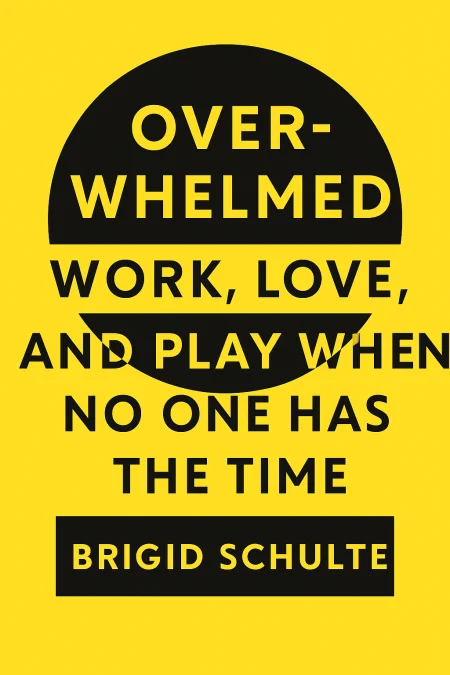
Overwhelmed
Work, Love and Play When No One Has the Time
Book Edition Details
Summary
In a world that spins faster every day, "Overwhelmed" by Brigid Schulte offers a profound exploration of our perpetual race against time. As an acclaimed journalist and a mother juggling modern life's frenetic pace, Schulte embarks on a quest that uncovers the historical and cultural roots of our time anxiety. Her journey takes her from the chaos of daily life—what she dubs "Time Confetti"—to global conferences and groundbreaking neuroscience labs, revealing how our overstressed existence reshapes our brains and societies. Schulte's narrative is as enlightening as it is relatable, unraveling the tangled web of gender roles, workplace biases, and societal expectations that bind us. With wit and wisdom, she introduces real-world solutions and hopeful glimpses of a life where leisure is not a luxury but a right. This is a call to arms for reclaiming our most precious resource: time, nudging us toward a state of serene balance where happiness and fulfillment are within reach.
Introduction
Sarah stares at her laptop screen at 11:47 PM, her third cup of coffee growing cold beside a stack of permission slips that need signing. Her daughter's science project materials are scattered across the kitchen table, and tomorrow's presentation looms. The laundry basket overflows in the corner, a silent testament to another day that slipped through her fingers like sand. This scene plays out in millions of homes across America every night, where parents juggle impossible schedules while wondering how life became so relentlessly demanding. The modern epidemic of overwhelm isn't a personal failing or a sign of poor time management. It's a systemic crisis that has emerged from the collision of outdated workplace expectations with the realities of contemporary family life. When women entered the workforce en masse, the structures of work and society failed to adapt, leaving families to navigate an impossible maze of competing demands without adequate support systems. This exploration reveals how we arrived at this breaking point and, more importantly, illuminates pathways toward reclaiming our time and sanity. Through intimate stories of struggle and breakthrough, we discover that the solution isn't about working harder or sleeping less, but about fundamentally reimagining how we structure work, share domestic responsibilities, and create space for what truly matters.
The Childcare Crisis: When Safety Becomes a Luxury
When Tracy Lafkin dropped off her eleven-month-old daughter Camden at what she believed was a licensed daycare center in Virginia, she trusted that her child would be safe while she worked her shift as a Navy petty officer. That trust was shattered when she received the devastating phone call that would change her life forever. Camden had died at the facility, a victim of unsafe sleeping practices and inadequate supervision at an unlicensed provider that operated under religious exemptions from state safety regulations. Tracy's story represents the dark underbelly of America's childcare system, where parents desperate for affordable care often unknowingly place their children in dangerous situations. Unlike other developed nations that treat childcare as essential infrastructure, the United States has created a patchwork of unregulated providers, endless waiting lists, and costs that can exceed college tuition. The tragic irony is that while politicians debate family values, working families face impossible choices between economic survival and child safety. The contrast becomes stark when examining successful models like the Pentagon's childcare system, which emerged from military necessity but now serves as the gold standard for quality care. After a scathing 1982 report found that only one percent of military facilities met basic standards, Congress invested in comprehensive reform. Today, nearly 100 percent of military childcare centers are accredited, with highly trained staff, reasonable costs, and curricula designed to nurture child development. This transformation proves that when society prioritizes children's welfare with adequate resources and oversight, excellence becomes achievable. The broader implications extend beyond individual tragedies to economic competitiveness and social equity, revealing that America's failure to build this foundation forces millions of families into precarious arrangements that undermine both child welfare and parental productivity.
Breaking the Ideal Worker Myth: Workplace Revolution Stories
At Menlo Innovations in Ann Arbor, Michigan, the sight of employees bringing their babies to work while coding complex software would seem impossible in most corporate environments. Yet this scene represents the daily reality at a company that has revolutionized work culture by prioritizing joy, flexibility, and human wholeness over traditional productivity metrics. Employees work in pairs, rotate assignments weekly, and maintain strict boundaries between work and personal time, creating an environment where bringing babies to the office feels natural rather than disruptive. The transformation didn't happen overnight, as founder Rich Sheridan had spent decades in soul-crushing corporate environments where long hours and constant stress were badges of honor. When Sheridan lost his job during the dot-com crash, he made a radical decision to create the opposite of everything he'd experienced. The result is a thriving company where employees leave by 6 PM, rarely check email after hours, and take time off without guilt or career consequences. Paradoxically, this human-centered approach has produced exceptional business results, with clients praising both the quality of work and the positive energy of interactions. Similar innovations are emerging across industries as forward-thinking leaders recognize that the old model of extracting maximum hours from workers is both unsustainable and counterproductive. These workplace pioneers demonstrate that the choice between productivity and humanity is false. When organizations trust employees to manage their time and energy, provide clear performance expectations, and support whole-person wellness, both individual satisfaction and business outcomes improve. The revolution isn't just about policies on paper, but about fundamentally reimagining what work can be when it serves human flourishing rather than demanding its sacrifice.
From Busyness to Balance: Learning from Danish Hygge Culture
Sharmi Albrechtsen grew up in suburban Washington D.C., raised by ambitious immigrant parents who instilled in her the American dream of constant achievement. Success meant straight A's, prestigious colleges, high salaries, and relentless upward mobility. When she moved to Denmark for love, she brought this drive with her, working past 6 PM while everyone else's cars disappeared from the parking lot, and starting a catering business during her year-long maternity leave because she couldn't bear to "just hang around." But Denmark operates on different principles, where the concept of hygge permeates daily life, prioritizing cozy contentment over endless striving. Danes leave work at reasonable hours, take long vacations without guilt, and prioritize simple pleasures like candlelit dinners and walks in nature. When Sharmi tried to apply American-style self-promotion in job interviews, it backfired because Danish culture values community over individual achievement. Slowly, she began to adapt, learning to light candles during ordinary meals, to resist the urge to interrupt her daughter's play with educational activities, and to take morning beach walks even in winter. She discovered that happiness wasn't about acquiring the next luxury item or achieving the next milestone, but about being fully present in simple moments. Denmark consistently ranks among the world's happiest countries, not because Danes have perfect lives, but because they've created systems that support human flourishing. Generous parental leave, subsidized childcare, shorter work weeks, and cultural expectations that prioritize well-being over wealth create space for what truly matters. Their example challenges the American assumption that more is always better, suggesting instead that enough might actually be plenty when we learn to savor what we have.
Reclaiming Joy: The Power of Play in Time-Starved Lives
At a trapeze academy in Brooklyn, a group of time-starved mothers gathered for an unusual experiment in reclaiming joy through the Mice at Play organization, founded by women who felt their lives shrinking to just work and caregiving. As each woman climbed the ladder twenty feet above the ground, trembling with fear and excitement, something remarkable happened during those suspended moments in the air, the endless to-do lists, work deadlines, and family obligations simply disappeared. Sara Baysinger, one of the founders, had never considered herself athletic and viewed exercise as punishment rather than pleasure, but when she first swung from that tiny platform, she discovered that terror and exhilaration could coexist. The experience awakened something dormant, not just physical confidence, but a sense of possibility that extended far beyond the trapeze. She began competing in triathlons and half-marathons, not from obligation but from pure joy in movement and challenge. The science behind play reveals why these moments matter so profoundly, as play literally rewires the brain, creating new neural pathways that enhance creativity, problem-solving, and resilience. Yet women especially struggle to give themselves permission to play, carrying centuries of cultural conditioning that equates their worth with constant service to others. Breaking free requires recognizing that taking time for joy isn't selfish but necessary for being fully alive. The path to reclaiming time isn't about perfect balance or having it all, but about making conscious choices aligned with your deepest values. Whether it's swinging from a trapeze, taking a walk without destination, or simply sitting quietly with a cup of tea, these moments of presence and play aren't luxuries but the foundation of a life well-lived.
Summary
The overwhelm that characterizes modern life isn't a personal failing or sign of weakness, but the predictable result of trying to meet impossible standards with outdated systems. When we attempt to be ideal workers in workplaces designed for people without families, while simultaneously being perfect parents in a culture that demands intensive involvement in every aspect of our children's lives, something has to give. Usually, it's our health, our relationships, and our sense of joy that suffer first. The solution isn't individual time management or better organization, though those skills can help, but recognizing that our current approach to work and family life is fundamentally unsustainable. Real change requires courageously choosing different priorities, whether that means advocating for flexible work arrangements, sharing domestic responsibilities more equitably, or simply giving ourselves permission to be imperfect. The Danish concept of hygge offers a powerful alternative vision where enough is truly enough, where simple pleasures are celebrated, and where human connection takes precedence over endless achievement. We don't need to move to Scandinavia to embrace these principles; we can start by lighting a candle during dinner, taking a walk without our phones, or choosing to be fully present with the people we love. The time we're seeking isn't hidden in better schedules or more efficient systems, but waiting for us in the moments when we stop rushing long enough to remember what really matters and reclaim our right to a life of meaning, connection, and joy.
Related Books
Download PDF & EPUB
To save this Black List summary for later, download the free PDF and EPUB. You can print it out, or read offline at your convenience.
By Brigid Schulte
