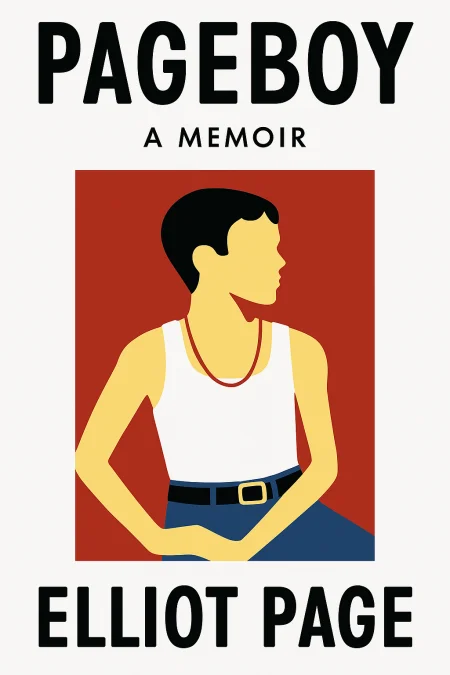
Pageboy
A Memoir
Book Edition Details
Summary
Elliot Page invites readers into the heart of his transformative journey with "Pageboy," a memoir that transcends the typical celebrity narrative. A powerful voice in both Hollywood and the transgender community, Page sheds light on the complexities of identity, love, and resilience. Through unguarded reflections and revelations, this book not only chronicles his rise to fame but also explores profound moments of personal evolution. Page's honest storytelling captures the tension between public persona and private self, offering a raw yet hopeful exploration of mental health and self-acceptance. For those seeking a narrative of authenticity and courage, "Pageboy" resonates deeply with the universal struggle to find one’s true self amidst the pressures of the world.
Introduction
In a world where authenticity often comes at a steep price, few stories illuminate the journey from hiding to wholeness as powerfully as Elliot Page's transformation. From the shadowed corners of childhood confusion to the bright stages of Hollywood stardom, and finally to the quiet courage of living one's truth, this memoir traces a path that millions recognize but few have documented with such unflinching honesty. Page's story unfolds against the backdrop of early 2000s fame culture, where success and visibility often demanded the deepest kind of self-betrayal. What emerges is not just a chronicle of gender transition, but a masterclass in the archaeology of the soul. Through intimate revelations about family dynamics, professional pressures, and the relentless internal voice that whispers both destruction and salvation, readers witness the painstaking work of excavating one's authentic self from beneath layers of expectation and fear. This journey offers profound insights into the nature of identity itself, the price of living someone else's story, and the revolutionary act of choosing self-love over self-erasure. Most importantly, it demonstrates how the courage to face our deepest truths can transform not only our own lives, but create space for others to breathe more freely in their own skin.
Early Years: The Boy in Hiding
The seeds of identity crisis were planted early, in the innocent observations of a four-year-old who knew something fundamental about themselves that the world wasn't ready to hear. In preschool bathrooms and childhood bedrooms, a young person wrestled with the disconnect between internal truth and external expectations, trying to make sense of a body that felt foreign and a reflection that never quite matched the person looking back. Family dynamics shaped these early years with particular intensity. The divorce of parents, the blending of households, and the complex web of relationships that followed created an environment where authenticity felt dangerous. The child learned early that expressing discomfort or difference could lead to emotional upheaval, tears from those they loved most, and the devastating realization that their truth could cause pain to others. This lesson would echo through decades of carefully constructed performances. Yet even in these formative years, there were glimpses of the person waiting to emerge. In private play sessions, elaborate fantasy worlds provided refuge where gender could be fluid and identity could breathe. These moments of imaginative freedom became lifelines, offering a taste of the wholeness that seemed impossible in the daylight world of school uniforms and family expectations. The early relationship with acting emerged as both salvation and complication. The ability to disappear into characters offered temporary escape from the prison of assigned identity, but it also reinforced the notion that authentic self-expression was something reserved for make-believe. The stage became both sanctuary and cage, providing professional success while demanding ever-greater degrees of self-concealment.
Hollywood's Closet: Fame and Suppression
The meteoric rise to fame through films like "Juno" brought unexpected challenges that went far beyond typical celebrity pressures. Success in Hollywood came with explicit instructions about image management, wardrobe requirements, and the careful curation of a public persona that felt increasingly disconnected from internal reality. The entertainment industry's demands for femininity created a daily battlefield where every photo shoot, red carpet appearance, and interview became an exercise in self-betrayal. Professional advisors spoke in code about maintaining "options" and keeping personal life "private," euphemisms that masked deeper prejudices about queerness and marketability. The message was clear: authenticity was incompatible with career success. This period revealed the entertainment industry's sophisticated machinery for enforcing conformity, using financial incentives and professional opportunities to reward compliance while punishing deviation from prescribed norms. The psychological toll of this constant performance manifested in increasingly destructive ways. Panic attacks, depression, and disordered eating became coping mechanisms for a person trapped between professional success and personal annihilation. Each achievement felt hollow when it required abandoning fundamental aspects of identity, creating a paradox where external validation only deepened internal despair. Relationships during this period suffered under the weight of secrecy and shame. Love became another arena for performance, with partners often reduced to supporting roles in elaborate deceptions designed to protect public image. The energy required to maintain these multiple identities left little room for genuine connection or emotional intimacy, creating a cycle of loneliness that no amount of professional success could fill.
Breaking Free: Love, Truth, and Transition
The path toward authenticity required dismantling not just external pressures but deeply internalized beliefs about worthiness and belonging. Coming out as gay in 2014 represented a crucial first step, but it also revealed how much work remained. The relief of partial truth-telling was accompanied by the recognition that deeper excavation was necessary, that gender identity held keys to wholeness that sexual orientation alone could not provide. Relationships became laboratories for exploring different aspects of identity and desire. Each connection offered lessons about boundaries, authenticity, and the difference between love and performance. The patterns of choosing unavailable partners or recreating familiar dynamics of hiding began to shift as self-awareness grew, though not without considerable pain and multiple false starts. The decision to pursue top surgery marked a turning point where internal knowing finally overcame external fear. Years of circular thinking and self-doubt gave way to clarity born of desperation and hope in equal measure. The choice represented not just a medical procedure but a declaration of faith in the possibility of wholeness, a belief that the person glimpsed in childhood fantasies and mirrored reflections could actually exist. Physical transition brought unexpected revelations about the interconnectedness of body and spirit. Small changes in appearance or hormone levels created cascading effects on mood, confidence, and relationships with others. The experience of being recognized as male by strangers offered glimpses of a future where external perception might finally align with internal truth.
Becoming Whole: The Journey to Authenticity
The integration of all aspects of identity required learning new languages of self-expression and relationship. Professional life had to be renegotiated as authenticity became non-negotiable, leading to difficult conversations with agents, producers, and colleagues who had invested in previous versions of public persona. Some relationships survived this transformation while others revealed their conditional nature. Family dynamics underwent their own evolution as parents and siblings grappled with changed understanding of someone they thought they knew. The courage to set boundaries with toxic relationships, even with blood relatives, demonstrated how self-love sometimes requires difficult choices about which connections serve growth and which perpetuate harm. The memoir itself represents the culmination of this journey toward wholeness. Writing about experiences previously shrouded in shame required developing new muscles of vulnerability and self-compassion. The act of witnessing one's own story with clarity and kindness became its own form of healing, transforming private pain into shared wisdom. Perhaps most importantly, this journey revealed that authenticity is not a destination but an ongoing practice. Each day brings new opportunities to choose truth over comfort, connection over performance, and self-love over self-abandonment. The work of becoming whole is never finished, but the rewards of engaging with that work ripple outward in ways that can touch countless other lives.
Summary
At its heart, this memoir demonstrates that the courage to live authentically is perhaps the most radical act available to any human being. Page's journey from a confused child to a whole adult offers a roadmap for anyone struggling with the gap between who they are expected to be and who they actually are. The story reminds us that transformation is possible at any stage of life, but it requires willingness to face uncomfortable truths and make difficult choices in service of deeper integrity. For readers grappling with their own questions of identity, sexuality, or gender, this narrative provides both comfort and challenge. It offers the reassurance that confusion and pain are normal parts of the journey while also modeling the kind of persistent self-advocacy required to create authentic life. The memoir suggests that our deepest struggles often contain the seeds of our greatest gifts, and that the work of becoming whole is not just personal healing but collective liberation.
Related Books
Download PDF & EPUB
To save this Black List summary for later, download the free PDF and EPUB. You can print it out, or read offline at your convenience.
By Elliot Page
