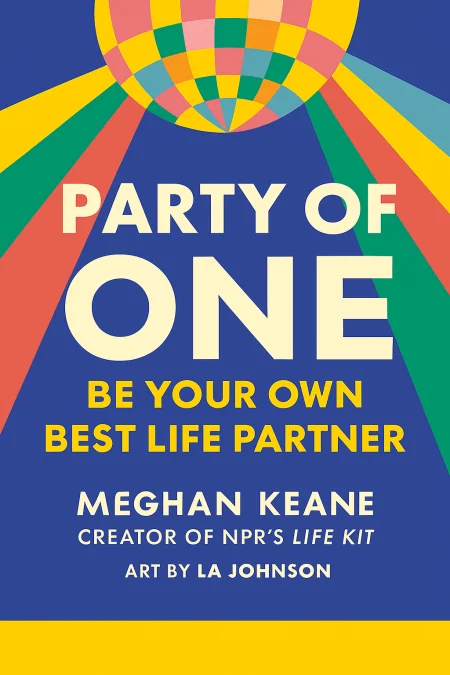
Party of One
Be Your Own Best Life Partner
Book Edition Details
Summary
In a world where couples often steal the spotlight, Meghan Keane's "Party of One" flips the script, offering a vibrant celebration of self-love and independence. This insightful guide, born from the mind behind NPR’s Life Kit, transforms solitude into a source of empowerment and joy. Meghan, who once navigated the ups and downs of singlehood herself, provides readers with a treasure trove of wisdom: from nurturing self-compassion to artfully managing inquisitive relatives. Illustrated by LA Johnson, this book is more than a self-help manual—it's a heartfelt invitation to embrace life on your own terms. Discover how to become your own soulmate and craft a fulfilling existence that shines brightly, with or without a partner.
Introduction
Modern society perpetuates a pervasive myth that romantic partnership represents the pinnacle of human fulfillment, relegating singlehood to a transitional state of incompleteness. This cultural narrative not only stigmatizes those who remain unpartnered but fundamentally misunderstands the nature of human happiness and self-actualization. Contemporary discourse around relationships operates from the flawed premise that individuals require external validation through romantic love to achieve wholeness, when empirical evidence and philosophical inquiry suggest the opposite may be true. The exploration ahead challenges this deeply embedded assumption through a multifaceted analysis that combines historical examination, psychological research, and practical wisdom. Rather than accepting the conventional hierarchy that places romantic relationships above all other forms of human connection, this investigation reveals how single life offers unique opportunities for personal growth, authentic self-discovery, and meaningful community building. The argument unfolds through systematic deconstruction of marriage myths, examination of social stigma, analysis of emotional regulation, and reconstruction of alternative models for flourishing. Readers will encounter a rigorous yet accessible framework for understanding why the pursuit of romantic partnership as life's primary goal may actually impede rather than enhance human flourishing.
Dismantling Marriage Myths and Romantic Love Supremacy
The institution of marriage, despite its cultural elevation to sacred status, reveals itself through historical analysis as a fundamentally economic and political arrangement rather than the romantic ideal contemporary society imagines. Archaeological and anthropological evidence demonstrates that marriage served primarily as a mechanism for property transfer, political alliances, and resource consolidation throughout most of human history. The notion of marriage as the ultimate expression of romantic love emerged only in the nineteenth century, coinciding with the rise of individualism and capitalist economic structures that required new justifications for an institution previously grounded in material necessity. Even the purported "traditional marriage" model represents not timeless wisdom but a brief historical anomaly. The 1950s suburban ideal of male breadwinner and female homemaker lasted less than two decades and required specific economic conditions that no longer exist. Tax policies explicitly designed to remove women from the workforce, unprecedented wage growth, and massive government subsidies for housing created an artificial environment that proved unsustainable. Contemporary marriage rates reflect this reality, with record numbers of people choosing alternative life arrangements that better serve their individual circumstances and values. The supremacy of romantic love itself deserves scrutiny as a cultural construct rather than biological imperative. Evolutionary biology reveals love as "biological bribery" designed to ensure reproduction, not personal fulfillment. The concept of amatonormativity exposes how society's obsession with romantic partnerships renders other forms of meaningful connection invisible and undervalued. Platonic friendships, chosen family, and community bonds often provide greater stability and support than romantic relationships, yet receive minimal cultural recognition. This hierarchy of love types creates artificial scarcity around human connection and prevents individuals from recognizing the abundance of meaningful relationships already available to them. The philosophical implications extend beyond personal choice to questions of human flourishing itself. When romantic partnership becomes the singular pathway to social acceptance and personal worth, society creates conditions that undermine rather than support genuine happiness and authentic self-expression.
Overcoming Singlism and Building Self-Compassion
Singlism represents a systematic form of discrimination that pathologizes single life through stereotypes, stigmatization, and structural disadvantage. Research consistently debunks the myths underlying this prejudice, revealing that single individuals maintain broader social networks, contribute more to their communities, and often demonstrate greater life satisfaction than their married counterparts when controlling for other variables. The persistent belief that single people must be lonely, selfish, or somehow deficient reflects cultural bias rather than empirical reality. The phenomenon of singlism operates through both explicit discrimination and subtle messaging that positions singlehood as inherently problematic. Housing policies favor couples, social events assume partnership, and even casual conversation reinforces the assumption that romantic attachment represents normal human functioning. These structural inequalities compound the psychological burden placed on single individuals who must constantly defend their life choices against societal disapproval. Overcoming internalized singlism requires developing what researchers term "single at heart" identity - the recognition that solitary living represents a valid and potentially optimal life path rather than a temporary condition awaiting correction. This shift involves distinguishing between loneliness and solitude, understanding that the former represents dissatisfaction with social connection while the latter offers opportunities for self-reflection, creativity, and restoration. Fifteen minutes of quality solitude can improve emotional regulation more effectively than many social interactions. Self-compassion practices provide the foundation for rejecting cultural messages about single life inadequacy. Rather than accepting external definitions of personal worth based on relationship status, individuals can develop internal validation systems grounded in their own values and experiences. The cultivation of gratitude, the pursuit of meaningful solitary activities, and the intentional development of diverse social connections create alternative frameworks for evaluating life satisfaction that do not depend on romantic partnership.
Managing Thoughts, Emotions, and Creating Meaningful Life
Rumination represents one of the most destructive cognitive patterns affecting single individuals, transforming natural desires for connection into obsessive thought loops that increase rather than decrease emotional distress. The mechanics of rumination reveal why asking "why am I single?" proves counterproductive - such questions lack concrete answers and generate additional anxiety rather than actionable insights. Effective cognitive management involves recognizing rumination triggers, implementing distraction techniques, and reframing abstract concerns into specific, addressable problems. Emotional regulation differs fundamentally from emotional suppression, requiring acceptance rather than avoidance of difficult feelings. The theory of constructed emotion suggests that emotional experiences result from brain predictions based on past experiences rather than inevitable responses to current circumstances. This understanding creates opportunities for individuals to influence their emotional responses through mindful awareness and intentional behavior change. Loneliness, for example, serves as biological signaling for social connection needs rather than evidence of personal inadequacy. Mindfulness practices provide practical tools for managing both rumination and emotional overwhelm without requiring extensive meditation experience. Simple techniques such as environmental scanning, controlled breathing, and present-moment awareness can interrupt anxiety spirals and restore rational decision-making capacity. The goal involves developing emotional regulation skills that maintain choice and perspective during challenging moments rather than achieving permanent emotional equilibrium. Values-based living offers an alternative to goal-oriented life planning that depends on external achievements like romantic partnership. Rather than pursuing happiness directly, individuals can focus on embodying personal values through daily actions and decisions. This approach creates intrinsic satisfaction independent of relationship status while building the authentic self-knowledge necessary for meaningful life construction. The practice of radical acceptance allows individuals to engage fully with current reality rather than postponing satisfaction until hypothetical future conditions are met.
Cultivating Community and Redefining Relationship Priorities
Friendship represents an undervalued but scientifically validated pathway to health, happiness, and longevity that often surpasses romantic relationships in terms of measurable benefits. The Harvard Study of Adult Development, tracking participants for nearly eighty years, identified social connections as the primary predictor of life satisfaction and physical health. Single individuals who invest intentionally in friendship networks frequently demonstrate superior community integration compared to married couples who focus exclusively on their nuclear family units. Building meaningful community requires moving beyond passive social consumption toward active relationship cultivation. This involves developing what researchers call "social fitness" through regular practices of invitation, support, and celebration. Effective community building operates on multiple levels simultaneously: maintaining both close intimate friendships and broader networks of acquaintances that provide diverse forms of connection and mutual aid. The concept of "weak ties" reveals how even casual social interactions contribute significantly to psychological well-being and community belonging. Intentional friendship practices challenge cultural assumptions about relationship hierarchies that privilege romantic partnerships over chosen family bonds. Shine theory promotes collaborative rather than competitive approaches to friendship, where individual success becomes shared celebration rather than source of envy. This requires developing skills for supporting friends through both achievements and challenges while maintaining appropriate boundaries around personal capacity and energy. The creation of rituals and traditions within friendship networks provides stability and meaning typically associated with family structures. These practices can include everything from annual celebrations to regular gathering schedules that prioritize friendship maintenance over romantic pursuit. Some individuals explore radical friendship models including platonic co-parenting, shared homeownership, or intentional community living that challenge conventional assumptions about how adults should organize their domestic and financial lives.
Summary
Single life emerges not as consolation prize or transitional phase but as legitimate pathway to human flourishing that offers unique opportunities for authentic self-development and meaningful community engagement. The systematic examination of marriage myths, social stigma, emotional management, and community building reveals that romantic partnership, while potentially valuable, represents neither necessary nor sufficient condition for life satisfaction. The cultivation of self-compassion, intentional friendships, and values-based living creates sustainable foundations for well-being independent of relationship status. Rather than viewing singlehood through the lens of deficit or incompleteness, individuals can embrace it as opportunity for designing lives that authentically reflect their deepest values and aspirations. This perspective shift liberates energy previously devoted to romantic pursuit for investment in personal growth, creative expression, and community contribution that benefits both individual and society.
Related Books
Download PDF & EPUB
To save this Black List summary for later, download the free PDF and EPUB. You can print it out, or read offline at your convenience.
By Meghan Keane
