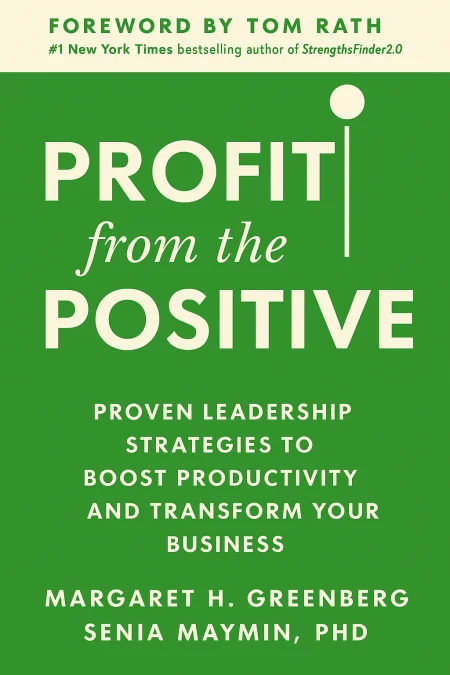
Profit from the Positive
Proven Leadership Strategies to Boost Productivity and Transform Your Business
byMargaret H. Greenberg, Senia Maymin
Book Edition Details
Summary
In a world where every manager juggles the relentless demands of productivity and budget constraints, "Profit from the Positive" emerges as a beacon of transformative potential. Margaret Greenberg and Senia Maymin, guided by the pioneering insights of Dr. Martin Seligman, champion an unconventional approach: leveraging the potent science of Positive Psychology to revolutionize workplaces. Whether you're at the helm of a small team or steering a corporate giant, this book is your toolkit for driving performance and collaboration without breaking the bank. Featuring real-world successes from trailblazers like Google and Amazon, it offers actionable, zero-cost strategies that promise to elevate your organization's trajectory. Prepare to rethink leadership, as this guide reveals how minor shifts can yield monumental results, turning business challenges into opportunities for growth and innovation.
Introduction
Every leader has reached that familiar crossroads where traditional strategies feel exhausted and breakthrough results seem elusive. You've streamlined processes, restructured teams, and implemented countless improvement initiatives, yet sustainable transformation remains just out of reach. The missing piece isn't another complex system or expensive consulting program—it's a fundamental shift in how we understand human potential and organizational excellence. This revolutionary approach emerges from the cutting-edge field of positive psychology, where researchers have discovered that focusing on what's working, rather than constantly fixing what's broken, unlocks unprecedented levels of productivity, engagement, and innovation. When leaders learn to harness the power of strengths, emotions, and positive habits, they don't just solve problems—they create thriving environments where people naturally excel and organizations flourish beyond their wildest expectations.
Master Your Inner Leader: Productivity, Resilience, and Emotional Contagion
The foundation of transformational leadership begins with mastering yourself, starting with the recognition that productivity isn't about working harder—it's about working smarter through the power of intentional habits. Research reveals that our brains can be rewired to operate more efficiently by creating automatic behaviors that free up mental energy for strategic thinking. Consider Paul, a data services director managing seventeen offices across three continents, who found himself trapped in a cycle of 24/7 availability and chronic exhaustion. His breakthrough came when he discovered the profound difference between setting goals and creating habits. Instead of simply resolving to "manage his time better," Paul implemented specific when-and-where triggers for his most important tasks. He designated Friday afternoons for strategic planning in the quiet conference room at the end of the hall, turning this commitment into an automatic ritual that required no willpower to maintain. Within weeks, Paul's transformation was remarkable. His strategic thinking improved dramatically, his stress levels plummeted, and his team began operating with unprecedented clarity and direction. The secret wasn't superhuman discipline—it was outsourcing routine decisions to the automatic part of his brain, freeing up conscious thought for high-value leadership activities. The pathway to sustainable productivity involves three critical shifts: replacing "just do it" with "just plan it" by creating specific implementation intentions, using the Zeigarnik effect to maintain momentum by leaving projects strategically unfinished, and paradoxically working less to accomplish more by scheduling regular renewal periods. When leaders master these internal systems, they create the foundation for inspiring and guiding others toward extraordinary results.
Build High-Performance Teams Through Strengths and Recognition
The most successful leaders understand that exceptional performance isn't extracted from people—it's unlocked by creating conditions where individual strengths naturally align with team objectives. This represents a fundamental shift from the traditional deficit-focused approach that constantly seeks to fix weaknesses toward a growth-oriented model that amplifies what's already working brilliantly. Margaret witnessed this transformation firsthand while working with Kathy, a project manager struggling with a disengaged team member named Randy who worked remotely and seemed increasingly disconnected from the group's success. Rather than focusing on Randy's communication deficits, Kathy introduced a strengths-based conversation that revealed Randy's natural talent for systematic analysis and his desire to mentor newer team members. The breakthrough moment came when Randy volunteered to create weekly knowledge-sharing sessions with the team's newest members, applying his analytical strengths to break down complex procedures into digestible learning modules. This simple realignment transformed Randy from a disengaged remote worker into an energetic team contributor who looked forward to Monday morning calls and proactively reached out to colleagues with insights and support. This success demonstrates the four-step process for building strengths-based teams: first, help each team member identify their unique talents through structured conversations and assessments; second, facilitate team discussions where members share their strengths and understand how different talents complement each other; third, redesign roles and projects to maximize the intersection of individual strengths with team needs; and fourth, establish recognition systems that celebrate both individual excellence and collaborative achievements. When teams operate from this strengths-based foundation, they naturally develop the trust, energy, and innovation that distinguish high-performing groups from merely functional ones.
Transform Key Business Practices for Maximum Impact
Revolutionary results require more than individual excellence—they demand systematic transformation of the core practices that shape organizational culture and performance. This means reimagining everything from hiring decisions to performance reviews through the lens of positive psychology research, creating systems that naturally bring out the best in people rather than simply managing their limitations. The most profound example comes from a comprehensive study of over 80 IT employees that revealed managers who provided frequent recognition and encouragement achieved 42 percent higher project performance compared to those who focused primarily on problem-solving and correction. This wasn't about being "nice"—it was about understanding how positive feedback literally rewires the brain for enhanced creativity, risk-taking, and sustained effort. Tom, a department head at a financial services company, experienced this transformation when he shifted his weekly team meetings from problem-focused status reports to celebration-centered discussions that highlighted recent wins, shared innovative solutions, and recognized both individual contributions and collaborative achievements. The change wasn't merely cosmetic—within months, his team's project completion rates improved dramatically, voluntary turnover dropped to zero, and other departments began requesting to work with his group. The systematic approach involves four key transformations: redesigning hiring processes to assess cultural fit and emotional intelligence alongside technical skills, converting performance reviews from annual evaluation events into ongoing development conversations that preview future success rather than merely reviewing past performance, restructuring meetings to maintain a 3:1 ratio of positive to negative interactions while ensuring balanced participation from all team members, and implementing recognition systems that provide specific, process-focused feedback on a frequent basis. These changes create reinforcing cycles where positive practices naturally sustain and amplify themselves throughout the organization.
Become a Positive Deviant: Start Small, Think Big
The journey toward transformational leadership doesn't require organizational overhaul or budget approval—it begins with the courage to become what researchers call a "positive deviant," someone who achieves exceptional results by applying evidence-based practices that others might initially view as unconventional or unnecessary. The most inspiring example comes from Chip Conley, founder of Joie de Vivre Hotels, who faced near-bankruptcy during the dot-com crash but refused to accept defeat as inevitable. Instead of cutting costs and hoping for survival, Conley implemented a simple but radical practice: ending every executive committee meeting with positive stories about employees who had gone above and beyond for guests, even during the company's darkest financial period. This small change created a ripple effect that ultimately saved the company and fueled unprecedented growth. Team members began actively seeking out positive stories to share, which increased their awareness of exceptional service behaviors, which encouraged more employees to take initiative with guests, which improved customer satisfaction scores, which generated more bookings and referrals. The practice cost nothing to implement but generated millions of dollars in sustainable competitive advantage. The positive deviant approach follows four essential principles: don't resist resistance but instead use skepticism as valuable feedback about where to focus your influence efforts, start small with three specific changes you can implement immediately without permission or budget, drop the academic jargon and focus on practical results that speak for themselves, and use the back door by integrating positive practices into existing processes rather than announcing revolutionary changes. When you consistently apply these principles, your results will naturally attract curious colleagues who want to understand and replicate your success, creating organic transformation that spreads throughout the organization.
Summary
The science of positive psychology has revealed a fundamental truth that challenges conventional leadership wisdom: sustainable excellence emerges not from fixing what's wrong, but from amplifying what's right. As research consistently demonstrates, "working hard to manage weaknesses, while sometimes necessary, will only help us prevent failure—it will not help us reach excellence." The leaders who create truly transformational results understand that their primary role is unleashing the extraordinary potential that already exists within their people and organizations. This approach requires a profound shift in mindset, from viewing leadership as control and correction to understanding it as cultivation and celebration. When you master your internal productivity systems, build teams around individual strengths, transform business practices to naturally encourage excellence, and have the courage to become a positive deviant who leads by example, you don't just improve performance metrics—you create environments where people genuinely love their work and consistently deliver their very best efforts. Begin today by identifying one small positive change you can implement immediately, whether it's starting your next meeting with a brief success story, having a strengths-focused conversation with a struggling team member, or simply noticing and acknowledging the excellent work that's happening around you right now. These seemingly modest actions, when applied consistently and scientifically, have the power to transform not just your leadership effectiveness, but the entire trajectory of your organization's success.
Related Books
Download PDF & EPUB
To save this Black List summary for later, download the free PDF and EPUB. You can print it out, or read offline at your convenience.
By Margaret H. Greenberg
